
Stand on a low step, let one foot hang in front, and bend the knee of the leg you’re standing on. When the free heel reaches the floor, you have a choice. You can put your weight on that foot and finish stepping down, or you can touch lightly and come back up on the same leg.
That light tap is the point of the forward step-down drill. It marks how far you’ve lowered while the foot on top stays in charge. Start low enough that you can come back up without pushing off the floor.
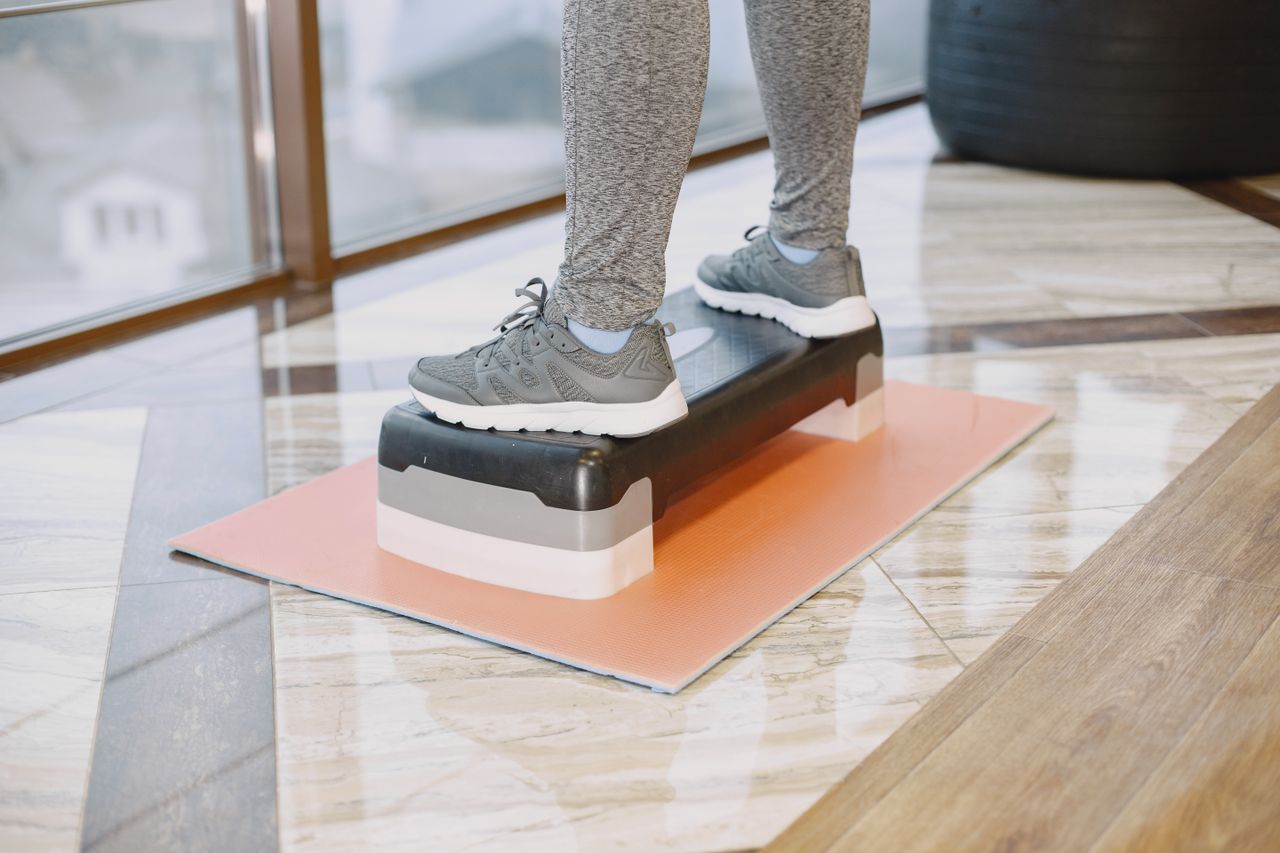
Table of contents
Let the leg on the step lower you
Use a low, sturdy exercise step or the bottom stair beside a rail. Set one foot securely on top, with room for the other leg to move down in front. Stand tall to start, shift your weight to the foot on top, and let the other heel reach forward. Bend the supporting knee and hip to lower yourself slowly. If balance distracts you from the movement, keep a hand on a rail or other fixed support.
In Prehab’s anterior step-down demonstration, the free heel lightly taps the floor before you return to the start. Keep that foot relaxed enough to lift again as soon as it touches. Stand back up by pressing through the foot on the step. A quick push from below changes the task, just as the trailing foot can help launch you during a step-up.
Give the heel a target it can reach gently
Notice what happens just above the floor. Can you slow down before the heel touches? Can you leave the floor again without rocking forward onto that foot? If either part is hard to control, try a lower step. You can also stop short of the floor on your first tries and use the same depth on each repetition. Add the tap when you can reach it without the last-second drop.
A motion-capture study by Cara Lewis and colleagues tested heel-tap step-downs from boxes about 6 and 9½ inches high in 14 healthy young adults. Participants bent their trunks farther forward on the higher box, including when researchers compared them at the same supporting-knee angle. The study measured how people moved during the tasks. It didn’t establish an ideal height or test a long-term training program.
Keep the return as deliberate as the descent
At the bottom, keep the foot on top planted. If the free foot flattens on the floor or you feel a push from its toes, reset and use a shorter reach. A gentle tap still makes contact. The practical check is whether the leg on the step can bring you back up on its own without a bounce.
Try a few unweighted repetitions on each side at the same height. Keep the rail setup the same so you can tell whether one side needs a smaller range. Once you can repeat the descent and return smoothly, change one thing at a time. A slightly higher step adds reach, while using less hand support makes balance a bigger part of the drill.