
You bring your hands together into a diamond, expecting an upgrade from standard push-ups. In one small laboratory comparison, diamond reps didn’t significantly outperform standard ones in measured muscle activation. Both produced higher signals than the wider-hand version.
The test involved 20 healthy, recreationally active young men. It measured electrical activity during push-ups, rather than muscle growth over weeks. That distinction matters when deciding what to change in your own training.
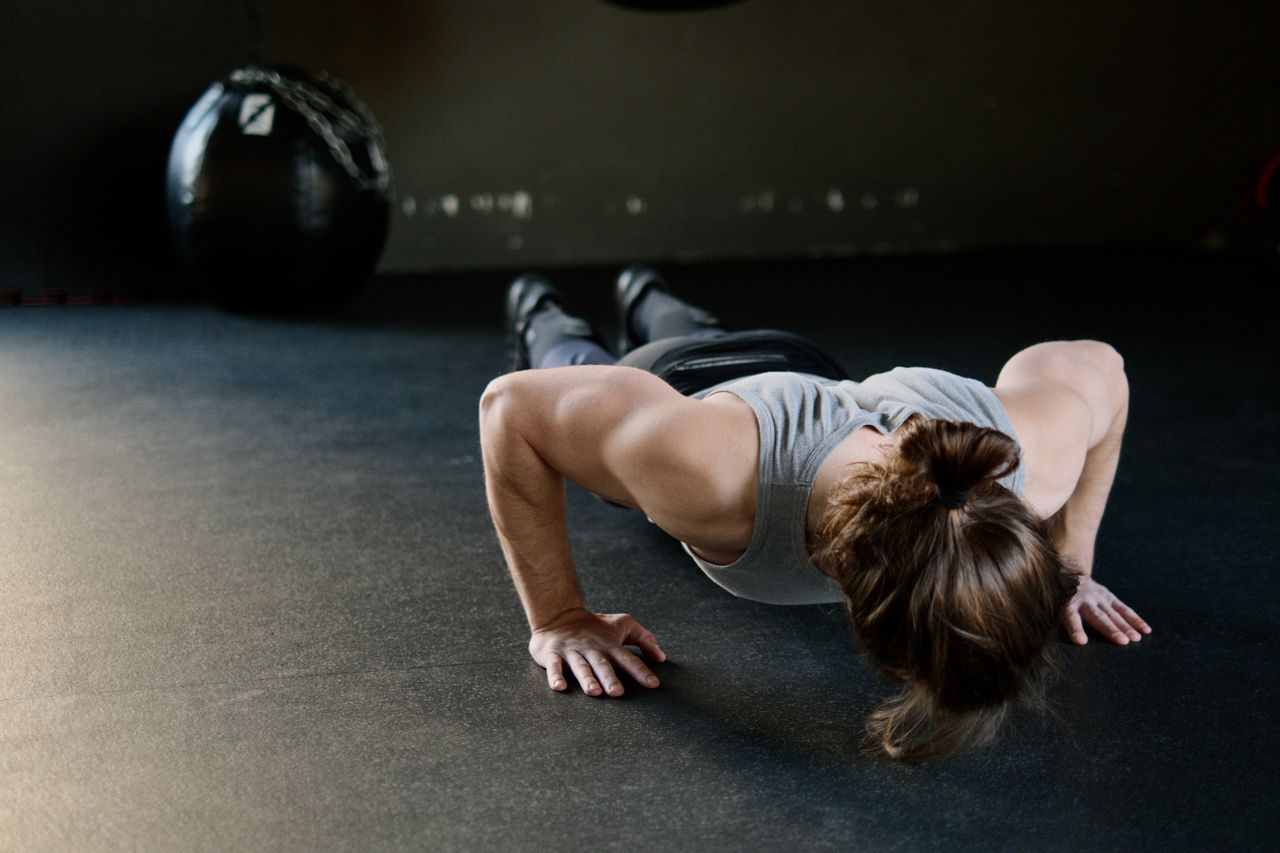
Table of contents
Diamond reps didn’t show a clear advantage
In the 2026 study, participants completed standard, diamond and wide push-ups in random order during one lab visit. Each variation used six slow repetitions, while sensors recorded activity over the chest and triceps.
Both standard and diamond versions exceeded wide in the measured electrical signal. Neither the raw analysis nor the normalized analysis found a statistically significant difference between standard and diamond.
The wide hand spacing was self-selected, and range of motion wasn’t measured. The results also cannot represent every age, sex or training level.
An electrical signal isn’t a growth forecast
In a 2022 Sports Medicine paper, Andrew D. Vigotsky and colleagues examined the reasoning behind using acute surface EMG to predict hypertrophy. Their conclusion was that this measurement has not been validated as a predictor of long-term muscle growth. A higher signal needs careful interpretation.
Think of that as a question to ask when an exercise is declared “best for building muscle.” Were muscle sizes measured before and after a training program, or was electrical activity recorded during a session? Those are different outcomes, even when the same exercise appears in both.
You can use a laboratory comparison to question an assumption without turning it into a ranking for your whole workout. There is no need to treat the hand position with the most impressive label as an upgrade you must earn.
Keep the basic repetition under control
For a practical starting point, the American Council on Exercise places the hands shoulder-width apart, fingers facing forward or slightly inward, with shoulders over hands. Brace the trunk, glutes and thighs, keeping the head aligned with the spine. Lower under control without letting the hips sag or hike, then press until the elbows straighten.
That gives you several useful checks before experimenting with width: can your body lower and rise together, and can you finish without changing the shape of the repetition? Moving the hands farther out is only one adjustment; it doesn’t answer those other questions.
If the standard floor version is still beyond your control, our wall-push-up progression explains how stance and support height offer smaller steps. Changing the difficulty is a separate decision from chasing an activation ranking.
Ask your coach to judge a complete set, including its later repetitions, rather than choosing a position from a photograph. If the narrower setup stops you from completing that same controlled motion, the lab result hasn’t given you a reason to force it.