
The treadmill reads 10% incline, your hands are wrapped around the rails, and the climb looks demanding. But the setting alone doesn’t describe your effort. A small study found that leaning back while holding the rails made that incline less demanding than walking upright.
That does not mean every handrail touch cancels the workout. The distinction was how people used the support, rather than simply whether their hands touched it.
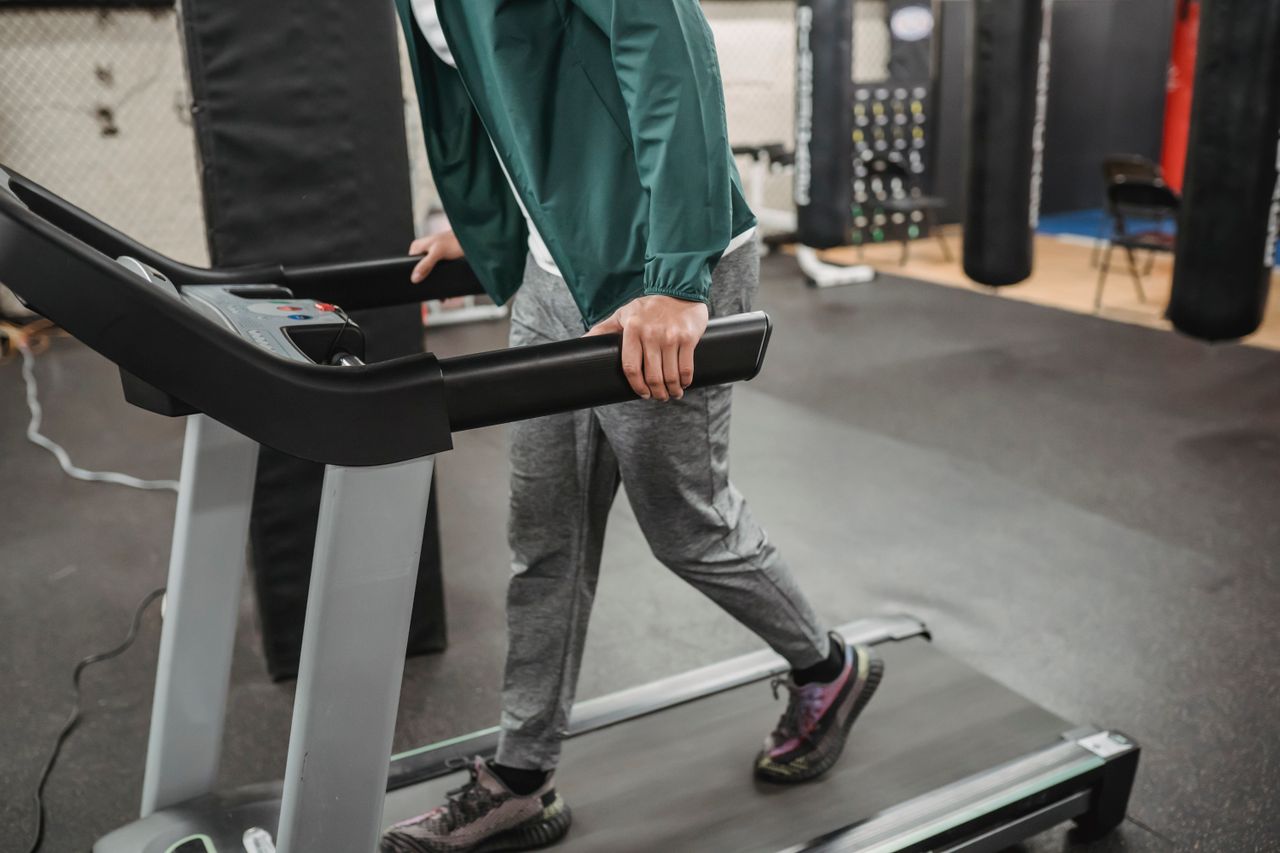
Table of contents
Upright support and leaning back were different tests
The 2014 experiment involved 13 healthy adults completing five-minute walks. It compared 5% without support with 10% unsupported, upright with handrail support, and leaning back with support.
At 10%, leaning back produced lower energy expenditure and perceived effort than either upright condition. Upright support versus no support didn’t differ significantly, but that doesn’t prove the two are identical.
Handrail forces weren’t measured, so the mechanism couldn’t be isolated. This short experiment also did not measure long-term weight loss.
Choose the session before chasing the percentage
In her ACE guide to treadmill intervals, exercise-science instructor Angel Chelik starts with the goal. Options include keeping speed steady while changing incline, lowering speed as incline increases, or maintaining incline while increasing speed. The controls can serve different purposes within a workout.
Consider two sessions: one uses a higher grade but a slower speed; the other stays flatter at a faster pace. Looking only at incline leaves out a deliberate programming choice. Decide whether you are comparing identical settings or two different sessions.
Our examination of the treadmill’s 1% running rule explores another reason to question a default percentage. A rule borrowed from running does not automatically assign the right incline to your walk.
If you need the rails for balance or have been given a supported walking plan, keep that support. Do not suddenly let go to make the session look harder. Ask the instructor or clinician guiding your exercise to help choose the settings and support together.
Check effort as well as the display
The U.S. physical activity guidelines’ Q&A offers a simple relative-intensity check: during moderate activity, you can talk but not sing. Vigorous activity leaves room for only a few words before pausing for breath. The same activity can be harder for someone with a different fitness level.
For a walk intended to be moderate, check your breathing and ability to speak after settling into the pace. Being unable to get through more than a few words tells you something the incline number cannot: how demanding that combination is for you.
If the current setup has you hanging back from the rails, discuss a lower speed or grade that lets you walk with the support you actually need. The aim is to match the session’s intended effort and a controllable walking position, rather than preserve a particular number on the screen.