
The first two reps of a back-squat set move quickly. By rep six, the same weight takes longer to get up. Researchers tested what happens when you rack the bar before you get to that point. The lifters did the same six reps, but they took a short break after rep two and again after rep four.
In the small study, the bar lost less speed by the final rep when lifters used those 30-second breaks. They still got the same three minutes between sets, so the shorter breaks added time to the workout.
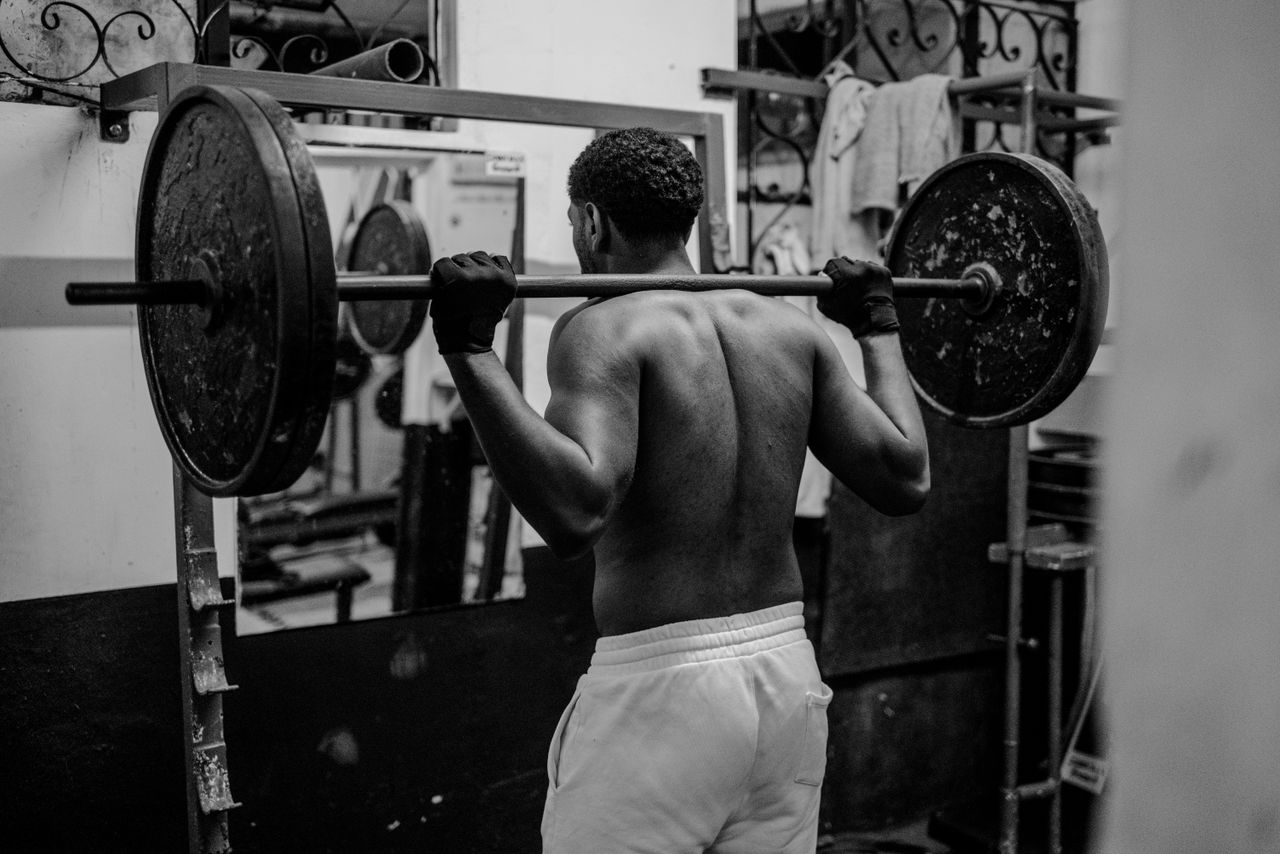
Table of contents
Same load and reps, with two extra breaks
In a 2026 study led by Erik Hobein, six strength-trained adults, five men and one woman, completed two free-weight back-squat sessions in random order. In each session, they did four sets of six with 75% of the heaviest weight they could squat once. They took three minutes between sets in both sessions.
In one session they did all six reps in a row. In the other they did two reps, rested for 30 seconds, did two more, rested another 30 seconds, and finished the last two. Those pairs made up a cluster set. The lifters sat during the breaks. Both sessions called for a controlled descent and a maximal effort on the way up, and the researchers standardized each lifter’s squat depth across sessions.
That’s a different change from giving yourself longer before starting the next set. These lifters got extra time before finishing the current set and kept their usual between-set break in the experiment.
How much speed did the lifters keep?
The researchers tracked how fast the bar moved during the driving part of the ascent. For each set, they compared the fastest rep with the last rep, then averaged the losses across the four sets. The last rep was 8.4% slower than the fastest rep on average with the short breaks, compared with 19.4% slower with six continuous reps.
The fastest rep could occur anywhere in a set, so the comparison doesn’t assume rep one was always quickest. The result comes from two sessions in six trained lifters. It tells you what happened to the bar speed in that workout. The researchers didn’t run a training block to test strength or muscle growth, and they didn’t compare different lengths of mid-set break.
Make room for the pause if speed is the goal
The eight short breaks added four minutes of scheduled rest to the cluster session. If you need to keep the workout the same length, this comparison doesn’t tell you what happens when you cut the rest between sets to pay for the pauses inside them. The researchers kept that part of the schedule fixed.
If your workout calls for fast, controlled ascents and you have time to experiment, try splitting a familiar set at a manageable load. Rack the bar between pairs and keep the load, depth, and between-set rest the same if you want to compare it with your usual set. Without a bar-speed sensor, your impression or a side-view clip can give you a rough comparison. Use it to notice whether the final rep still turns into a grind.