
You lie on your side with your knees bent and lift the top knee. To get it a little higher, you roll toward your back. The opening looks bigger, but some of that motion came from the pelvis turning. On your next clamshell, use the top hip to tell you where to stop.
Keep your feet together and put your hand on your top hip. Open the knee slowly, then stop before the hip rolls away under your hand. The gap between your knees may be smaller than you expect.
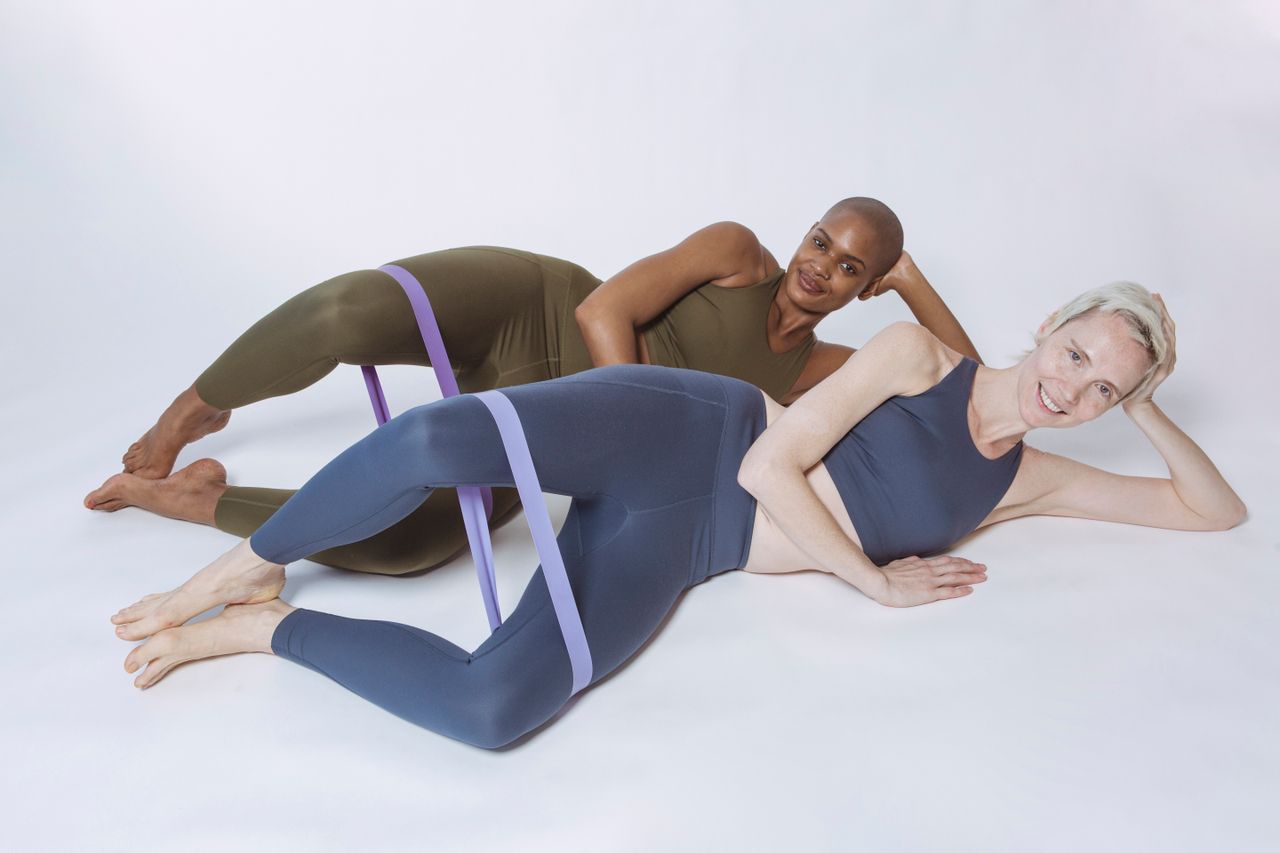
Table of contents
Feel what moves before you look at the gap
Lie on one side on a mat and support your head with your bottom arm. Bend both knees and keep one hip directly above the other. Start with your knees and feet stacked. Keep your feet touching as you lift the top knee. The American Academy of Orthopaedic Surgeons’ clamshell instructions use the pelvis as the limit for the knee lift and advise staying centered on your side.
Rest your top hand on the bony rim of the hip to feel when it moves. Open slowly enough to notice the first hint of the pelvis rolling backward. Bring the knee down a little, then try to reach that smaller opening again while staying on your side. If your feet separate on the way up, close your knees and reset your feet before another rep.
The pelvis changed the muscle signal in a lab
Emma Willcox and Adrian Burden used surface electrodes to measure muscle activity in 17 healthy volunteers during six versions of the clamshell. The gluteus medius at the outer hip and the gluteus maximus both showed greater activity with the pelvis in a neutral position than with the pelvis deliberately reclined.
That compares two tested positions during the exercise. It doesn’t tell you how much a tiny roll changes the effort, or which version builds more strength over weeks. The useful check at home is whether you can move the thigh while the pelvis holds the position you started in. There’s no target angle you have to match on both sides.
Keep the same opening when you add resistance
Start the range check without a band. Lift, pause briefly, and lower with enough control to set the knees together gently. Try it on both sides. If you lose your stacked position on later reps, use a smaller opening or end the set there. A slower return gives you time to notice whether your hip rolls as the knee comes down, too.
The clamshell can also be done with a light band around the thighs above the knees, as shown in the photo. Use the same setup and see whether you can keep your feet together and the top hip steady against the added resistance. If you want a separate side-lying exercise, our hip abductor exercise guide also shows a straight-leg raise. In that drill the whole top leg lifts. For the clamshell, keep the knee bent and let the top hip set the endpoint.