
You finish a set of wall push-ups without much trouble, then try the floor version and barely move. The gap can make the wall exercise feel like a dead end: easy repetitions on one side, a stalled push-up on the other. But the wall version has an adjustment you can make before changing exercises.
Move your feet a little farther from the wall. That can make the movement harder while your hands stay on the same surface. When you need another option, lowering the surface under your hands offers a further way to adjust the challenge.
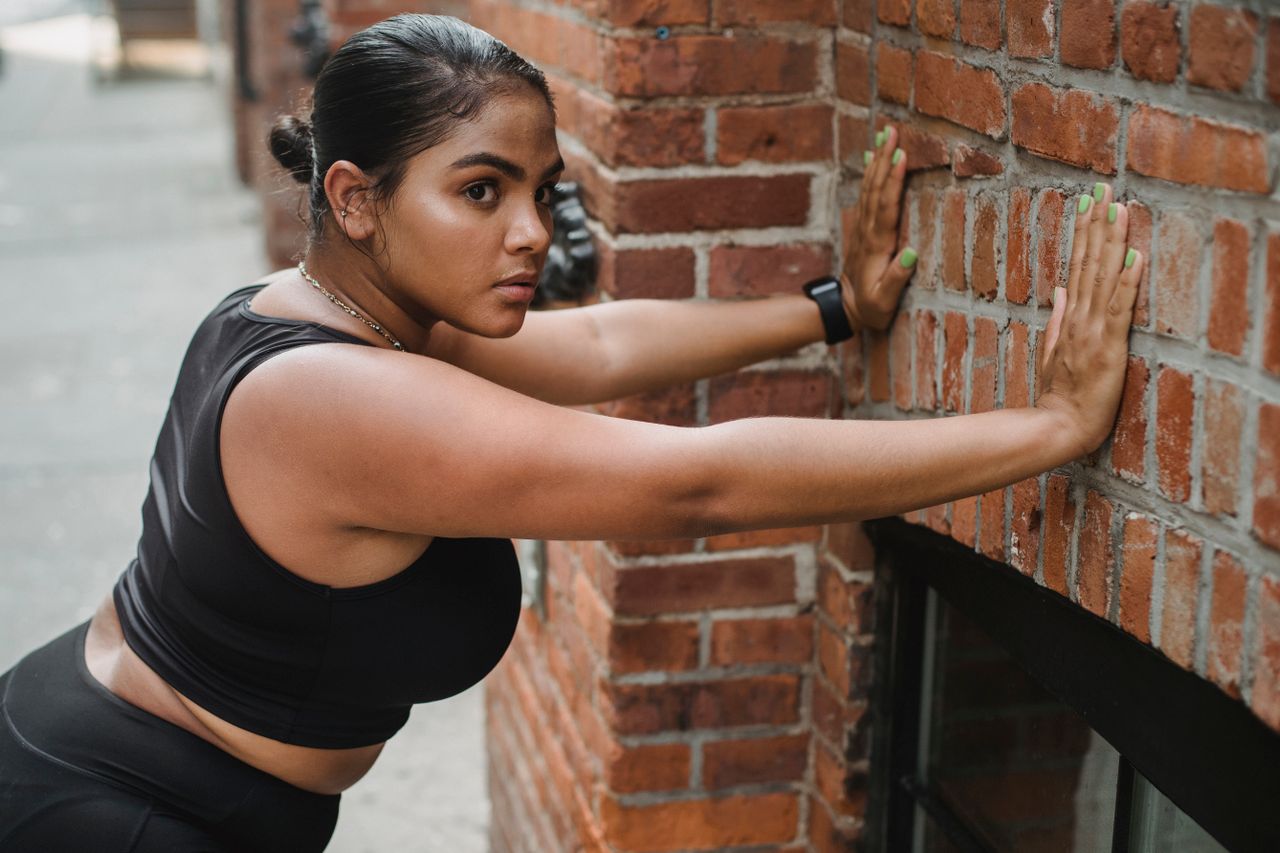
Table of contents
Change where you stand first
Mersey Care NHS Foundation Trust’s wall-press guidance specifically recommends moving the feet farther from the wall to make the exercise harder. It is a simple change to your starting position, rather than a requirement to add equipment or attempt a floor push-up immediately.
Begin with a position you can control. Mayo Clinic’s wall push-up instructions place the hands at shoulder height, slightly wider than shoulder-width, with the abdominal muscles engaged. Bend your elbows to bring your chest toward the wall, then press back smoothly.
Keep your back straight as you move. Your chest should travel toward the wall; reaching forward with your head while leaving your torso behind changes the movement. Avoid letting your hips sag or your lower back arch to finish a repetition.
If your current position feels easy, try a small step back and reassess the same movement. If you lose control, step closer again. The useful comparison is between two versions you can perform properly, rather than how far from the wall you can stand.
A lower hand support gives you another option
A wall is one end of a wider range of hand-supported push-ups. In an American Council on Exercise article, ACE-certified personal trainer Cindy Sullivan explains that a higher support, such as a wall or kitchen counter, reduces resistance. A lower incline makes the exercise more demanding.
The mechanics have been measured in a laboratory. A 2011 study of 23 recreationally fit adults compared six push-up variations, including versions with the hands elevated on 12-inch and 24-inch boxes. The elevated-hand variations produced less peak vertical force than the regular floor push-up.
That was a comparison of forces during repetitions, not a trial showing how quickly beginners should progress. It did not test wall push-ups. Its practical value here is showing that support position changes the load; moving straight to the floor is not the only available adjustment.
Use a fixed, secure support that will bear your weight without sliding or tipping. A rolling chair or a lightweight table that moves under your hands is unsuitable, regardless of whether its height looks convenient.
Keep the movement consistent as the angle changes
A push-up moves your body while your hands stay planted, a distinction also explored in our guide to push-ups versus the bench press. Changing the support should preserve that basic action: lower and raise your body together instead of finding a new way to reach the surface.
Try one adjustment at a time. Keep the same hand placement while changing your foot position, or choose a different support while paying attention to your body alignment. That makes it easier to notice when the extra challenge starts to alter your technique.
If a lower support makes every repetition a struggle, return to the wall and use a stance you can manage. Your next useful step can be a small change in position, rather than a push-up variation you cannot yet control.