
The mat can make downward dog seem like a two-part test: hands down, heels down. If your heels hover, it is tempting to shuffle your feet closer and keep pushing. But heel contact is not a requirement. A useful adjustment may be a knee bend that preserves the shape of your back.
NC State’s yoga teaching guide explicitly allows bent knees and heels that reach toward the floor without touching. Its other instruction is to maintain the spine’s natural curves, including the lower back’s inward curve.
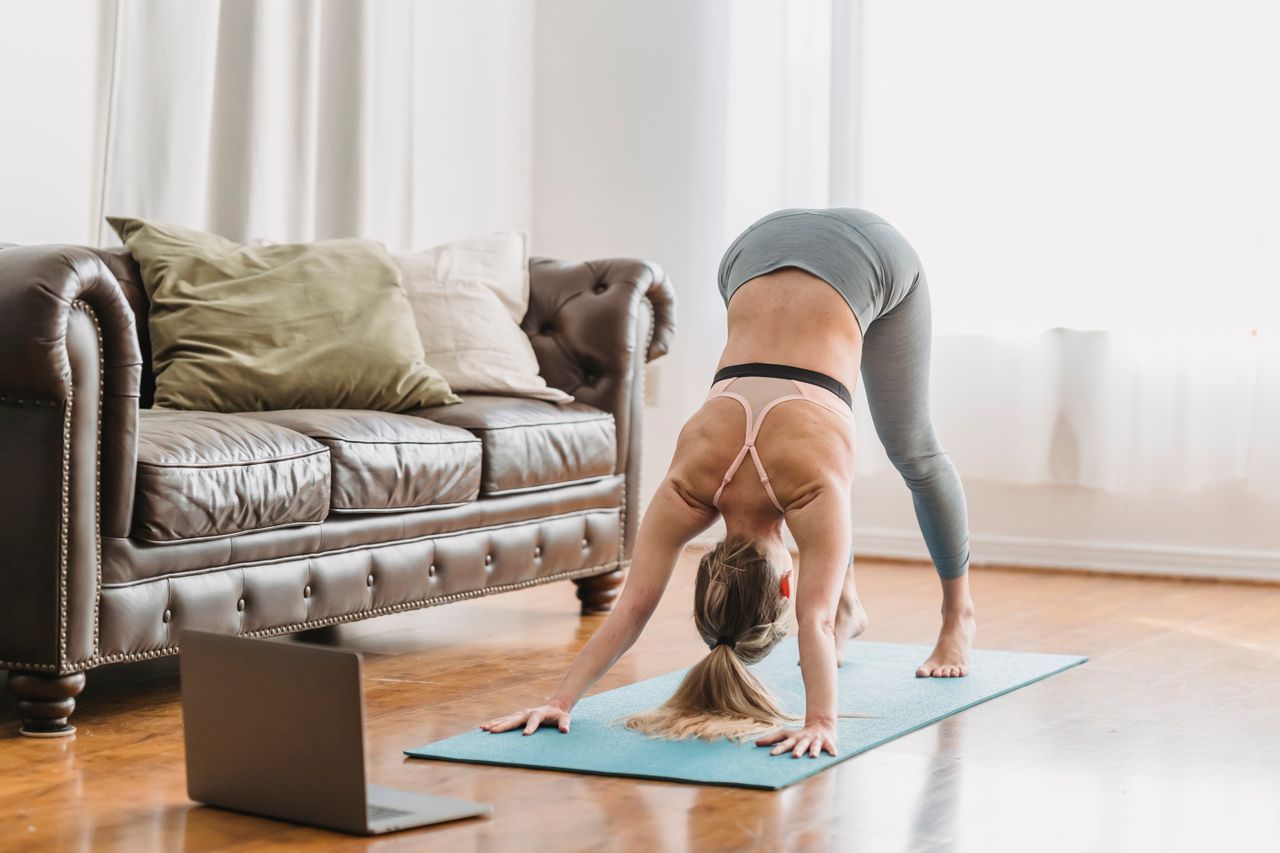
Table of contents
Find the position before chasing heel contact
Yoga teacher Amber Burke’s original coaching guide uses a plank entry to establish the pose’s length. Start on hands and knees, with wrists below shoulders. Find a long, neutral back, then step your feet back into plank while keeping that shape.
Keep hands and feet anchored as you lift your hips up, bend the knees slightly and bring your ears in line with your upper arms. Burke explains that bending the knees can help someone with tight hamstrings tip the tailbone up and back while retaining the lower back’s natural curve.
From there, straighten your legs only as far as you can maintain that position. Burke specifically cautions against taking a big step forward or moving the hands back simply to put the heels down. A smaller gap under the heels would not make up for losing the back position you were checking.
Give the hands a job, too
The university’s instructions also call for pressing the whole surface of the hand into the mat, keeping the shoulder blades broad across the back and reaching the chest toward the thighs without losing shoulder engagement. The pose involves active support through the upper body, rather than concentrating only on the feet.
A similar inverted-V shape appears in pike push-ups, but those add a pressing repetition. Downward dog’s arm support is a different task from repeatedly bending and straightening the elbows.
An entry and an exit you can follow
Yoga Journal’s pose guide offers another entry from hands and knees, with hands slightly ahead of the shoulders. Tuck the toes, exhale and lift the knees, sending the hips up and back. Keep a slight knee bend while reaching the heels toward the mat, and let the head rest between the upper arms.
Its beginner guidance accepts heels that remain lifted. When finishing, bend the knees on an exhale and lower into child’s pose. There is no need to stay up until the heels finally meet the floor.
If you want to explore the upper-body position separately, the same guide gives a wall version: place hands shoulder-width apart on the wall and walk back until the hips bend to about a right angle. The hands may be level with the hips or higher. Look down toward the floor.
For a supported version, that guide also suggests resting the heels against a wall or using a rolled blanket behind them. Supporting a hovering heel is a different choice from forcing it downward while changing the rest of the pose.