
The bar starts at your shoulders, travels forward around your face, then finishes overhead. That can look like a completed repetition while hiding a useful detail: the bar took a curved route. For a standing barbell press, the correction may begin with making room for the bar, rather than pushing it around your head.
CrossFit’s shoulder-press guide identifies that fault. When the face causes the forward arc, it recommends pulling the chin back before pressing, while keeping the trunk stable.
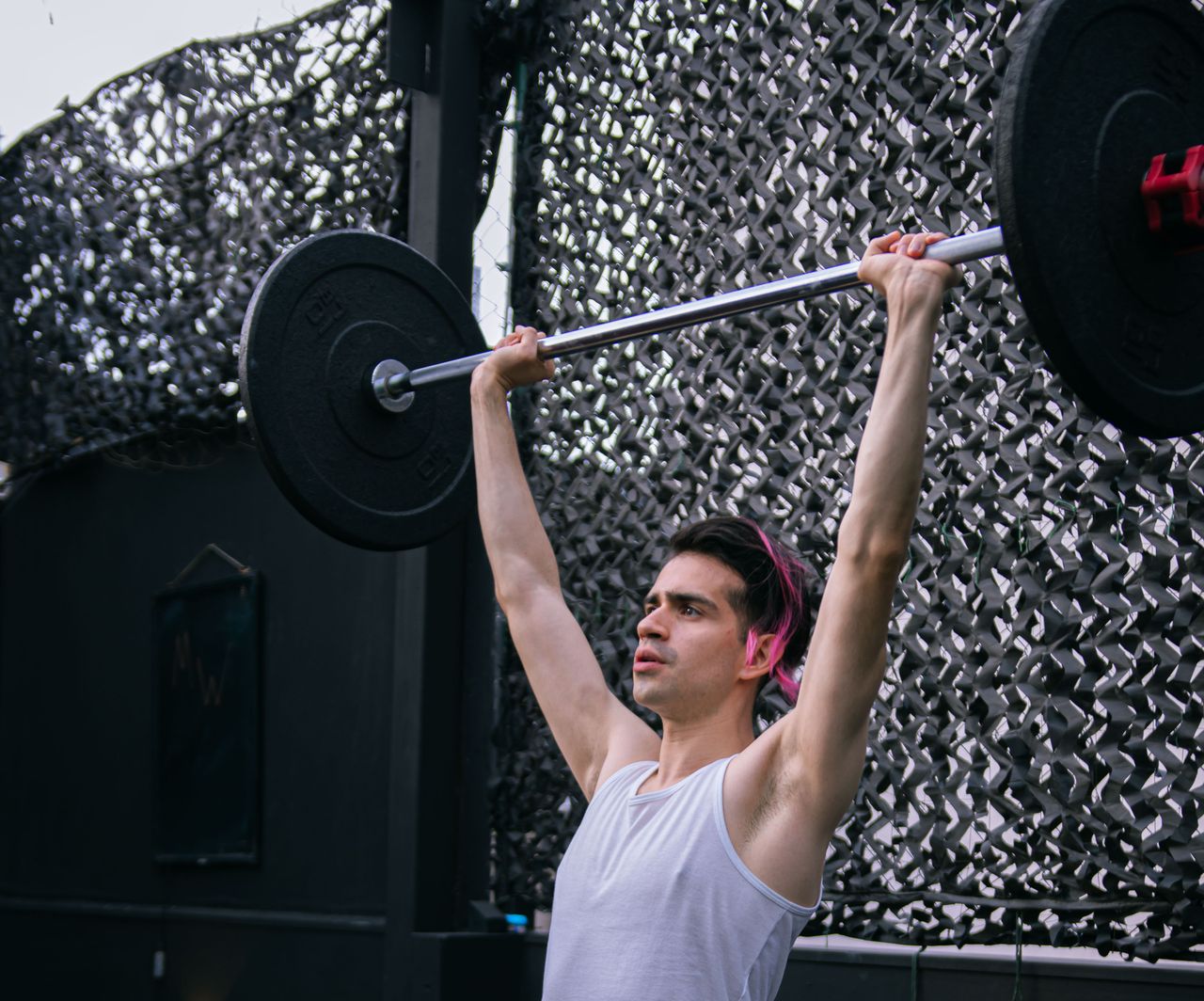
Table of contents
Watch the route, not just the finish
In a March 2026 coaching explanation, CrossFit trainer Stephane Rochet describes keeping the bar close to a vertical reference through the body. For overhead movements, the body clears the way so the bar can travel upward without looping forward around the face.
The practical distinction is between moving yourself enough to accommodate the bar and sending the load farther out in front. The weight on the bar has not changed, but its position relative to you has.
One way to apply the cue is to have an instructor watch a light practice repetition from the side. Ask about the route as the bar passes the face, rather than checking only whether the arms eventually straighten overhead. A finishing position alone does not show how the bar arrived there.
Check the setup before adding effort
The Collegiate Strength and Conditioning Coaches Association starts its barbell press with rack hooks at upper-chest height. Grip just outside shoulder width, position the elbows under the wrists with forearms upright, and brace the abdominals. During the press, the rest of the body remains rigid.
Its overhead target is extended elbows with the bar over the body’s center of gravity, followed by a controlled return to the shoulders. Those are setup and movement instructions, rather than a reason to lean farther backward to finish a difficult repetition.
CrossFit identifies another cause of forward drift: elbows behind the bar at the start. It recommends bringing them slightly forward. “Chin back” is therefore not the correction for every bar-path problem.
Our standing overhead-press guide covers the general setup. Here, the specific check is whether the bar clears the face without taking a forward detour.
Practice the path with a light implement
CrossFit’s warm-up uses PVC or an empty bar to establish the front-rack and overhead positions with a stable trunk, then joins them with the pressing movement. Choose PVC if the bar is not manageable.
Before the practice set, clear equipment and other tripping hazards from the lifting area. The association also specifies chest-height safety straps when the press is performed inside a full rack.
Keep this a strict press while exploring the cue. The association treats using the legs to drive the bar upward as a different action from its prescribed upper-body press. If you want feedback on the path, do not change the movement halfway through the repetition by adding a leg drive.