
Your barbell bench set is 135 pounds. At the dumbbell rack, dividing by two points you toward a pair in the 65- to 70-pound range. The arithmetic adds up, but the movement changes. Each hand now has a separate weight to lower, steady, and press, so it makes sense to start with a lighter pair.
In one study, trained lifters pressed less total weight with dumbbells than with a barbell for one maximum rep. That result gives you a reason to find a new starting load for your working sets.
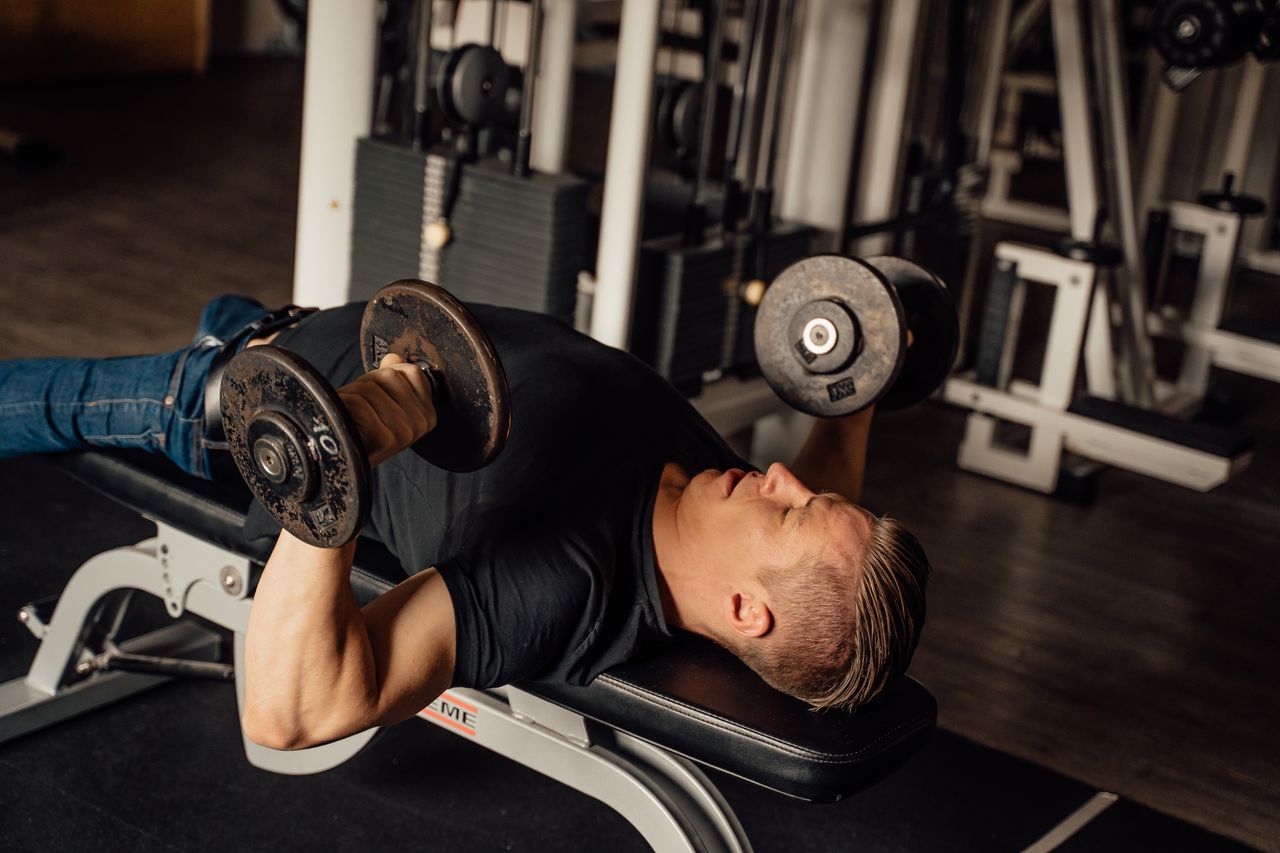
Table of contents
The dumbbell pair weighed less in the max test
In a 2011 study led by Atle Saeterbakken, 12 resistance-trained men tested their one-rep max in three chest presses: a free barbell, two dumbbells, and a Smith machine. The participants had experience with all three. Researchers had them practice the tests beforehand and varied the order in which they tried the presses.
The combined weight of the dumbbells was 17% lower than the barbell load on average. That comparison uses the weight of both dumbbells. If you log “40 pounds” for dumbbell bench, that usually means 40 pounds per hand and 80 pounds in total. A barbell entry normally includes the bar and its plates.
The 17% difference came from maximum singles in a small group, under a particular test setup. It doesn’t tell you what any lifter should use for a set of eight, or how much the gap changes as someone practices with dumbbells. Treat the dumbbell press as its own exercise when you choose the working load.
Use the first set to check both sides
Choose a pair light enough to get into position comfortably on a flat bench. The American Council on Exercise’s chest-press instructions call for planted feet, neutral wrists, and lowering both dumbbells under control. On your first few reps, notice whether one weight drops faster or starts to drift as you press. Both hands should still have a controlled path when the set gets harder.
Rest, then move up a small step if the practice reps felt easy. Use the rep range your program calls for and pick a pair that lets you reach it without grinding the first rep or cutting the descent short. If getting the dumbbells into position already feels like a maximum effort, keep the lighter pair for now. The setup is part of handling the load.
Track the dumbbells by weight per hand
Write down the weight per dumbbell and the reps you completed, along with the flat bench setup. That gives you a result you can repeat next time. A dumbbell rack that jumps from 25 to 30 pounds adds 5 pounds to each hand and 10 pounds to the pair. The combined load goes up by 20%.
If the current pair fits your program and the next one throws off the press, there’s room to build reps before taking the next dumbbell jump. Use how both weights move at the end of your working set to decide when you’re ready to go up.