
You lie down to bench, slide each hand a little farther out on the bar, and press the same weight you used on the last set. The plates haven’t changed, but your shoulder joints can experience different forces. In one experiment, those forces changed when lifters moved their hands or changed how they set their shoulder blades.
The wider grip raised several estimated shoulder forces. Drawing the shoulder blades together reduced some forces and increased another near the ends of the rep. The changes depended on which joint the researchers looked at and where the bar was in the lift.
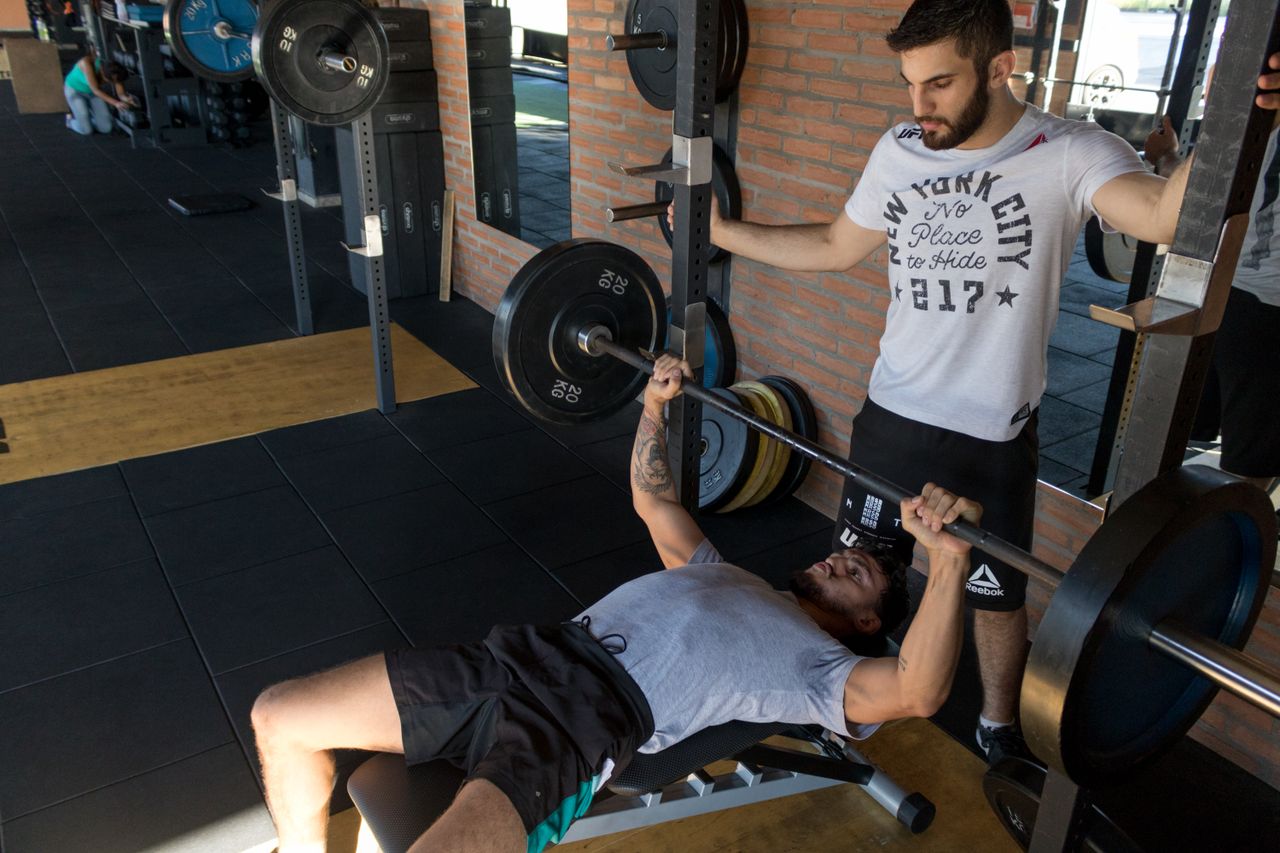
Table of contents
The researchers kept the weight at about 35 pounds
In the 2024 study led by L. Noteboom, 10 healthy, experienced strength athletes, nine men and one woman, performed three reps in each of 21 bench-press setups. They used the same 16-kilogram barbell each time. The researchers recorded movement and sideways force on the bar, then used a computer model to estimate forces inside two shoulder joints.
Grip width was measured relative to each lifter’s shoulders, from one bony tip to the other. The study tested hand spacings of one, one and a half, and two times that distance. If the points of your shoulders are 16 inches apart, those spacings would be 16, 24, and 32 inches. That’s how the experiment defined its setups. Where your fingers land on the bar will depend on your own measurements.
Going from one and a half to two shoulder widths raised estimated compression in the shoulder’s ball-and-socket joint and where the collarbone meets the shoulder blade during much of the rep. The narrowest grip had a trade-off too. Compared with the middle grip, it increased an estimated upward force component at the ball-and-socket joint. So the answer depends on which force you’re comparing.
Shoulder-blade position changed the result at different points
For the retracted position, the team asked lifters to bring their shoulder blades together and arch their backs slightly. Compared with a neutral setup, that lowered estimated compression at the ball-and-socket joint through much of the rep. Near the bottom, it also reduced the modeled force tending to shift the upper arm bone backward. At the start and finish, though, the estimated upward force component rose.
The researchers used brief sets with a light bar and estimated the forces from a model. The study can show how the tested setups differed under those conditions. To learn whether one setup leads to fewer injuries over time or behaves the same under a heavy bar, you’d need a different experiment.
Change one part of your setup during the warmup
If you’re curious about a narrower grip, keep your shoulder-blade setup and warmup load the same. Move both hands inward by the same small amount using the bar’s markings as a reference. Pay attention to how steadily you can lower and press the bar. If it’s your shoulder-blade setup you want to change, keep your grip where it was.
The U.S. Army Public Health Center’s bench-press guidance suggests starting with light practice sets and using a spotter who knows how to help. Before the first rep, agree on how your spotter will assist with the lift-off or an incomplete rep. Once you’ve found a hand position you can repeat comfortably, note where your fingers meet the bar’s markings so you can set up the same way next time.