
You grab the climbing rope, lift your knees and catch it between your shoes. Then the rope slips as you try to stand, and you’re back to holding your weight with your hands. That first move can tell you what to practice before you aim for the top of the rope.
Start with a coach and keep the work low. These three drills take you from pinching the rope while seated to standing on the lock and making a short climb you can come back down from under control.
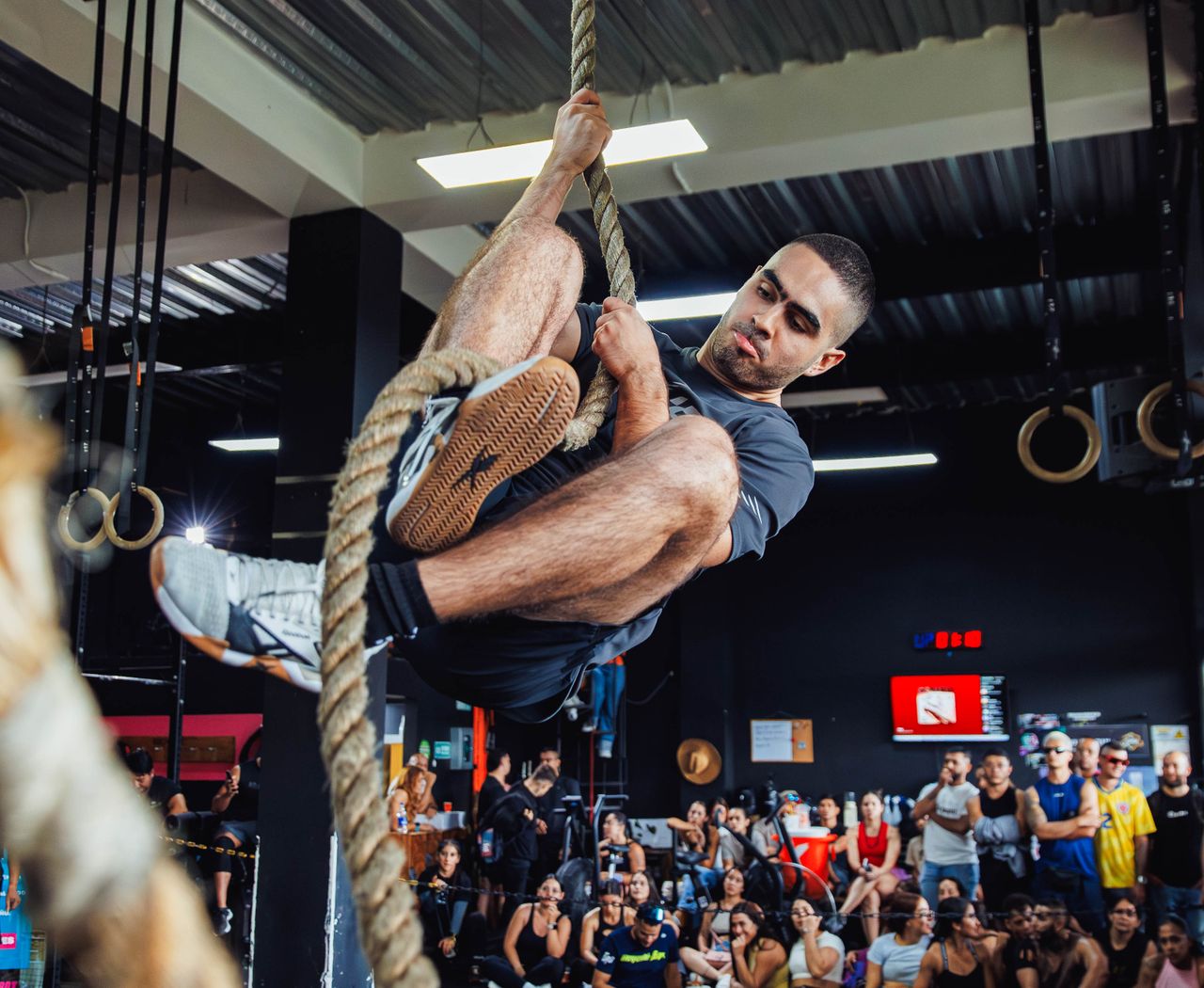
Table of contents
1. Set the foot lock from a box
Sit on a sturdy box beside the rope and have your coach show you how to trap it between your shoes. With a J-hook, one foot scoops the loose rope under the other, and the shoes press together to hold it. CrossFit Reverb’s illustrated guide shows the scoop and the finished clamp separately.
Stay seated while you make and release the lock. The box still supports your weight, so you can look at your shoes and see whether the rope is pinched or hanging loose beside them. If the coach sees slack at the clamp, reset your feet and try the same motion again. CrossFit’s competitor training guide starts wrap practice seated until the athlete is comfortable with the foot placement.
2. Stand on the lock close to the floor
With the coach beside you, use the same foot position to practice a low stand. Keep both hands on the rope, bring your knees up enough to set the clamp, and check that it’s holding before you straighten your hips and knees. The CrossFit affiliate class plan has athletes watch their feet until the lock is secure and then stand on it before reaching for the next pull.
For this drill, stop after the stand. You’re finding out whether the clamp holds as your legs straighten and take some of your weight. If the rope slides through your shoes or your elbows bend sharply to keep you up, return to the floor and have your coach check the clamp. Save the higher reach for when you can make that low stand without the rope moving through your feet.
3. Make a short climb and come all the way back down
Agree on a low stopping point before you leave the floor. Stand on the first lock, reach higher while keeping a grip on the rope, then lift your knees and set the next lock. A short climb lets your coach see whether you can find the same foot position a second time, when there’s no box supporting you.
Have the coach show you how to reverse the sequence at that height. Keep control with your hands and feet as you lower yourself, and finish with both feet on the floor before letting go. If you can get up but hurry or slip on the way down, practice at the lower height again. CrossFit also uses reduced climb height as a workout scaling option, so a full-height rep can wait.
Work on the new footwork before the timed workout, while you can stop and reset. The same distinction between learning a movement and using it for conditioning comes up when practicing for a kipping pull-up.