
At a pull-up rig, a smooth rhythm can keep repetitions moving: the body swings, the hips contribute and the chin rises toward the bar. It can look like the next step for someone struggling to pull up from a quiet hang. CrossFit’s own coaching guidance gives that progression a different order.
It recommends developing a strict pull-up before performing kipping pull-ups, to establish a foundation of shoulder stability and strength. The kip is a coordinated skill to add to that foundation, rather than a workaround for missing strict pulling capacity.
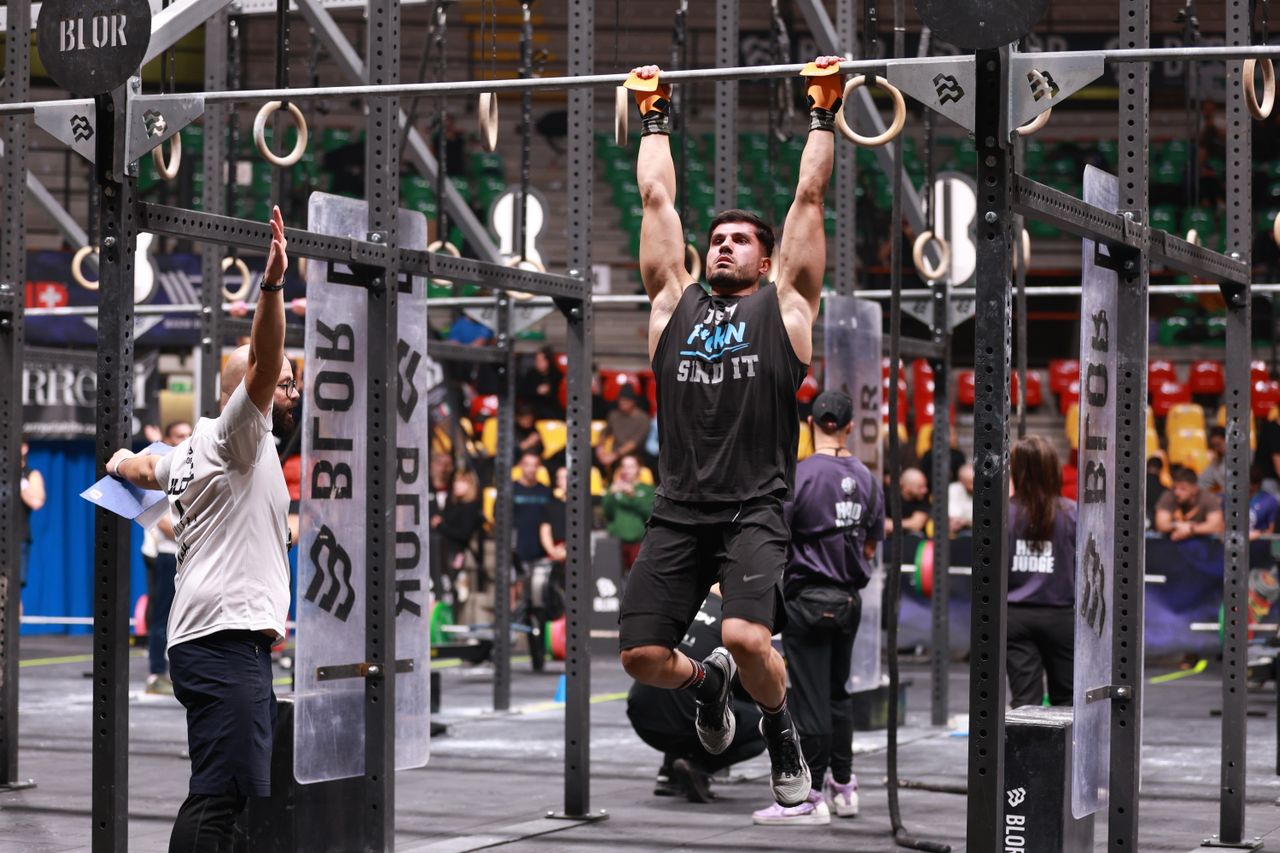
Table of contents
The hip contribution has a purpose
CrossFit’s movement guide describes the kip as a transition between arch and hollow body positions. The chest moves forward as the feet move behind, then the chest moves back as the legs come forward. Coordinated hip and arm action helps bring the chin over the bar.
CrossFit uses that version in conditioning workouts to complete more work in less time. Learning to link those movements is a coordination task as well as a pulling task. Its stated purpose differs from demonstrating how much pulling work can be completed without that hip-assisted rhythm.
That distinction is useful when reading the workout. A set of kipping repetitions and a set of strict repetitions describe different tasks, even when both appear under the broad label of pull-ups. One total should not quietly replace the other when judging progress toward a strict-rep goal.
Make the controlled pull clear
For an example of a pull-up performed without swinging, the American Council on Exercise’s instructions describe bracing the trunk and pulling by bending the elbows down toward the sides. The body stays vertically aligned rather than generating a swing to start the upward movement.
The return is controlled too: lower until the arms extend overhead while maintaining the trunk position. The starting hang, upward pull and descent all belong to the exercise. A coach can watch those parts separately instead of judging readiness solely from whether the chin reaches the bar.
Build the strength and practice the skill
In his coaching Q&A, Eric O’Connor, a Certified CrossFit Coach at Level 4, describes athletes who can perform kipping repetitions yet struggle with a strict pull-up. He recommends assessing their pulling strength and selecting appropriate practice, rather than assuming more conditioning repetitions will fill the gap.
His options include assisted pull-ups, chin-over-bar holds, lat pulldowns and other pulling exercises. Our guide to working toward an unassisted pull-up also describes assistance and holds. Those are practice options to choose for the lifter, not a requirement to rush through every drill in one session.
CrossFit’s gymnastics coaching guide separates kip-swing practice from strict-strength work before combining them. Practicing a controlled swing component is different from using full kipping pull-ups as the substitute for a strict repetition.
O’Connor also advises checking whether extra practice is draining so much energy that regular class performance suffers. A useful coaching check therefore has two parts: identify the pulling movement that currently needs help, and fit its practice around the rest of the training.
Before treating a bigger swing as the next progression, have the coach watch the chosen assisted or strict version through its full intended range. Agree on what should improve next: less assistance, better control or adding the kip to a controlled strict pull.