
A spotter can stand close to the bench without touching the bar or shouting encouragement. That quiet presence may feel like background to the set. Yet a small experiment found a difference when the lifters could see the people ready to help, even though the load and the available support stayed the same.
The experiment involved 12 recreationally trained young men pressing on a Smith machine. They averaged 4.5 more repetitions across three sets when the spotters were visible than when those same spotters were hidden from view.
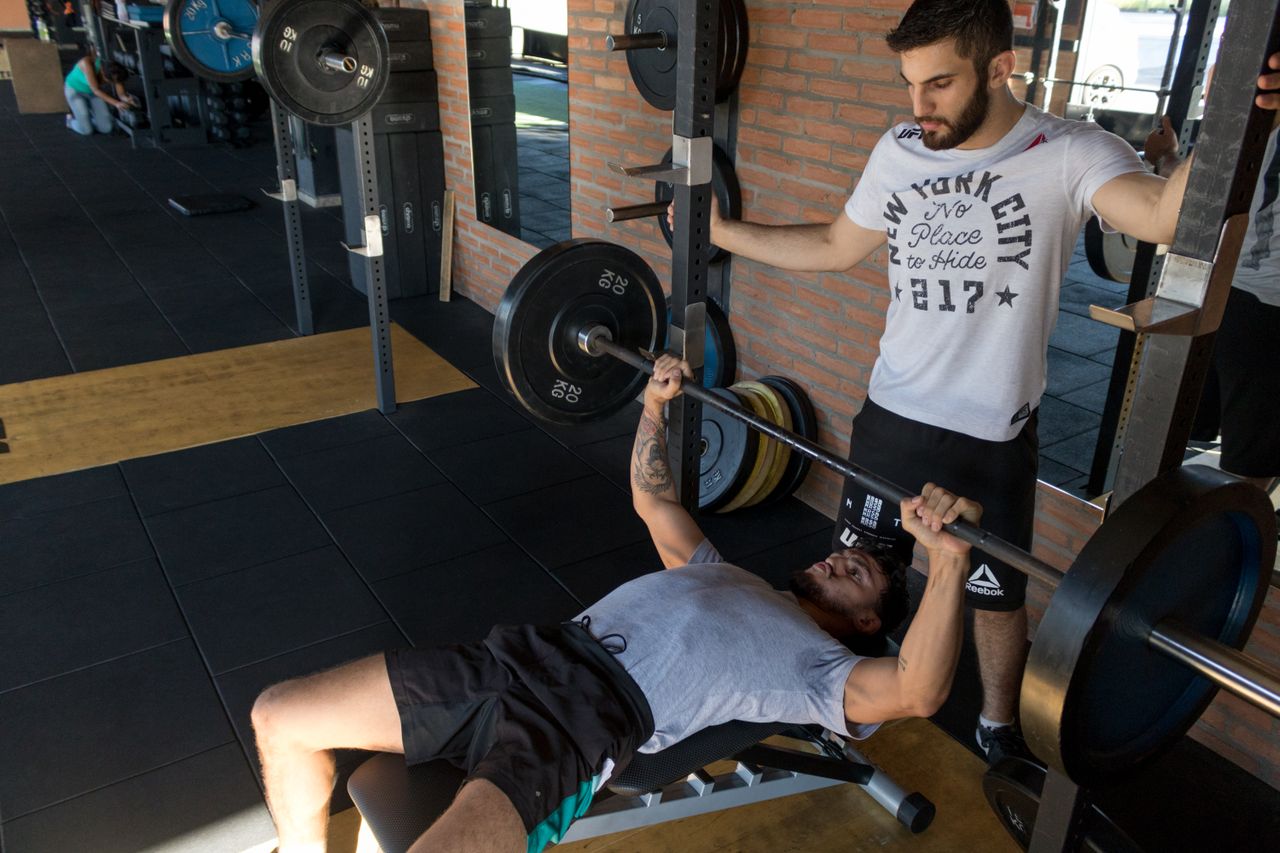
Table of contents
The spotters never actually left
In the study published in 2019, each participant completed both conditions in randomized order on separate visits. The work was three sets to failure at 60% of one-repetition maximum, with two-minute rests.
Two spotters stood beside the Smith bar in both conditions. Shielding allowed them to remain unseen in one trial. They gave no verbal encouragement, and successful repetitions were unassisted. Participants also reported greater confidence when the spotters were visible.
This was a short performance experiment, not a muscle-growth program or proof that every lifter will gain extra reps. It did not measure an increase in maximum strength.
The free-bar bench press pictured here is an illustration; the experiment used a Smith machine and two side spotters.
Our machine-versus-free-weight comparison explains why a strength test belongs to the exercise used. This spotter experiment likewise should not be silently relabeled as a free-bar bench test.
Visibility and assistance are separate things
The interesting practical distinction is that someone can affect the experience of a set without lifting any of its weight. Actual help on the bar is different: once another person contributes force, the task is no longer an unassisted repetition.
That makes the person’s role worth discussing before the set. A nearby observer is not automatically prepared to help, and agreeing to spot involves more than promising to count repetitions.
The American Council on Exercise’s bench-press assessment protocol identifies concrete spotter responsibilities: helping with unracking, reracking and an incomplete attempt. It also emphasizes that the lifter must communicate when a repetition cannot be completed. Those duties remain relevant regardless of how reassuring the person’s presence feels.
Agree on the job before the bar moves
In his 2026 spotting guidance, Certified CrossFit Coach Eric O’Connor recommends establishing the intended repetitions, the lift-off and return to the rack, and the signal for assistance. Coaches should teach the spotting technique and practice that communication during lighter build-up sets.
For example, make clear whether help is wanted getting the bar out of the rack, who gives that cue, and when the lifter has control of the starting position. The help signal also needs an agreed meaning, rather than leaving the spotter to guess whether a spoken word means another repetition or an immediate return to the rack.
The study’s silence was an experimental condition, not a rule to withhold necessary communication. Before lying down, settle the assistance signal and make sure the person accepting the role knows how to carry it out.