
You have a chest exercise planned, but the benches are full. A seated chest-press machine is open a few steps away. Whether that is a useful substitution depends on what you want from the session: working your muscles, improving general strength, or lifting more weight on a particular barbell exercise.
The distinction is between training a muscle and practicing a lift. Machines are a valid resistance-training option, but a bigger barbell bench press is a more specific goal than simply getting stronger.
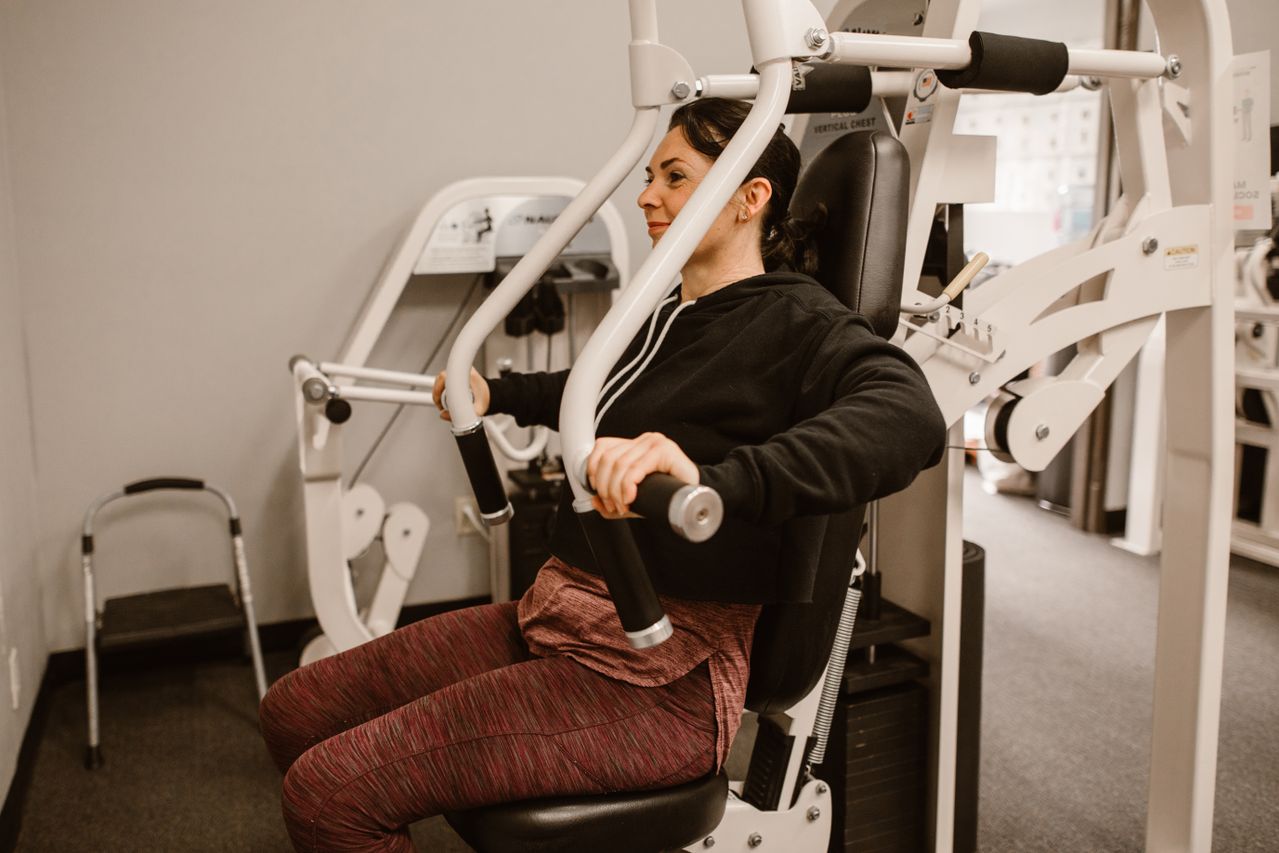
Table of contents
The strength test is part of the answer
A 2023 systematic review compared free-weight and machine training across 13 studies lasting at least six weeks. Participants were adults ages 18–60; none of the studies examined competitive athletes.
When both groups were tested with free weights, free-weight training produced a small advantage. Machine testing showed a tendency favoring machine training, but that result was not statistically significant. Some strength findings were sensitive to removing individual studies.
A fixed-path machine guides the resistance along its designed route. With a barbell, you control the bar’s path as well as the press. Both involve pushing, but the movement task is not identical.
The review also found no statistically significant difference in muscle growth. The growth evidence was limited and used different measurement methods, so it does not establish that every machine and free-weight exercise builds identical amounts of muscle.
These were varied programs, including different presses and lower-body exercises, rather than one clean experiment with the seated chest press in front of you. They also ran for weeks, so they do not measure the effect of changing one workout.
Choose an alternative around the goal
The American College of Sports Medicine’s 2026 guidance gives useful context for the everyday decision. Its evidence review found that equipment type, including machines versus free weights, did not consistently affect outcomes for the average healthy adult. Regular participation mattered more than finding a perfect program.
ACSM also emphasizes matching a program to personal goals and making it manageable enough to maintain. Someone seeking a consistent resistance-training routine has room to choose equipment they can use and enjoy. The same guidance notes that athletes and avid trainees need plans built around their particular goals.
If your target is a barbell bench-press test, that points toward keeping practice of that exercise in the program. A machine chest press can still be another training choice; its progress is a result on that machine, rather than a prediction of your next barbell maximum.
Our bench-press alternatives guide can help you consider other movements, but choose the substitute around that goal. The name “chest exercise” alone does not tell you how closely it matches the movement you want to improve.
Compare like with like afterward
Before sitting down at the machine, decide what you will compare afterward. If you are following progress on that press, use its own previous sessions as the reference. If a future barbell test is the target, judge that target with a barbell test.