
The treadmills are busy, and the battle ropes look like a quick way to finish your conditioning. Before copying a burst of waves, check what happens between bursts. Thirty seconds of work is only part of an interval session; the recovery period helps define the session you are choosing.
A small experiment held rope work steady while changing the rest between rounds. The shorter break produced a higher average physiological demand, without establishing the best interval for everyone.
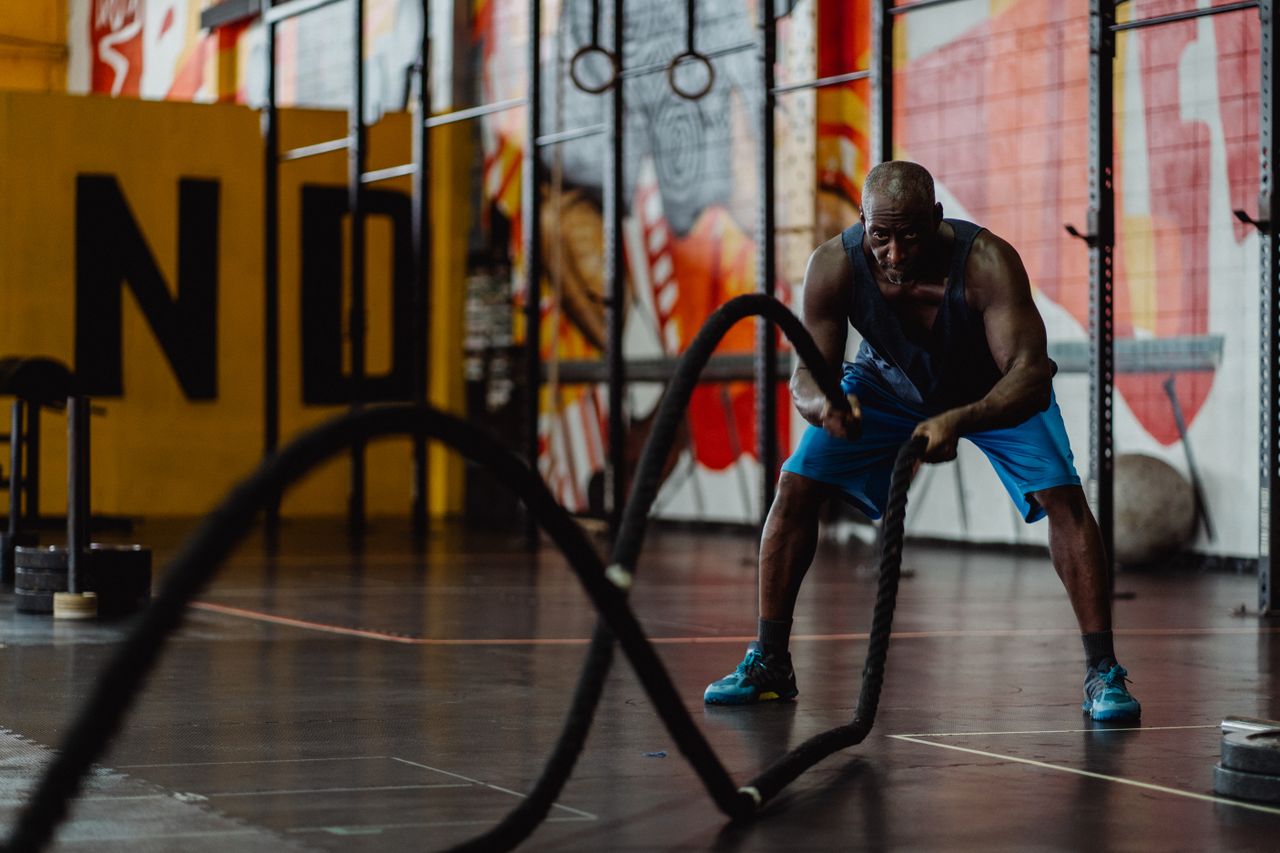
Table of contents
The rest changed the comparison
In a 2015 study of 22 active young adults, participants completed 30-second bouts combining alternating-arm waves with double-arm waves and a half squat. Researchers standardized wave frequency with a metronome and compared one-minute with two-minute rest intervals on separate, randomly ordered visits.
The one-minute-rest protocol produced higher average oxygen consumption and heart rate. Those were acute responses to the tested sessions, not evidence that rushing every recovery produces better long-term fitness.
The sessions also took different amounts of time. A higher average demand does not mean the shorter-rest version supplied more total work, or that it was a minute-for-minute replacement for running. The participants were college-age adults; the experiment did not identify an ideal recovery period for a first-time rope user.
Choose the conditioning task before chasing fatigue
Coach Nick Tumminello describes battle ropes as a conditioning option in the National Strength and Conditioning Association’s Personal Training Quarterly. His coaching instructions start with a securely anchored rope, one end in each hand, and coordinated movement through the body.
That is a different task from walking on a moving belt. Decide whether you want to try a particular rope interval workout or simply need another available conditioning station. A treadmill session does not become a matching rope session because both occupy ten minutes on your calendar.
When following a coach’s routine, get the wave pattern, work period, recovery period, and number of rounds together. Alternating waves, simultaneous waves, and slams are different instructions. Copying the timer while changing the movement leaves another part of the original routine behind.
Keep the recovery instruction when you make the swap
If a routine specifies a timed break, use a timer for that break too. Ending recovery whenever the next song starts, or whenever a friend finishes, gives you a different schedule from the one you intended to follow.
When you cannot complete the planned rounds with the requested movement, ask the coach which part to adjust. A longer rest, shorter work period, or different movement changes the session in a specific way; extra exhaustion alone does not tell you which choice serves your goal.
If the rope station is unavailable or its anchoring is uncertain, choose another station instead of improvising the setup. Our battle-rope alternatives include fan-bike and rowing options. Ask how that station’s work and recovery should be organized instead of transferring the rope timer unchanged.