
You finish your pool laps breathing hard, with tired arms and another workout completed. Swimming can be a useful way to train, especially if you enjoy it enough to keep returning. But a demanding swim does not cover every exercise need: how hard you worked and how your bones were loaded are different questions.
The Bone Health & Osteoporosis Foundation classifies swimming as non-weight-bearing exercise. Its advice is to keep other activities that work your bones in the week, too. That means considering appropriate weight-bearing movement and resistance training alongside the pool.
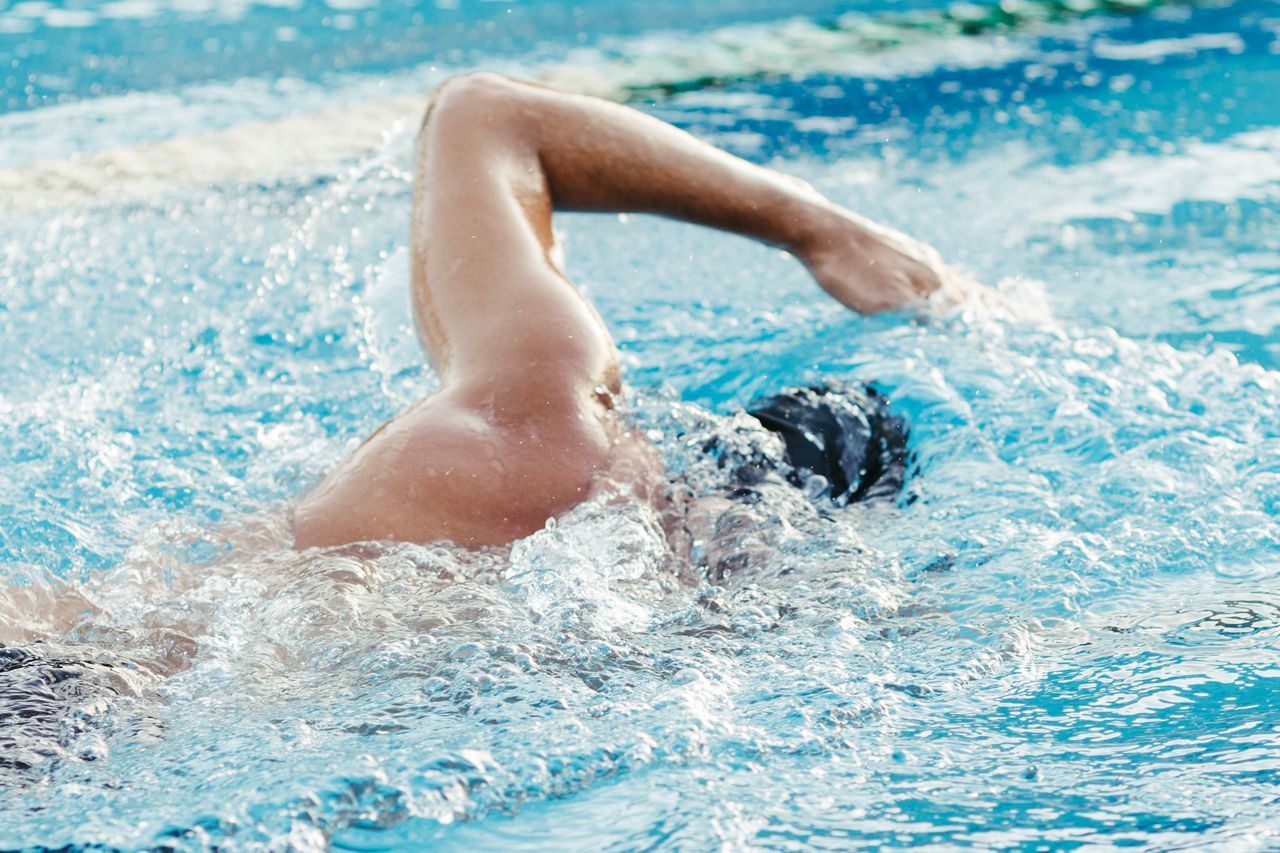
Table of contents
A hard workout is not automatically weight-bearing
The American Academy of Orthopaedic Surgeons describes weight-bearing exercise as activity on your feet, with your bones and muscles working against gravity. Walking, dancing and climbing stairs fit that description because your legs carry your body weight.
Swimming is a different setup. Moving through water can work your muscles and support heart and lung fitness, as the academy notes. It still does not involve carrying your body weight on your feet in the way those land activities do. More laps do not change that distinction.
Bone loading is also specific to the area involved. The academy explains that walking and jumping load the legs and hips differently from the wrist. Feeling thoroughly worked from one activity does not tell you that every part of your skeleton received the same stimulus.
Keep two kinds of land work in view
The National Institute of Arthritis and Musculoskeletal and Skin Diseases recommends a combination of exercise types for healthy bones. Two useful categories to check alongside a swimming routine are:
- Weight-bearing movement: options include brisk walking, dancing, climbing stairs and racket sports. Choose something that suits your current ability rather than assuming running is the required addition.
- Resistance training: muscles work against added resistance, which also puts stress on bones. Options include free weights, machines, resistance bands and bodyweight exercises such as push-ups.
The institute includes muscle strengthening at least twice a week in its adult exercise guidance. If equipment is the obstacle, our guide explains how resistance bands can provide the strength workout, rather than only the warm-up.
Fill the gap without abandoning the pool
In its bone-health exercise handout, the foundation tells people who swim or cycle to include other activities that work their bones. Its examples include both higher-impact choices and lower-impact alternatives, such as brisk walking and elliptical exercise. Higher impact is not a requirement for everyone.
Look at the routine you already have before adding more sessions. You might swim on some days, take a brisk walk on others, and keep separate strength work. If walking and resistance training are already established, the missing piece may already be covered; swimming does not create a problem just by being part of the week.
These categories are a planning check, not an osteoporosis treatment plan or a guarantee against fractures. If you have low bone density, osteoporosis or physical limitations, get help choosing suitable activities before adding impact or changing your loading.
Keep the pool sessions you enjoy. Check what happens after you leave the water, too.