
The resistance bands are already in your drawer, but you are browsing dumbbells before starting a strength routine. Bands can feel like the equipment you use to warm up before the real workout begins. For a healthy adult getting started, that distinction can become an unnecessary delay: the bands themselves can supply the resistance for useful strength training.
The American College of Sports Medicine’s 2026 guidance explicitly includes elastic bands among effective training options. The equipment can be simple. The work still needs to challenge your muscles.
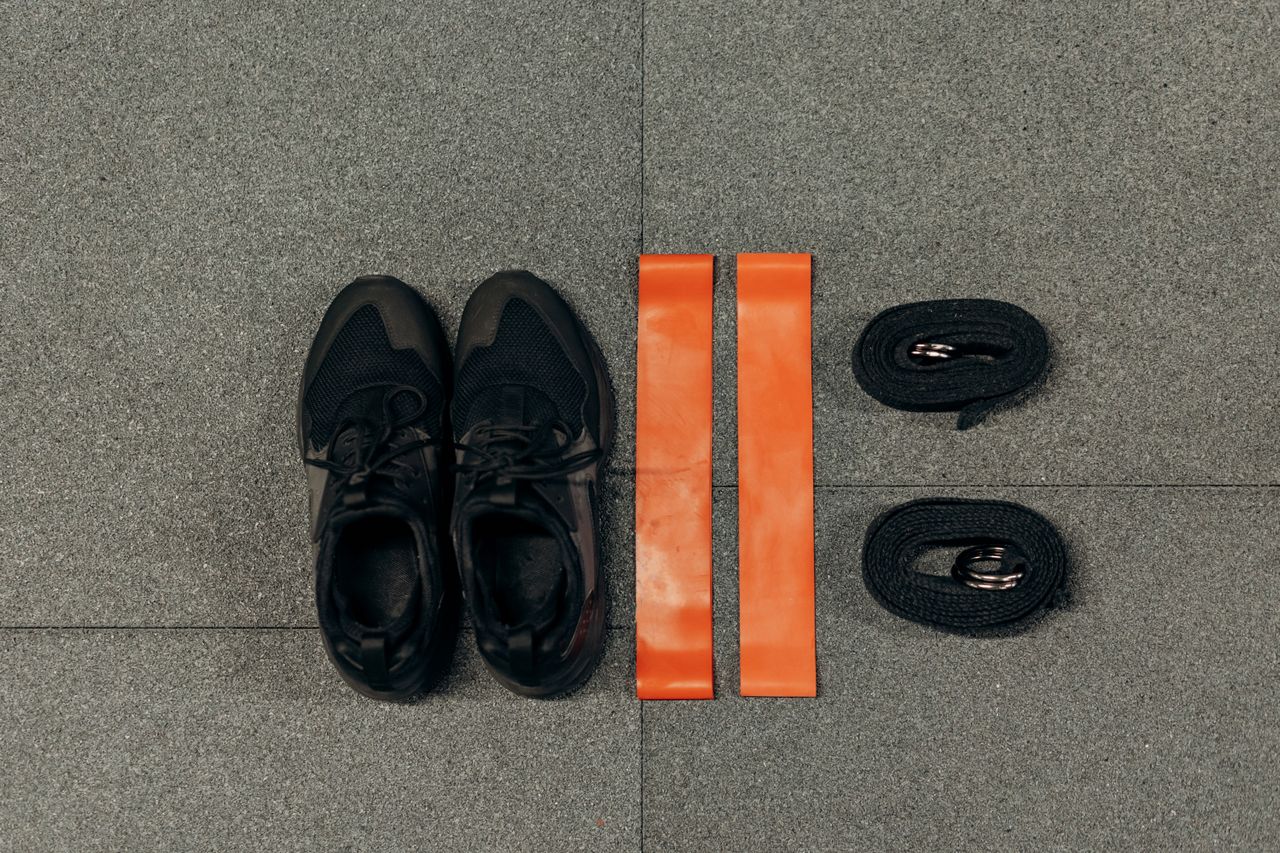
Table of contents
A band session can count
ACSM’s updated Position Stand synthesized 137 systematic reviews involving more than 30,000 participants. It found that band training can improve strength compared with no exercise. The evidence concerns programs carried out over weeks, not an immediate benefit from one casual session.
There is also direct comparison research. A 2019 review of eight studies did not find a clear strength advantage for elastic devices or conventional resistance equipment. The studies involved different populations and training protocols, and the authors identified problems with standardizing band loads.
That supports treating bands as a real option. It does not establish that any band routine will match any gym program, or that a light loop will meet every future lifting goal.
Judge the effort, not the equipment’s size
The CDC lists resistance bands as muscle-strengthening activity. Its practical standard is working to the point where another repetition would be difficult without help. It recommends at least two days a week, working the legs, hips, back, chest, abdomen, shoulders, and arms.
For a beginner, that makes two questions more useful than whether a band looks substantial: which muscles does the exercise work, and how challenging are the final controlled repetitions?
A few easy arm movements would leave much of that muscle-group list untouched. At the other extreme, choosing the stiffest band you own does not help if it prevents you from completing the movement properly. The resistance should suit the exercise and your current ability.
Follow the instructions supplied with the band for setup, anchoring, and its stretch limit. Check for nicks, tears, and a secure anchor before using it. A familiar exercise performed with an insecure anchor is a setup problem, not a useful way to increase the challenge.
Leave room for the resistance to change
The drawer does not have to contain every piece of equipment you will ever need. It only needs to contain something appropriate for the training you can do now.
ACSM distinguishes making useful progress from optimizing a specific outcome. Its strength recommendations favor heavier loads when maximizing strength is the goal. Starting with bands and later adding weights are compatible decisions.
For example, if a band row becomes easy, you can reassess the resistance and setup instead of endlessly repeating an unchallenging version. Change one element at a time so you can tell whether the movement remains controlled. Keep every adjustment within the manufacturer’s instructions.
Bands can also sit alongside the bodyweight and basic-equipment options in our guide to building muscle at home. You can combine those options without committing to one type of equipment.
Pick a suitable resistance, cover the muscles you intend to train, and make the repetitions count. Buying dumbbells can wait until there is a specific reason your current setup needs them.