
You’re halfway through a set of barbell rows when your torso starts rising with the bar. You can still pull, but you can no longer stay bent over at the same angle. If holding that hip hinge is what cuts the set short, a chest-supported row gives you another way to work on the pull.
Try the switch with a lighter pair of dumbbells. Let the bench support your chest, then compare where your elbows travel relative to your ribs. That gives you a better reference than how high the weights move off the floor.
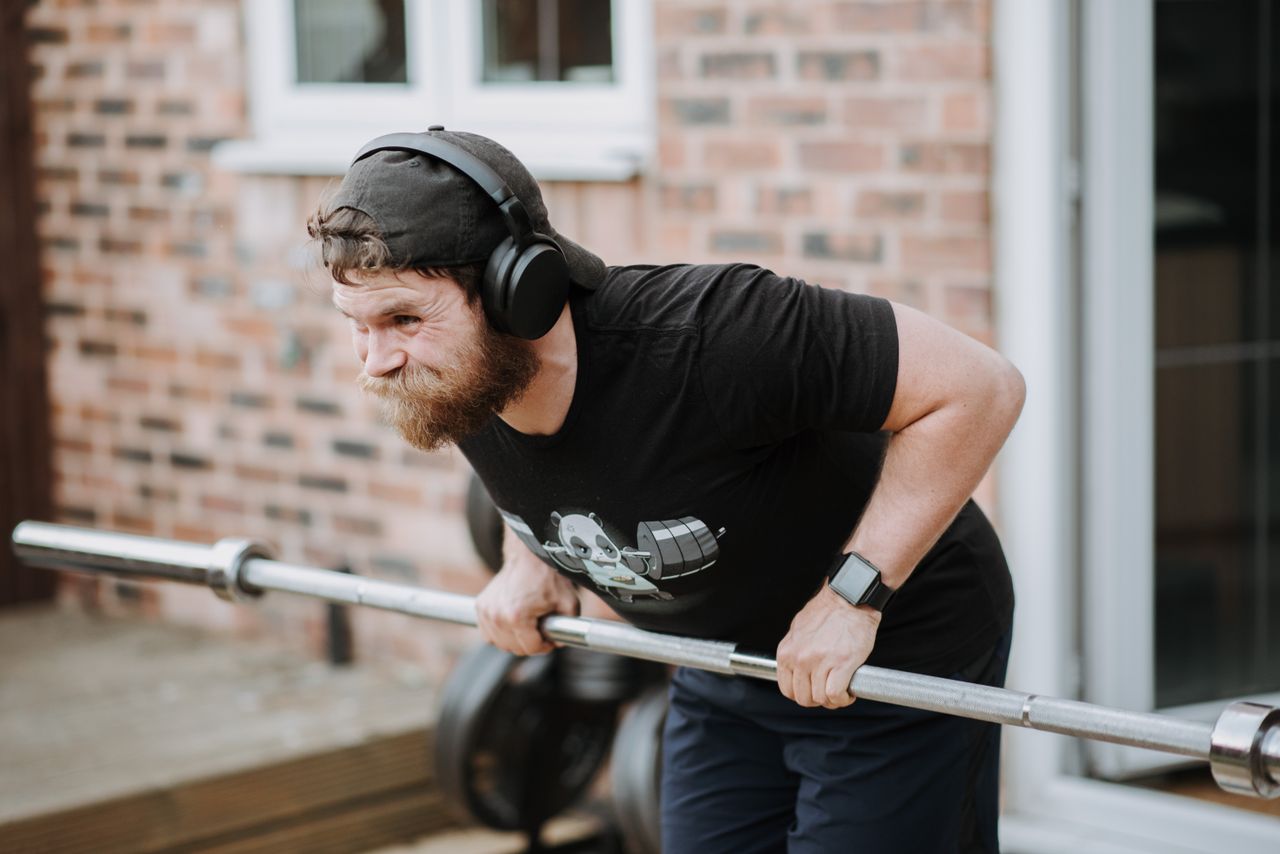
Table of contents
Decide which part of the row you want to keep
In a bent-over barbell row, you hold your torso forward at the hips while your arms pull the bar toward you. The chest-supported version keeps the pulling motion and gives your torso a surface to rest against. In a National Strength and Conditioning Association teaching guide, physical therapist Merrick Lincoln and his colleagues use the prone bench pull to teach horizontal pulling with less demand on the lifter to hold their body in position.
That distinction helps you decide when to swap. If you want to practice pulling while holding the hinge, the bent-over row still trains that combination. A lighter barbell is one way to keep practicing both. If you want a set of rows and the hinge keeps ending it early, give your chest the support and judge how steadily you can pull.
Match the elbow path before you match the weight
Set an adjustable bench to a modest incline and lie face down with your feet planted. Start with a dumbbell hanging in each hand, one on either side of the bench. Sweat’s exercise guide demonstrates a close-elbow version with palms facing each other. Pull the dumbbells toward the sides of your lower ribs and lower them under control, keeping your chest on the pad.
Think about a clean rep from your usual barbell row. If your elbows travel close to your sides, start there on the bench. If your upper arms usually sit a little farther out, see whether the dumbbells can follow a similar path without touching the bench. Compare the angle of your upper arms to your torso. The incline puts your ribs at a different height, so comparing the distance from either weight to the floor tells you little.
If the weights clip the bench on the way up or hit the floor at the bottom, adjust your position or bench angle before you load up. The aim is room to move your arms while your chest stays supported. If you have only a flat bench, the hand-and-knee-supported one-arm row is another setup to consider. Its support comes from your limbs, and you still need to control how much your torso turns.
Choose the load for this setup
A 2023 study of 28 resistance-trained adults tested the bent-over barbell row and a prone bench row separately, alongside a Smith machine row. The bench version used a barbell and a fixed torso on the pad. The researchers tested strength and bar speed in those versions. Their protocol didn’t establish a conversion to a pair of dumbbells.
Use the first supported set to choose your starting load. Watch whether the elbows keep following the same path and the chest stays on the pad through the last rep. If you have to lift off the bench to finish the pull, put the dumbbells down and try a lighter pair.