
You hang from the pull-up bar, bring your knees up, and lower them for another rep. A few reps later, your fingers start to open while you still feel able to lift your knees. If you want to keep working on that knee lift, step over to a low cable and put the resistance around one ankle.
A standing cable knee drive keeps one foot on the floor while the other knee comes forward against the cable. That takes the hanging grip out of the set and gives your trunk a different job.
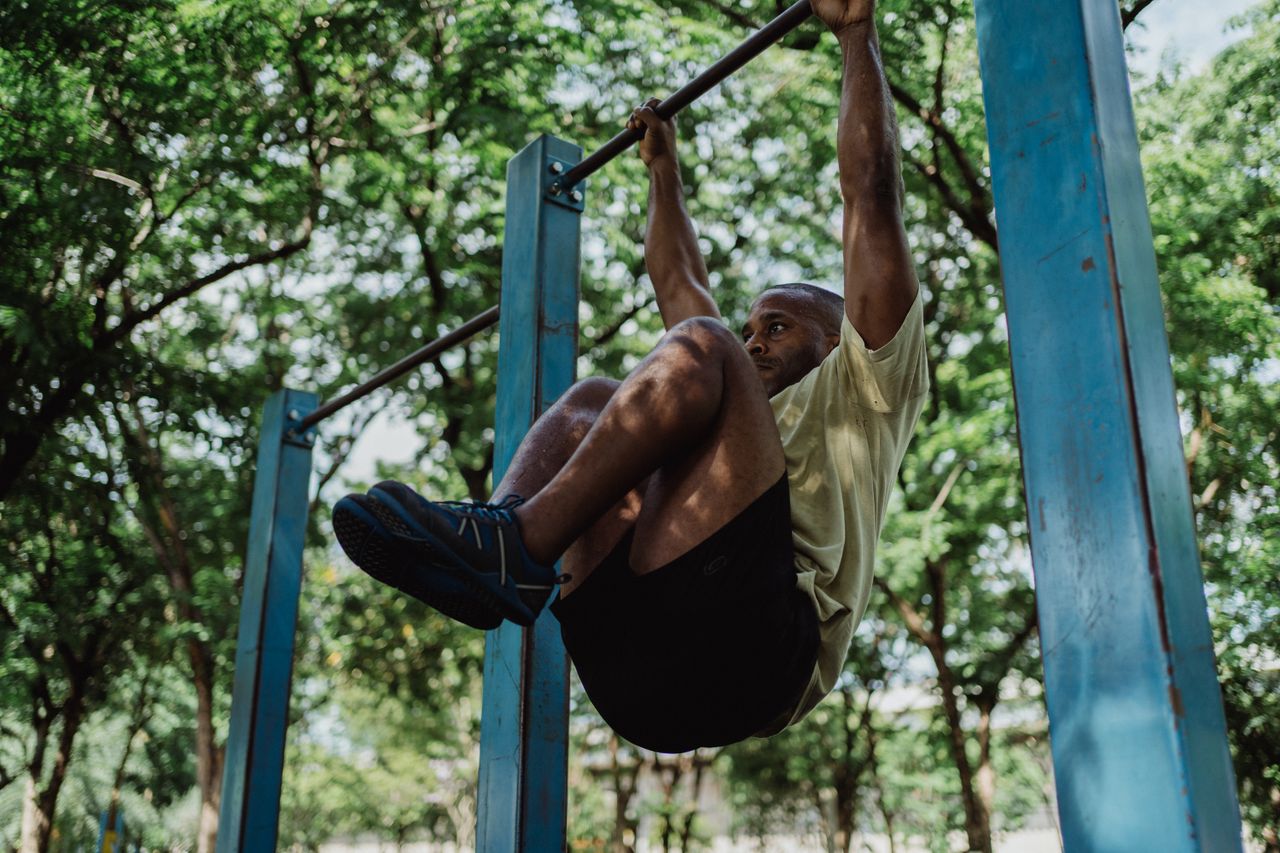
Table of contents
What changes when your feet come down
In a hanging raise, your hands support your body while you lift both legs. The bent-knee version shown here still needs that grip. In its hanging knee raise guidance, the National Academy of Sports Medicine describes using the abdominal muscles to help tuck the pelvis and controlling the torso so the legs don’t swing.
On the cable, your standing leg supports you while the pulley resists the other leg. The hip flexors bring that thigh forward. Your trunk helps keep you upright while the cable pulls from behind, and you can use a hand lightly for balance without asking it to hold your body off the floor.
If your goal is to practice the pelvic tuck of a hanging raise, that difference matters. A cable knee drive keeps the torso and pelvis relatively still as one thigh moves. To practice lifting both legs without hanging, our guide shows forearm-supported raises and reverse crunches. The forearm pads support your weight in the first. The floor supports your back at the start of the second.
Clip the cuff low and start with a light load
The exercise instructions published with the PROHIP trial protocol show the setup. Clip an ankle cuff to a low pulley and face away from the stack. Start with the cuffed foot slightly behind the other one. Put one hand on a fixed support if you need it, and choose a light weight you can control without having to pull yourself into position. Step forward just enough to take the slack out of the cable before the first rep.
Bring the knee forward and up as it bends. Pause briefly, then lower the foot slowly. Hawkes Physiotherapy’s standing hip flexion instructions also show the resistance attached behind the ankle and cue a slow return. As you lower, keep control so the cable doesn’t jerk the leg back.
Let your balance set the first few reps
Check whether your hips keep facing forward and your chest stays upright. If you lean back, hike one hip, or pull hard with the hand on the support to lift the knee farther, shorten the lift. If that still happens, use less weight. Switch legs and see whether you can reach the same position before changing the pin.
Try a few reps with a pause at the top. If you can stop the knee and then lower it smoothly, you have a range you can repeat. Finish the set there, even if it means the knee stays below hip height.