
Your workout calls for jump lunges, and someone’s working in the room below you. You can still work your legs in a split stance without leaving the ground. Set one foot in front of the other, put a hand on a sturdy support, and hold a shallow split squat.
The hold works at one depth and takes the landing out of the exercise. If your plan calls for jumping power or landing practice, save that part for a space where you can jump.
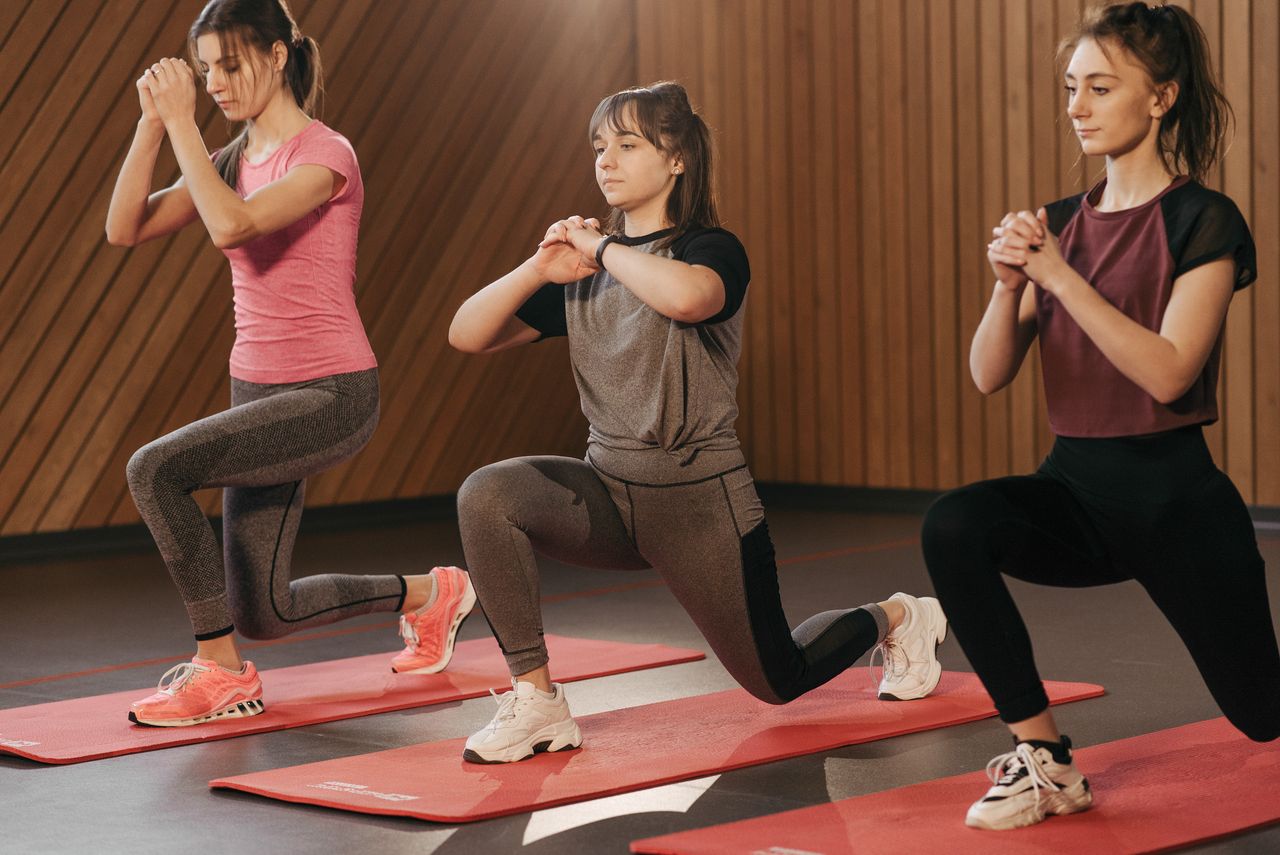
Table of contents
Set up where you can reach a solid support
Use a fixed rail or countertop that you can reach without twisting. The OPAL team’s split squat instructions show how a work surface can help with balance as both knees bend. Set your stance beside the support, within comfortable reach. Give your feet a little space from side to side so that they aren’t lined up heel to toe.
Keep the front foot flat and the ball of the rear foot on the floor, with the rear heel free to lift. The Royal National Orthopaedic Hospital’s static lunge setup uses this foot position. Start with a small bend in both knees. Check that your front heel stays down and that you can stop the descent without leaning heavily on the support.
Hold at a depth you can control
Once you’ve found that depth, stay there briefly and keep breathing. That still portion is an isometric hold. UC Davis exercise physiologist Keith Baar gives a held lunge as an example of the same kind of exercise. Here, your hand gives you a steady point of contact so you can pay attention to the leg position.
If you start sinking lower, rocking onto the front toes, or pulling on the rail to stay in place, stand up and reset. Bend a little less on the next hold. Try the other side after you’re upright, with the same stance width and a depth you can control. A few steady seconds are enough to see how the position feels. You can give the hold more time once you can repeat it without drifting.
Keep track of which foot was forward and roughly how deep you went. When you try it again, change either the depth or the time so you can tell what made it harder.
Match the exercise to the session
The American Council on Exercise lists split squat jumps among lower-body plyometric drills. Those reps involve leaving the floor and landing. A split squat hold keeps the feet down and asks you to sustain one position. Treat it as a leg exercise for the space you have that day, with separate time for jumps if you’re training them on purpose.
If you want to keep the feet in place and still move through repetitions, use a split squat with a controlled descent and rise. For the hold, count time on each side. When a workout calls for ten jumps, you can use the hold as a separate exercise and choose a duration you can finish at the same depth and foot position.