
You take a kettlebell off the rack for squats. You can hold it in both hands at your chest or bring it up in front of one shoulder. If you have a matching bell, you can hold one on each side. Where the weight sits changes what you have to keep steady.
Choose the hold for the set you want to do. The goblet keeps one bell centered, a single front rack puts it off-center, and a double front rack splits the load across two hands.
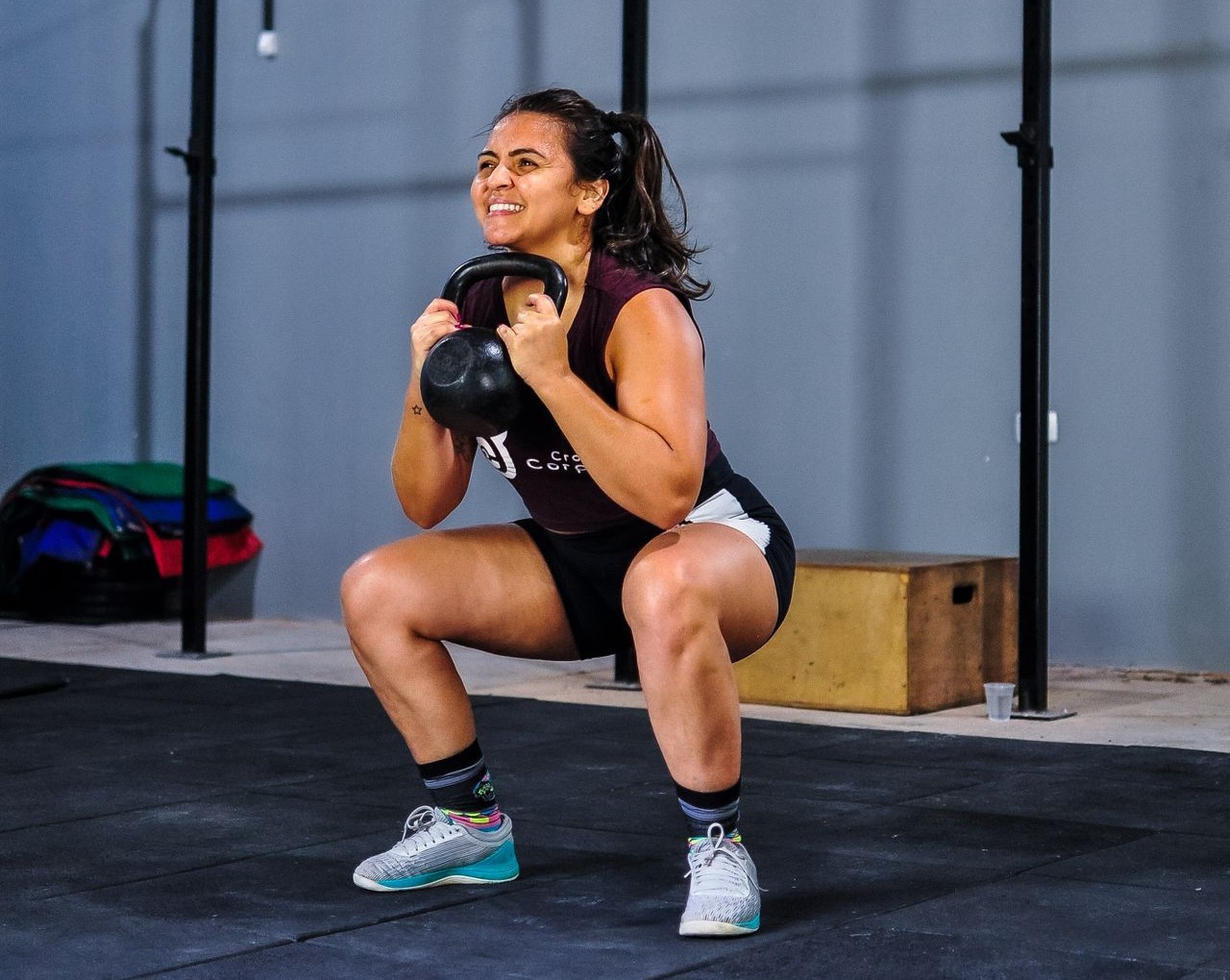
Table of contents
1. Goblet hold for one centered bell
Hold one kettlebell close to the middle of your chest with both hands. Take a secure grip on the sides of the handle, or cup the round body if the shape gives you a better grip. StrongFirst master instructor Pavel Macek describes several two-handed goblet grips, including cupping the bell. Choose one you can keep from the first rep to the last.
Set both feet firmly on the floor, bend your hips and knees, and lower as far as you can control. Stand with the bell still close to your chest. This is the straightforward choice if you have one bell and want the weight centered. If your hands start to slip or the bell drifts away from your chest, end the set and try a lighter bell.
2. Single front rack to manage an offset load
Bring one light kettlebell to the front of one shoulder. Let the bell rest against the outside of your forearm, keep your wrist in line with your forearm, and bring your elbow in close. Tom Corrigan’s CrossFit seminar notes describe squatting from that one-bell rack with the elbow tucked so it clears the thigh.
Keep both feet planted and let both legs do the squat. The bell sits closer to one side, so watch whether your torso tips or turns as you lower. If it does, try a lighter bell and keep the shoulders facing forward. Start on either side, then set the bell down, switch hands, and match the reps at the same weight. In a StrongFirst workout using one bell, coach Tony Gracia likewise matches the work on both sides.
3. Double front rack to share the load between two bells
When you can get two bells into position under control, start with a light matching pair. Hold one in front of each shoulder with your elbows close to your body. Pause at the top to settle both bells. Squat with the pair held close, then stand without letting one bell slide out in front of the other.
A pair lets you split a total across both hands. Two 20-pound bells, for example, give you 40 pounds in all. In Sean Shearon’s StrongFirst front squat program, the coach illustrates how single bells and pairs can give different weight steps. Log the pair as “2 × 20 lb” so you can repeat that setup. If the next pair is too much to get into the rack or hold there, keep the current load and build more controlled reps before making a big weight jump.