
You clean a kettlebell to shoulder height and hear it thump against your forearm. By the time the bell hits, the part worth changing may already be over. As the bell starts to rise, guide your hand farther through the handle so the bell can come around the outside of your hand.
In the single-arm clean that kettlebell coach Lori Crock teaches, the hand starts turning near waist height. That gives the bell room to roll into the rack while it’s still rising.
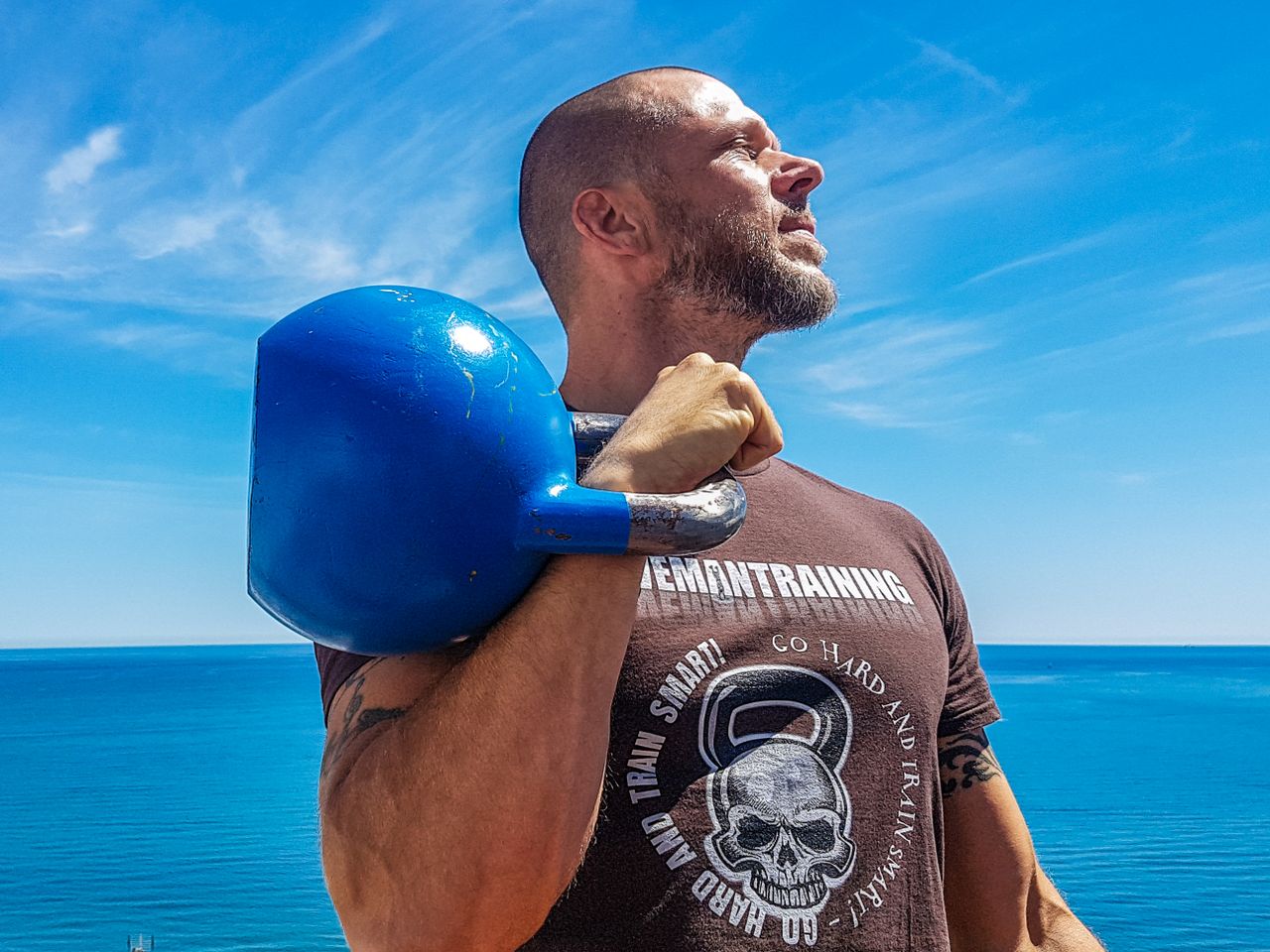
Table of contents
Start the hand movement on the way up
Begin with a light bell you can guide easily. Hinge at the hips, hike the bell back between your legs, then stand up sharply to send it upward. The hip drive is familiar if you’ve practiced letting the hips power a kettlebell swing. In the clean, bend your elbow and bring it close to your side so the bell has a shorter path into the rack.
In Crock’s single-kettlebell clean lesson, the hand begins shifting around the handle as it comes out of the backswing, near the hip or waist. Let the handle move across your palm while your fingers keep contact. Guide your hand deeper into the opening as the bell rises. If you wait until it’s already up by your shoulder, it may have begun flipping over your knuckles.
Look for the bell to settle beside your forearm
The bell will touch your arm in the rack. Watch how it arrives. In Jeff Martone’s CrossFit Journal lesson, it rolls around the hand before resting against the arm. Keep the wrist in line with the forearm and the elbow near the ribs. At the top, your hand and the bell should feel settled enough that you can stand there without having to catch the weight a second time.
If the bell still lands hard, look at its path before changing your grip again. A bell that swings far out in front has farther to come back toward you. On the next light rep, let the hips start the lift, keep the elbow closer, and watch whether the bell stays nearer your torso as your hand turns. If you film a rep from the side, frame the path from the backswing all the way to the rack.
Practice one clean at a time
Martone teaches the path in reverse as a drill. With a light bell, use both hands to set it in the rack. Guide it down from there, letting it roll off your forearm as you hinge and bring it between your legs. Park the bell before using both hands to reset. The return lets you feel the handle move in your hand without having to time the catch.
Then try a single clean and pause in the rack. Check where the bell landed and whether the wrist stayed straight. Set it down and repeat at the same weight. If the catch gets quieter while you can still guide the bell both ways, you’ve found a version worth repeating before you go heavier.