
A calf settles onto a foam roller, a tender spot appears, and the next move can feel like a test of how much pressure you can tolerate. Before pressing harder, consider another adjustment: change where you support your weight. Your hands and free leg are part of that setup.
In his American Council on Exercise guidance, exercise scientist Cedric Bryant recommends supporting more body weight with your arms or opposite leg when you find a tender area, while applying pressure gently.
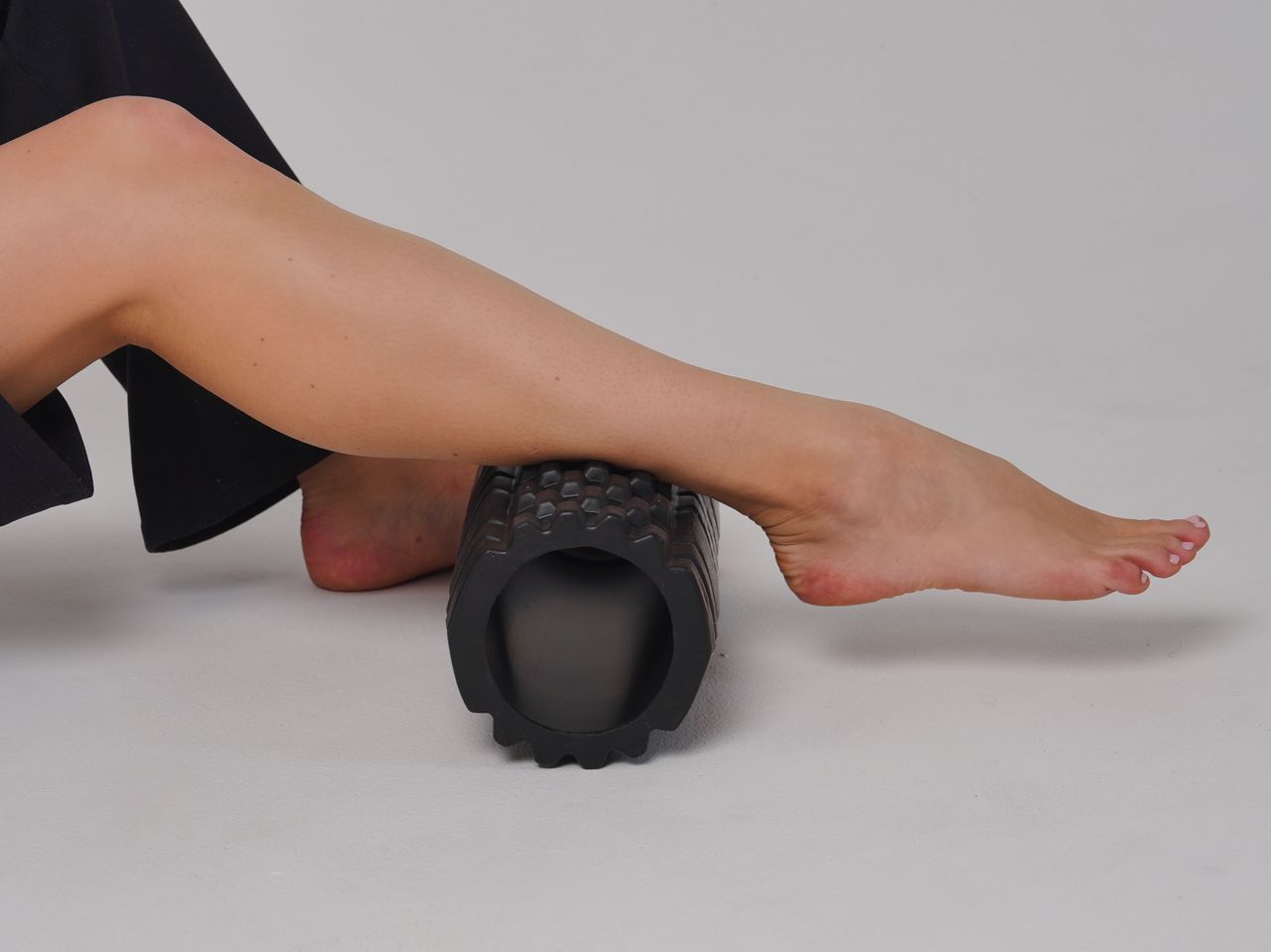
Table of contents
The support points matter
Your hands and free leg can carry some of the load that would otherwise press the calf into the cylinder. Their support helps determine how intense the contact feels.
Bryant advises slow movement over small areas, keeping the roller on soft tissue rather than joints, and avoiding sharp or unbearable pain.
See the adjustment in a calf setup
Hospital for Special Surgery’s calf example, featuring exercise physiologist Kate Baird, starts seated on the floor. Extend one leg in front of you, bend the other knee and place that foot flat on the floor. Put the roller under the extended leg’s calf and place your hands behind you for support.
From there, lift your hips so the calf rests on the roller and move slowly along the muscle. The opposite foot stays available as a support point. Apply Bryant’s pressure cue within that arrangement: let your hands and planted foot take more weight when the contact feels too intense.
HSS also describes turning the foot slightly left and right to reach different parts of the calf. That is a positional adjustment, separate from adding more body weight. You are changing which part of the muscle contacts the roller.
Rolling the calf is self-massage, separate from the active repetitions in a standing calf raise.
Use a clear reason to stop
Some tenderness is different from forcing yourself through pain. In an original Harvard Health interview, Carina O’Neill, DO, medical director of Spaulding Outpatient Center–Braintree, advises stopping if the pain makes you clench or grimace. Rolling too vigorously or for too long can cause tissue damage, she explains.
For someone getting accustomed to rolling, O’Neill suggests starting with five to 10 seconds, with longer bouts of 15 to 30 seconds as familiarity develops. Those are starting suggestions from her guidance, rather than a minimum you must complete despite pain. Stop earlier if the contact provokes the response she describes.
Harvard also presents foam rolling as an optional tool, rather than a mandatory part of every workout. You can assess whether it feels useful without assigning yourself an increasingly painful challenge. Persistent pain deserves medical advice instead of repeated attempts to press it away.
Before changing legs, lower your hips and reset the position. Put the roller beneath the other calf, arrange your hands and opposite foot again, and begin gently. Each side gets its own setup; it does not have to inherit the pressure you tolerated on the first.