
A dark slice and a package covered in grain names can make the bread aisle seem straightforward: the browner loaf looks like the whole-grain choice. But appearance leaves out a useful detail. Before choosing by shade, turn the package around and check which grain ingredients actually went into the dough.
Mayo Clinic notes that bread can look brown because of molasses or other ingredients. Color alone cannot establish whole-grain content, and familiar terms such as multigrain do not settle the question either.
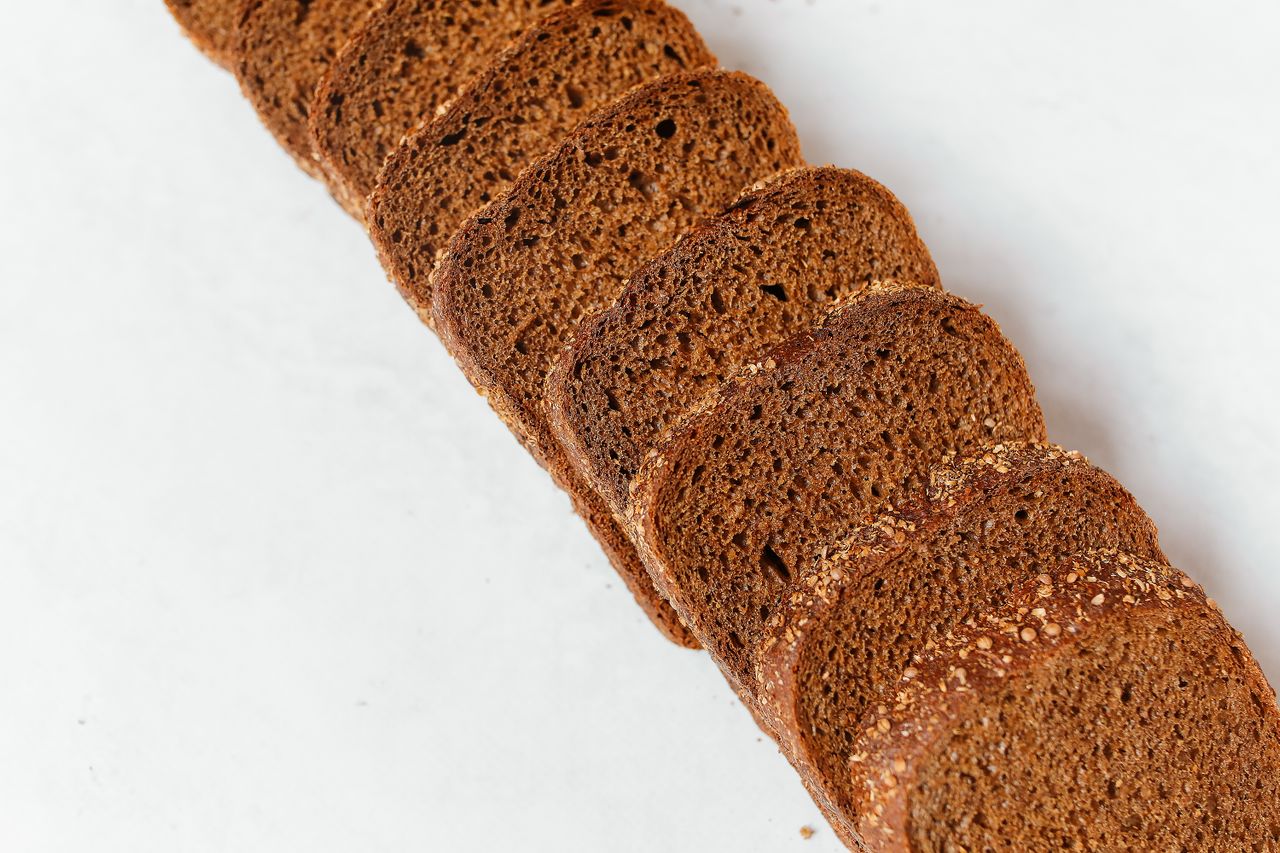
Table of contents
Whole grain describes the kernel
The Academy of Nutrition and Dietetics explains that a whole grain retains the bran, germ and endosperm. Its guidance warns that terms including multigrain, stone-ground, seven-grain and 100% wheat do not necessarily identify a whole-grain food. Look for the actual whole-grain ingredient wording.
The color clue also works imperfectly in the other direction. Mayo’s whole-grain guide describes whole-grain white bread made from wheat with lighter-colored bran. A pale crumb therefore does not automatically tell you that the grain has been refined.
Find the first grain ingredient
The FDA’s ingredient guidance explains that ingredients appear in descending order by weight: larger amounts come before smaller ones. Read the grain ingredients near the beginning, rather than looking only at the first word overall. Water, for example, may appear before a flour.
Consider two hypothetical label openings: “water, whole-wheat flour…” and “water, enriched wheat flour…”. Both begin with water, but the grain description changes. The word whole identifies a different grain ingredient; the order supplies information about relative amounts.
Mayo distinguishes enriched grains from whole grains: some nutrients removed during refining can be added back, but fiber usually is not replaced. Enrichment does not mean the original kernel parts remain intact.
A whole-grain ingredient near the top is a useful clue, but it does not reveal an exact whole-grain percentage. Continue through the list to see whether other grain ingredients are present. One prominent ingredient is only part of the formulation.
Read the nutrient information separately
Whole-grain identification does not supply the finished loaf’s exact fiber or sugar content. The Academy recommends looking for dietary fiber and keeping added sugars low when choosing whole-grain products. Check the actual product information rather than assigning nutrient amounts from the color or grain name.
For the nutrient comparison, check the serving size, too. The FDA explains that the label gives a household measure, such as a slice, followed by grams. Nutrition amounts are usually based on one serving, so compare the portions behind the numbers.
If you also compare sugar, our guide to the two sugar lines on a Nutrition Facts label explains why total sugars and added sugars answer different questions.
For an unpackaged bakery loaf, ask which flours were used instead of trying to read the answer from its crust. For a packaged sandwich bread, check the grain wording before comparing the other details that matter to you. That gives you a specific question to answer at the shelf.