
You pick up orange juice, notice that it has no added sugar, and pour a glass with breakfast. The zero on the Nutrition Facts panel can look like the whole story. But that number answers a narrower question than how much sugar is in the drink, and the line just above it supplies the missing information.
Total Sugars includes the sugars naturally present in the juice. Added Sugars describes the added portion of that total. A juice can therefore list zero added sugars while still containing sugar from its oranges.
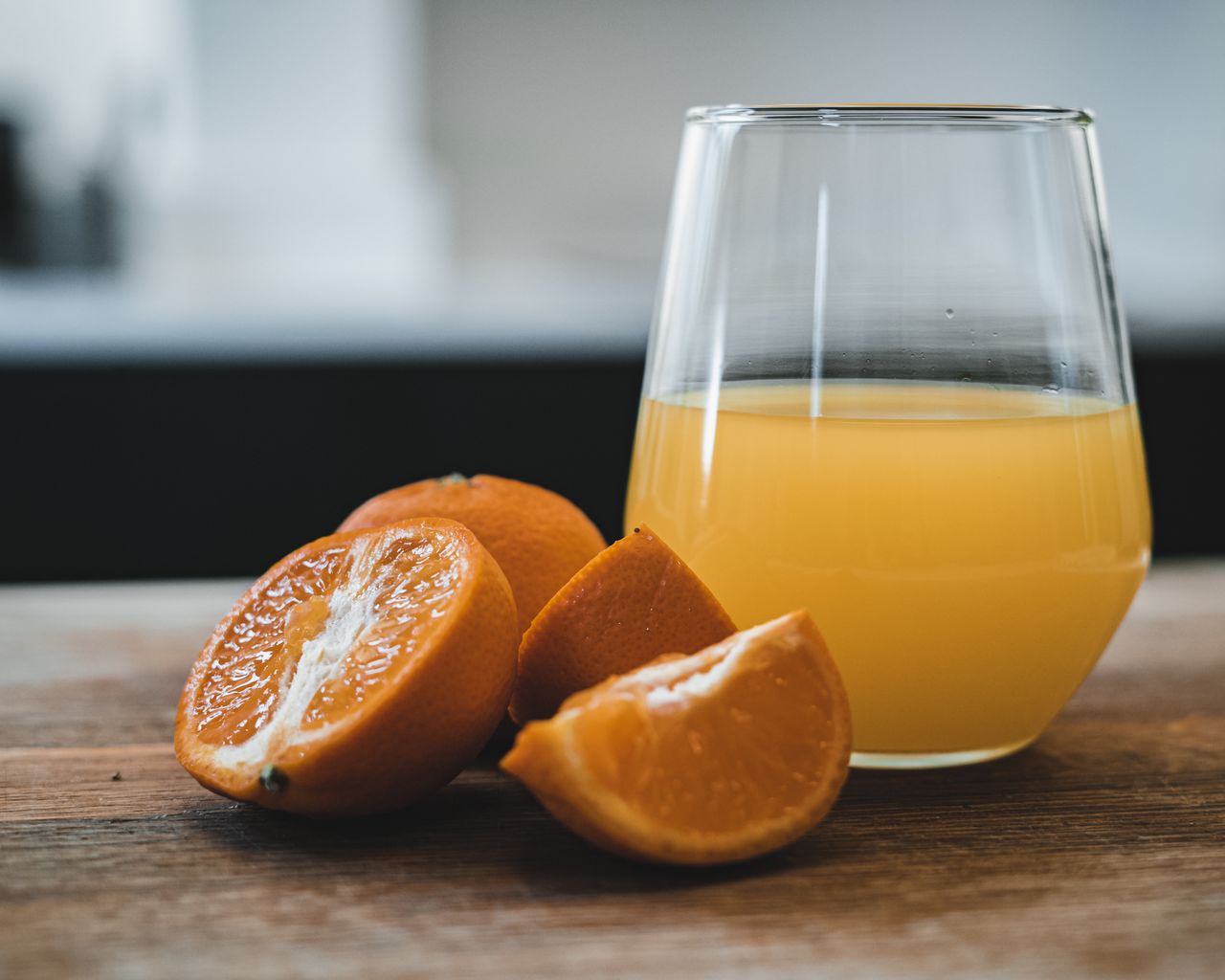
Table of contents
Read the two lines together
The FDA’s label explanation makes the distinction clear: Total Sugars includes naturally occurring sugars plus any added sugars. Added Sugars is a component of the total, not a second amount to add on top.
That is why the word “includes” matters. If a label says 20 grams of total sugars and includes zero grams of added sugars, the total remains 20 grams. The zero does not subtract the naturally present sugars from the drink.
The same reading rule works when added sugars are present. A hypothetical label with 20 grams total and 5 grams added still contains 20 grams of sugar per listed serving, not 25. The smaller figure describes part of the larger one.
Checking ingredients answers another useful question: what went into the product. The Nutrition Facts panel then tells you the labeled amounts per serving. Read both rather than asking a front-of-package phrase to explain every part of the drink.
The glass has to match the serving
Before comparing two juices, check the serving sizes. The FDA’s serving-size guidance says the nutrient figures refer to the amount listed on the panel. That amount reflects what people typically consume; it is not a recommendation for how much you should drink.
For a simple example, imagine a label listing 20 grams of total sugars per 8 fluid ounces. Pouring 12 fluid ounces would give one and a half labeled servings, or 30 grams using those figures. These are illustrative numbers, not a universal composition for orange juice.
A refill counts toward the amount you drink, too. If the glass holds more than the label’s serving, use that larger amount when comparing sugar and calories. Measuring a familiar glass once can make that comparison easier than guessing from its height.
Whole fruit brings a different consideration
Reading the sugar lines still leaves a separate food choice: juice or whole fruit. Mayo Clinic’s juicing guidance explains that most juicing removes fiber that whole fruits retain. Juice can supply vitamins and minerals, but its no-added-sugar status does not tell you how much fiber remains.
If you want whole-fruit options alongside breakfast, our guide to fruit choices offers ingredients to consider. Use fruit for the nutrients it contributes rather than assuming a juice and its original fruit are interchangeable in every respect.
Mayo Clinic also notes that juice can have a place in a balanced diet. The useful decision comes from the complete picture: the amount poured, total sugars, added sugars and fiber. Start with the serving size, then move up from the zero to the Total Sugars line.