
You tip a can of chicken noodle soup into a bowl for lunch. The label says 790 milligrams of sodium, which looks like the number for the meal you just heated. Look across the same line and you’ll see 1,690 milligrams. That second number covers the whole can you poured.
The same label also says “about 2 servings.” That little word explains why doubling the one-cup number can still miss what’s in the bowl.
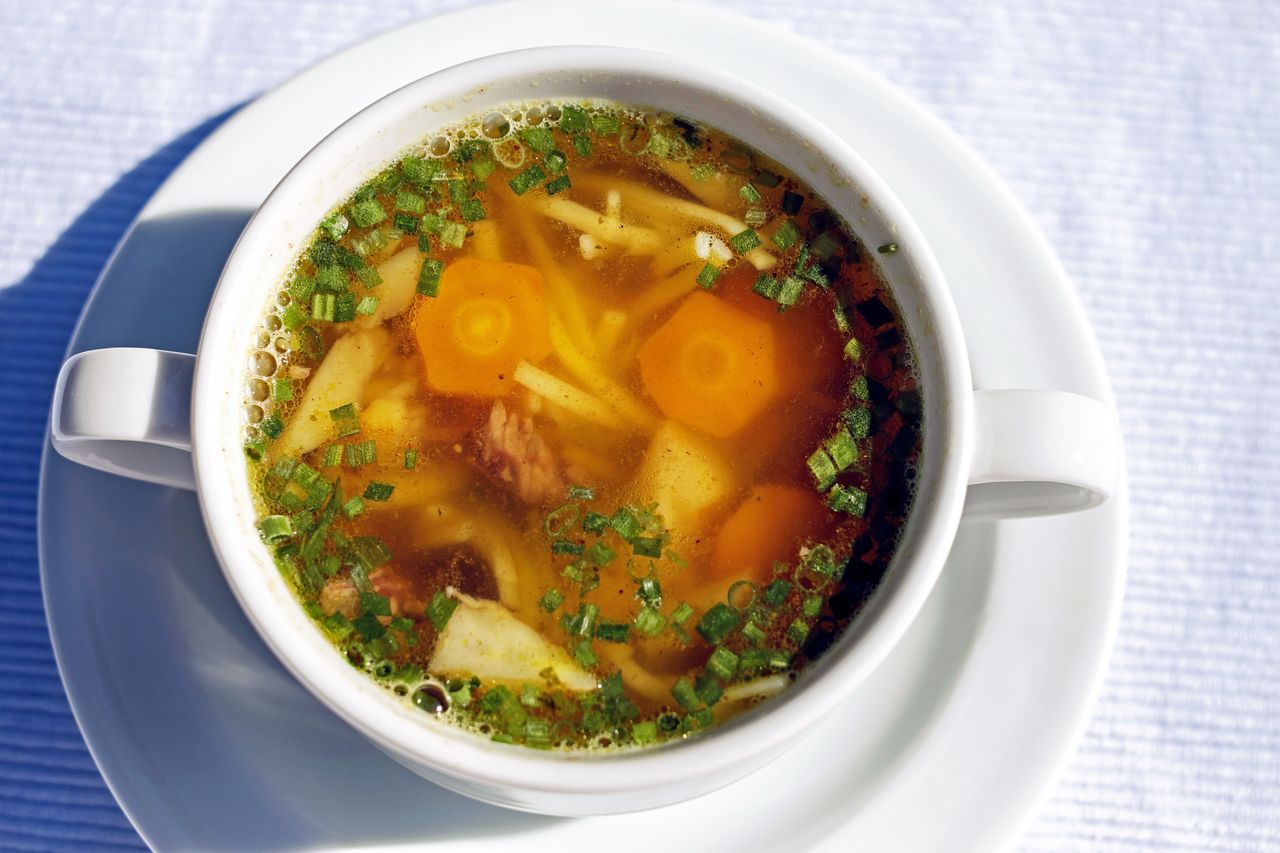
Table of contents
Read across the sodium line
On the label for Campbell’s Chunky Classic Chicken Noodle Soup, one cup contains 790 milligrams of sodium, or 34% of the Daily Value. The full container lists 1,690 milligrams, or 73%. The Chunky Healthy Request Chicken Noodle Soup also shows both numbers, with 410 milligrams per cup and 880 milligrams per container.
Both labels say “about 2 servings per container.” The word about matters. The FDA’s guidance on serving counts explains that manufacturers use it when they’ve rounded the number of servings. Doubling 790 gives you 1,580 milligrams, 110 less than the amount printed for the full Classic can. When the label gives you the container total, use it.
If a label has only one column, start with the serving size at the top of the panel. Then work from the amount you actually ladle out. A cup and a half is one and a half servings if the label uses one cup. Multiply the listed sodium by 1.5 for an estimate. If the whole can is lunch and the serving count says “about,” you can measure the contents to get a closer estimate.
Compare the lunch you’re going to eat
If you usually have soup alongside a sandwich, one cup may be the amount you want to compare. These two chicken noodle labels already use the same cup measure, so you can read their per-serving numbers side by side. If you normally finish the can, compare the per-container numbers. That also accounts for how much soup is in each package.
The FDA uses 2,300 milligrams as the sodium Daily Value on the label. The 73% on the Classic can’s whole-container line describes its share of that daily reference. If you serve it with crackers, cheese, or a sandwich, any sodium in those foods is additional.
Check how the soup is prepared
Ready-to-serve soup and condensed soup can use different measures on their labels. With condensed soup, see whether the numbers refer to the concentrate or to the soup as prepared. Adding plain water makes a larger batch, and the sodium from the can is still in that batch. If you eat only part of it, count the share you served.
If you want a fuller bowl without using the entire can, you can heat a portion with unsalted vegetables or beans. Our guide to draining and rinsing canned beans explains how much sodium can leave with the packing liquid. Check the label on any add-ins separately so you can account for what they bring to the bowl.