
You pick up a plant-milk carton for breakfast, notice the calcium claim and pour it into your smoothie. It looks like an easy nutritional swap. But adding calcium to a beverage doesn’t tell you how much protein came with it, even when both numbers appear on the same label.
Read the protein grams separately. The FDA advises comparing plant-based alternatives on several nutrients, including protein, calcium and vitamin D, because products can differ substantially.
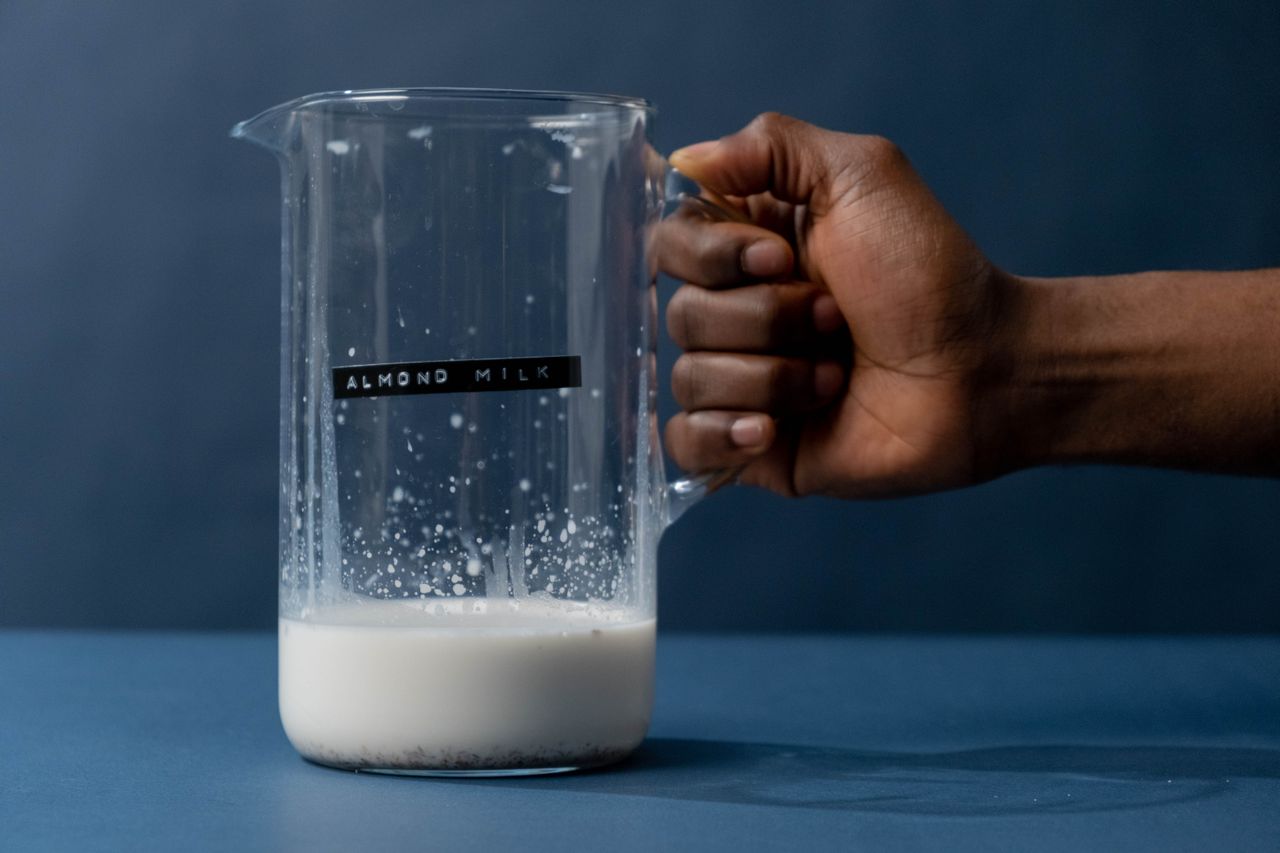
Table of contents
Calcium and protein answer different questions
The FDA’s consumer guidance explains that the plant source, processing and added ingredients can change a beverage’s nutrient profile. A drink may contain added calcium while supplying much less protein than dairy milk. Its plant-based name doesn’t settle the comparison.
The agency recommends looking for protein, calcium, vitamin D and potassium while also considering saturated fat and added sugars. That gives you several separate checks, rather than one calcium claim standing in for the entire Nutrition Facts panel.
Two unsweetened products make the distinction visible
On its current U.S. Unsweet Almondmilk nutrition panel, Silk lists 1 gram of protein and 470 milligrams of calcium per cup, or 240 milliliters. The ingredient list includes added calcium carbonate. It is a concrete example of a calcium-fortified drink with little protein.
Silk’s Unsweet Soymilk panel lists the same serving size and 470 milligrams of calcium, but 8 grams of protein. The equal calcium numbers therefore sit beside very different protein contributions.
These are two specific product examples, rather than fixed values for every almond or soy beverage. They also don’t show that one carton matches the other in all nutrients. Use the panel on the product you actually buy, since formulations and labels can change.
Count the amount that goes into your meal
Before adding those protein grams to your breakfast total, check the serving size. The FDA’s serving-size guide explains that nutrition information is usually given for one serving, while a container can hold several. The stated serving reflects a typical amount consumed; it is not a recommendation for how much you personally should drink.
A small pour into coffee and a full cup in a smoothie contribute different amounts. Measuring your usual pour once can make the label more useful than estimating from the size of the glass. First match the volume, then use the corresponding fraction of the listed nutrients.
For example, half a cup of the almond drink above would supply about 0.5 gram of protein; half a cup of the soy drink would supply 4 grams. That is simple serving arithmetic using these labels, rather than a new recommended portion.
A lower-protein drink can still be a choice you enjoy when protein comes from other foods in the meal. Our story on planned plant-based eating for lifting explains why the wider menu deserves attention alongside an individual drink. Identify the beverage’s actual contribution before counting it as your breakfast’s main protein source.