
You tip dried apricots or raisins into the bowl you normally use for fresh fruit. The bowl may look equally full, but the fruit has changed before you ever open the bag: much of its water is gone. That makes the volume comparison less straightforward than swapping one cup for another.
USDA counts half a cup of dried fruit as one fruit cup-equivalent. A full cup therefore counts as two. That is a food-group measure, not a promise of identical calories or nutrients, or a prescribed snack size.
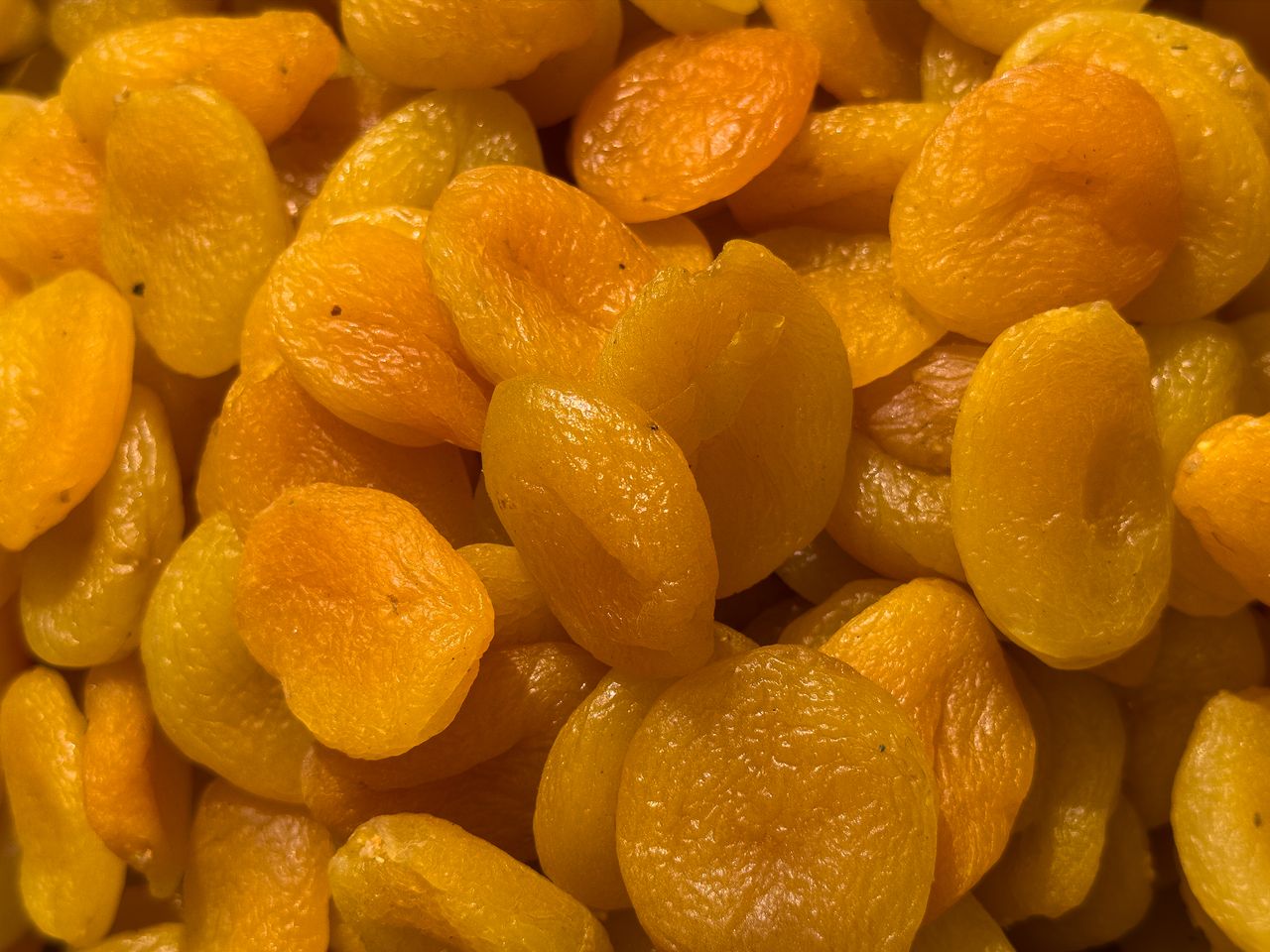
Table of contents
Half the volume does not mean identical nutrition
USDA’s Economic Research Service documentation explains the distinction. For most fruits and vegetables, one cup-equivalent is the edible portion that fits into a one-cup measuring cup. Raisins and other dried fruit are an exception: the corresponding volume is half a cup.
That helps make sense of a smaller portion on the plate. A quarter-cup of dried fruit counts as half a fruit cup-equivalent in that system. You do not need to fill a whole cup simply to include a meaningful amount of fruit in a meal.
The conversion answers a specific counting question. It does not say that half a cup of any dried fruit contains the same sugar, fiber or energy as one cup of every fresh fruit. Those amounts depend on the actual food and product.
Water leaves, but the energy does not disappear
Colorado State University Extension’s fruit-drying guide explains that removing moisture concentrates the fruit’s calories into a smaller amount of food. Drying alone does not create those calories; less water means the remaining food takes up less space.
That is why a small bowl of dried fruit can represent more food energy than its size suggests. The compact form can be convenient to pack, but the familiar bowl is a poor measuring tool if you assume it should hold the same volume as fresh fruit.
Drying also changes nutrients unevenly. The extension guide describes fiber as retained, while some vitamin C is lost during drying. Think of dried fruit as another form with its own characteristics, rather than either an exact miniature of fresh fruit or a food to reject because it is concentrated.
Let the package explain the portion you actually eat
The FDA’s Nutrition Facts guide says the listed calories and nutrients generally refer to one labeled serving. That serving reflects what people typically eat, rather than recommending how much you should eat. It is a different measure from USDA’s fruit cup-equivalent.
If a bag lists a quarter-cup serving and you eat half a cup, use two labeled servings when calculating its calories and nutrients. That is simple arithmetic, not a standard composition for all raisins, apricots or other dried fruit.
Check Total Sugars and Added Sugars separately, too. Our orange-juice label explanation covers why naturally present sugar remains in the total even when the added amount is zero. The same label-reading distinction applies here.
Measure the amount you usually pour once, then compare it with the bag’s serving. Keep the fruit you enjoy; replace the assumption that a fresh-fruit bowl and a dried-fruit bowl should be filled to the same line.