
You plant one foot on a box, press up, and bring the other knee through. It looks like one leg has lifted you. But a quick push from the foot still on the floor can help launch the movement, sharing the effort you intended to put through the leg on the box.
That matters when you choose step-ups to emphasize one leg at a time. The useful check happens before you reach the top: notice whether the trailing foot is helping propel you upward.
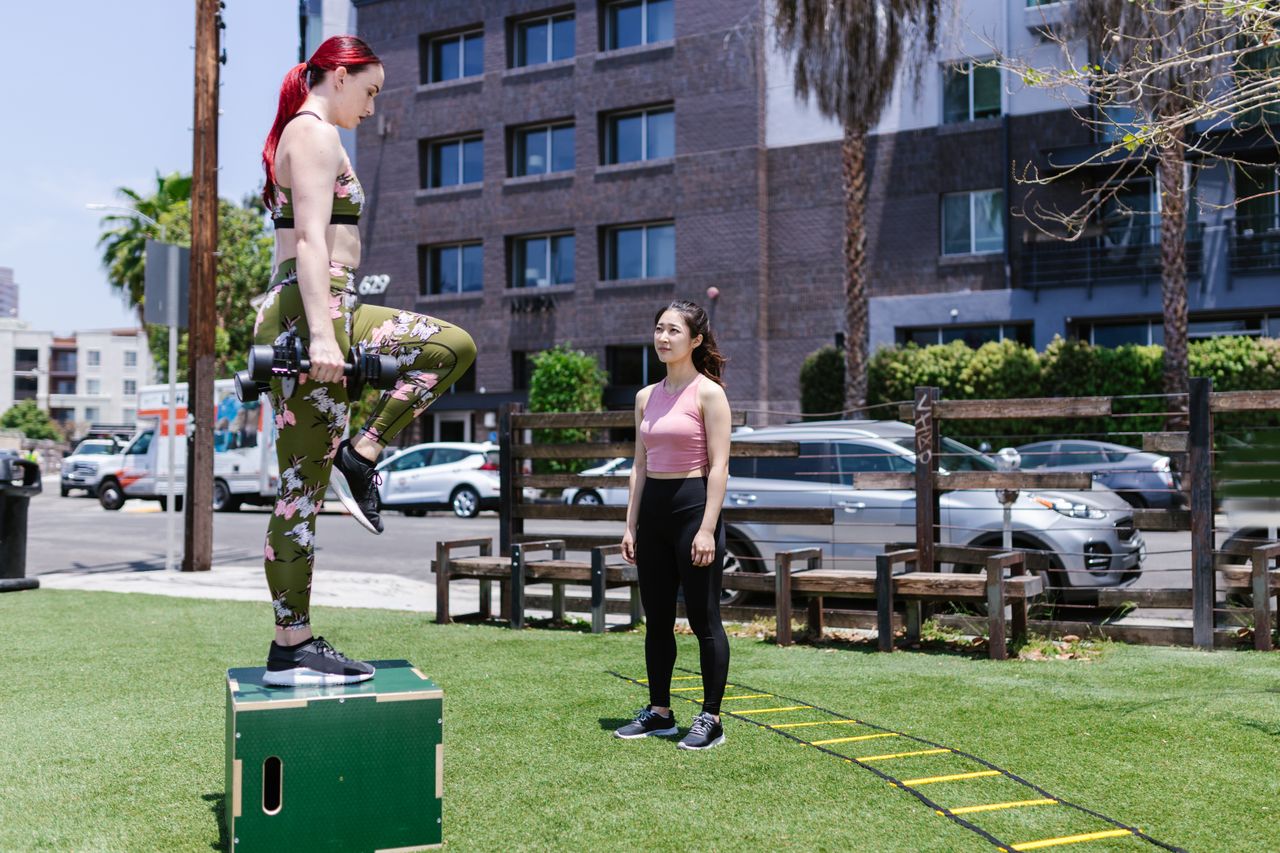
Table of contents
Choose the version that matches the goal
If you are using step-ups as a leg-press alternative, getting onto the box is only part of the task. You can reach the same top position with different amounts of help from the other foot.
An NSCA lifting-proficiency checklist describes shifting body weight toward the leading leg, then extending its hip and knee to stand on the box. For that version, it specifically tells lifters to avoid pushing or hopping up from the trailing foot.
That is a chosen strength-training technique, rather than a rule for every use of a step. The American Council on Exercise’s general step-up instructions allow a trailing-leg push. A rhythmic stepping movement and a lead-leg-focused strength repetition need not look identical.
Watch what happens as you leave the floor
Try a few repetitions without added weight on a low, stable step. Place the entire lead foot on its surface. Shift toward that leg, then press through the planted foot as you stand. Keep the movement smooth enough to notice how you start.
Pay attention to the moment your back foot leaves the floor. An obvious hop or forceful toe push is extra help. For the lead-leg-focused version, aim to reduce that boost instead of immediately making the box taller or grabbing heavier dumbbells.
The trailing foot can stay in contact with the floor at the start. You’re limiting its push, rather than trying to balance on one leg before the repetition begins.
Reaching the top still counts as completing a step, but it doesn’t tell you how the work was shared.
Make the height fit the movement
Mayo Clinic’s step-up demonstration emphasizes pushing primarily through the lead foot. It also makes a useful point about setup: starting low is fine, and good form matters more than step height.
If reducing the push-off makes your usual box awkward, choose a lower one and practice the same leading-leg action. There is no requirement to start at knee height. The box should let you place your whole foot securely and move with control.
Give the descent the same attention. Lower the trailing foot back toward the floor instead of dropping down and immediately bouncing into another ascent. Reset your position before the next repetition so the next push starts deliberately.
Mayo advises stopping when fatigue arrives or form begins to deteriorate. For a set intended to emphasize the leading leg, a lower, controlled step gives you a clearer task than a higher box you reach by launching from behind.