
You start a Romanian deadlift standing with the weights in your hands, then lower them as your hips move back. The floor is still several inches away when your controlled range ends. Reaching it can feel like finishing the rep, but that is the wrong target for this version of the deadlift.
The bottom depends on the hip hinge you can control while maintaining your back position. It does not require the dumbbells or barbell to touch down. Adding more movement after that point can change how you get the weights lower.
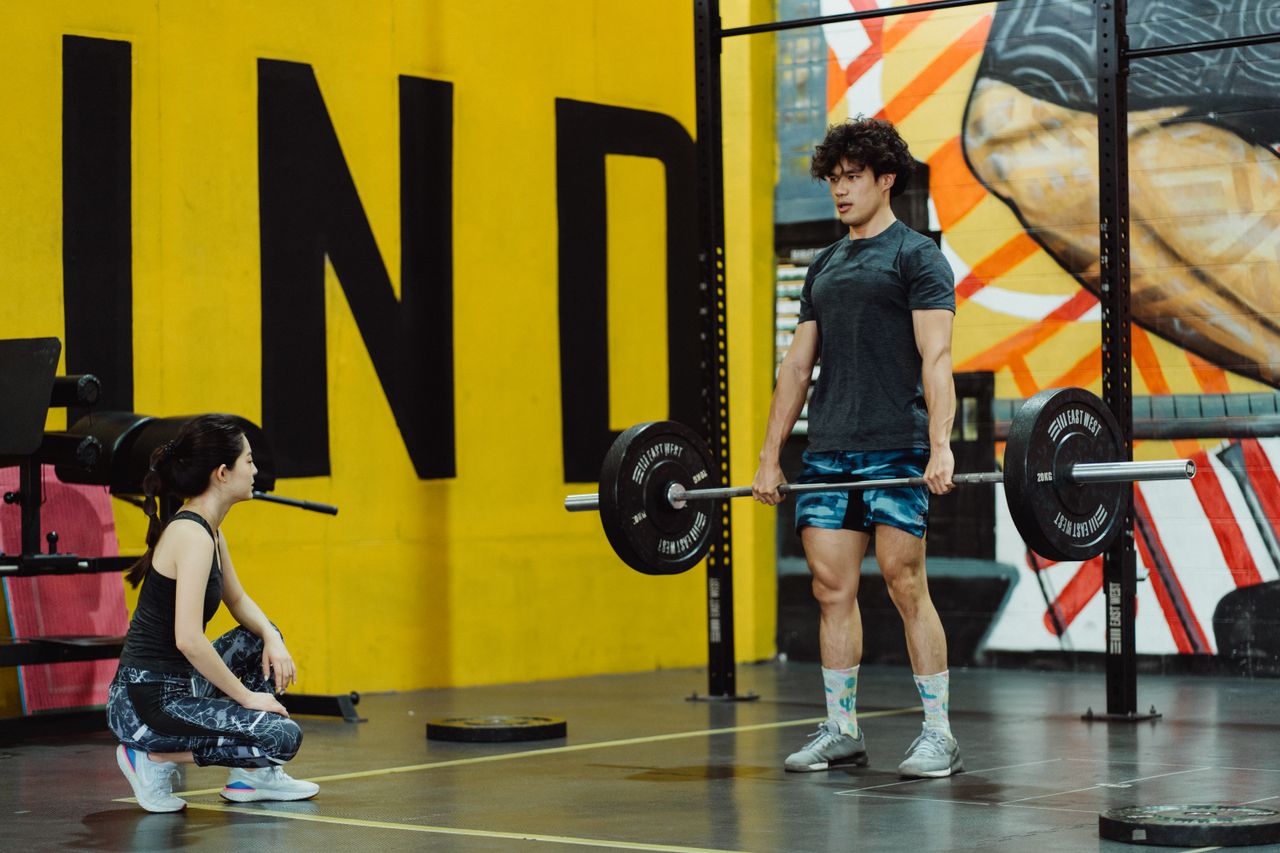
Table of contents
The floor does not decide your range
In a September interview with Woman & Home, personal trainer Edwina Jenner put it directly: “Depth is not the goal here.” She advises lowering the dumbbells while maintaining the position, with the endpoint varying according to mobility and body proportions.
That makes a fixed instruction such as “everyone must reach mid-shin” incomplete. Mid-shin can describe where someone’s weights end up; it is not a depth every lifter must force. Jenner specifically cautions against gaining extra distance by rounding the back or letting the shoulders fall forward.
If you are learning the hip-hinge pattern, pay attention to the hips moving backward. Looking only at how low the weights travel can hide whether you maintained that movement or found another way to get closer to the floor.
A Romanian deadlift starts from a different place
The National Council on Strength and Fitness’s deadlift teaching material distinguishes the Romanian version by its upright start and initial lowering phase. The knees bend slightly, then that angle is maintained as the hips hinge.
A conventional deadlift starts with the load on the floor and a coordinated upward movement through the hips and knees. Copying its floor reference into every Romanian-deadlift repetition mixes two different setups. Picking the weights up before your working set and putting them away afterward are separate from requiring floor contact on each rep.
The equipment also affects the visual target. A bar with large plates and a pair of smaller dumbbells can have different clearance from the floor even when your hands are at a similar height. Ground contact is therefore a poor substitute for checking the movement itself.
Make the bottom position repeatable
Use a load that lets you practice the hinge without rushing to the bottom. In an August interview with Fit&Well, fitness specialist Camden Wilson recommends starting light and moving slowly before adding load. His cue emphasizes maintaining pressure across the foot as you hinge.
Keep the weights close as the hips move back, and reverse the movement within the range you can control. If the extra inch requires a different back position or a noticeably deeper knee bend, check the setup instead of treating the extra distance as automatic progress.
At the top, return to standing rather than leaning back to manufacture a bigger finish. For a novice, a trainer watching the movement can help identify where the intended hinge ends; a photograph or the distance to the floor cannot determine that individual limit.
The useful endpoint is a controlled Romanian deadlift you can repeat. Touching the floor is not the test of whether you completed it.