
Standing on one leg can look uneventful next to squats or lunges. Yet holding that small patch of ground asks your body to organize more than a strong supporting leg. For adults over 50, a Mayo Clinic study offers a useful reason to include balance itself in the exercise conversation.
Researcher Kenton R. Kaufman, Ph.D., explains that balance brings together muscle strength, vision, the inner ear’s balance system and body sensation. A powerful leg is only one contributor to keeping the body steady.
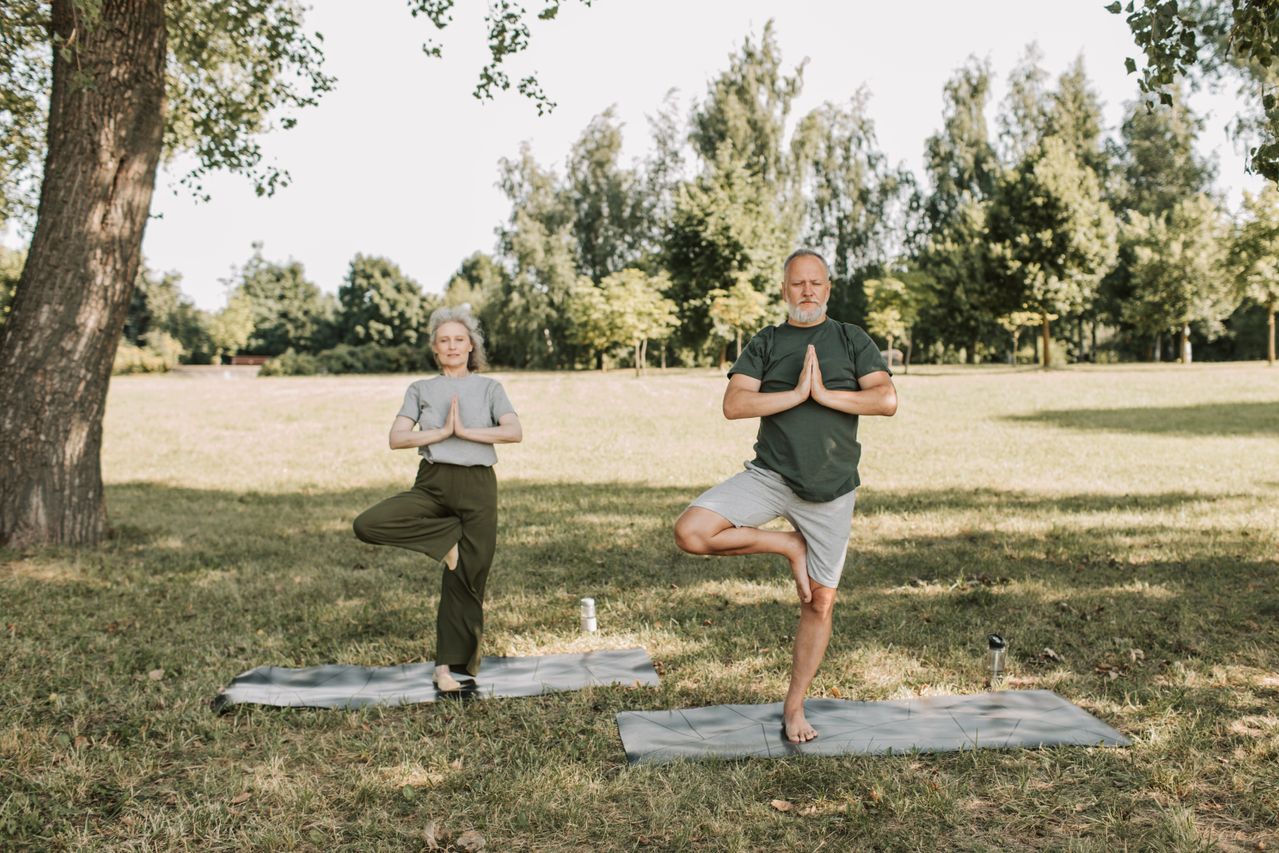
Table of contents
What the researchers actually measured
The 2024 study assessed 40 healthy, independently living adults over 50. Half were younger than 65 and half were 65 or older. Tests included grip and knee strength, walking, and several standing conditions on force plates.
For the one-leg conditions, participants kept their eyes open and could choose where to position the raised leg. Each attempt had a 30-second limit. The one-leg tests showed an age pattern: older participants tended to hold the position for less time.
This was a small study conducted at one point in time. It did not follow people as they aged, establish a home pass-or-fail score, or test whether practicing the exercise improved their health. Its comparison gives balance attention alongside strength, rather than replacing strength work with a stopwatch.
Practice the task instead of chasing a score
In Mayo Clinic’s explanation of the research, Kaufman describes single-leg standing as a way to practice coordinating the muscle and balance responses involved. That is a different purpose from trying to calculate a biological age from one attempt.
The pictured tree pose illustrates one-leg balance, but it is not the plain standing test used in the study. Holding a foot against the other leg and bringing the hands together also creates a different setup from simply lifting a foot off the floor.
For straightforward practice, Mayo Clinic’s balance exercise instructions start with feet about hip-width apart and weight evenly distributed. Lift one foot and bend that knee behind you. Use a stable table or heavy piece of furniture for support if needed.
Hold only as long as you can keep good form, up to 30 seconds, then put the foot down and repeat on the other side. The instructions allow increasing the number of repetitions as balance improves. Support makes the exercise manageable; removing it is not a requirement for every practice session.
Give balance a specific place in the routine
For a broader program, our four-minute home routine story covers a short strength routine tested in older adults, with chair-rise ability among its outcomes. A single standing drill and a mixed exercise program answer different training needs.
For personal comparisons, keep the floor, footwear and support consistent instead of comparing a supported attempt with an unsupported one. Mayo advises checking with a healthcare professional before balance exercises if you have serious balance problems or a condition affecting your bones, joints or muscles. Choose the stable support before lifting the foot.