
At the bottom of a lunge, the forward and reverse versions can look much alike: one foot in front, one behind and both knees bent. The difference comes before that position. Step backward, and the front foot stays where you put it while the other has to find the floor behind you.
Keeping that foot planted does not make the repetition balance-free. The backward step introduces a placement task outside your forward view. Controlling it is part of the exercise, alongside lowering your body and returning to standing.
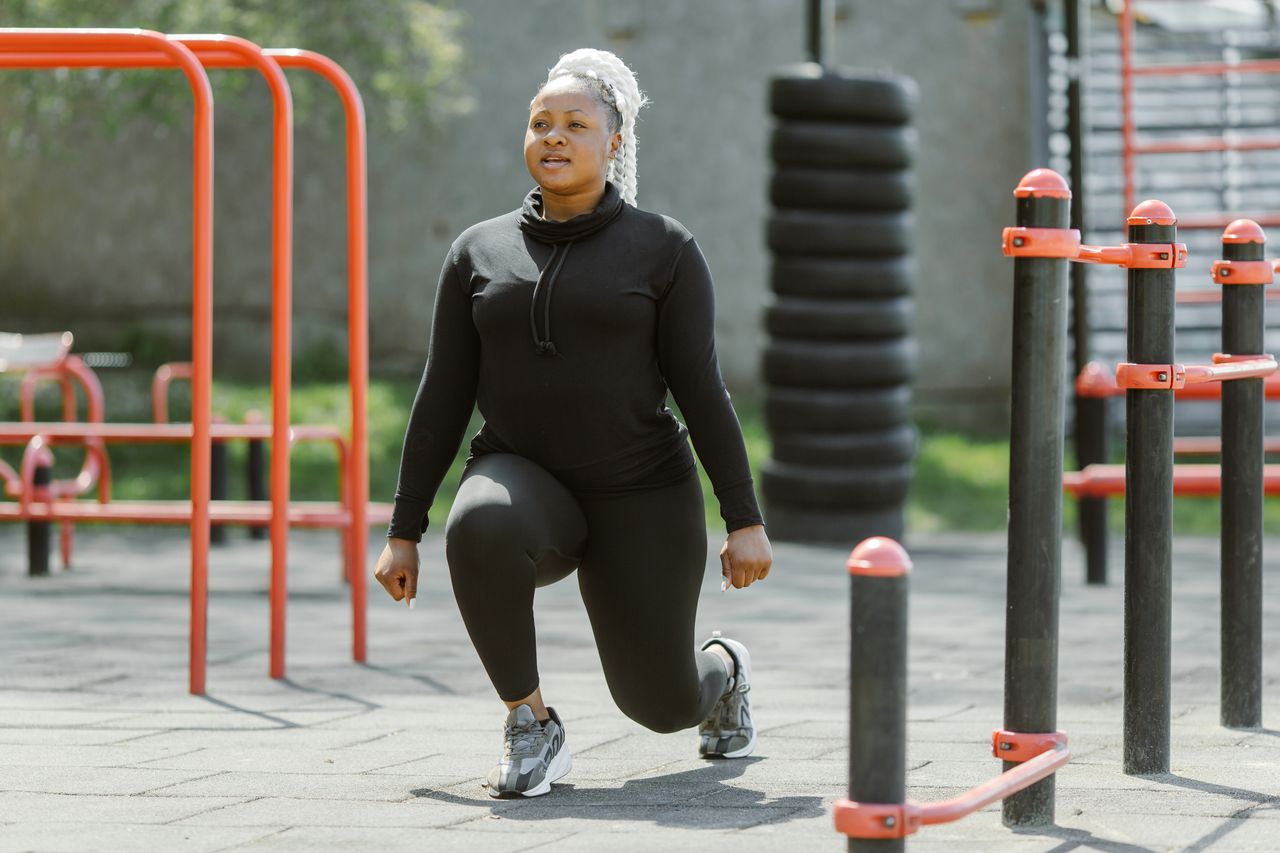
Table of contents
Two jobs inside one repetition
The National Council on Strength & Fitness’s lunge guidance points out that backward movement can challenge coordination because it is less familiar and lacks the same visual information as stepping forward. A planted front foot and a controlled moving foot are separate parts of the task.
Think of the repetition as a step, a lowering movement and a return. If the rear foot lands somewhere unexpected, the descent starts from a different stance. Hurrying through all three parts can make it difficult to notice which part needs practice.
The NCSF guidance emphasizes learning the movement before adding load. For a bodyweight reverse lunge, that means the backward step deserves attention even when your legs feel strong enough to lower and rise.
Direction belongs in the exercise description
A 2015 laboratory study illustrates that forward and reverse lunges are not mechanically interchangeable. Nine healthy, active young men performed both versions with a standardized three-second lowering and two-second rising phase while researchers measured forces and joint motion.
The forward lunge produced greater hip- and knee-joint moments in that protocol. These measurements describe the turning demands around the joints; they do not establish which version will produce more muscle or prevent injuries.
For everyday practice, the useful point is that changing direction changes the movement being performed. Calling both exercises a “lunge” leaves out how the feet get into position and how you return to standing.
Make the placement task manageable
The NSCA’s lunge coaching guide describes hand support on something stable and nonmoving as a way to reduce the balance challenge. It also offers a smaller range of motion as a modification. A solid support gives you an option between an unsupported repetition and abandoning the movement.
If you want to remove the repeated step entirely, our split-squat guide explains the version that keeps both feet in place. That changes the practice task: you can work on lowering and rising without finding a new rear-foot position each time.
Before starting backward steps, check the floor behind you. Begin from a consistent standing position, place the rear foot deliberately and reset between repetitions. Keep some side-to-side width between the feet, rather than lining both up on a tightrope. If the feet keep landing in a different arrangement, pause and establish the stance again before continuing the set.