
An adjustable bench makes the change look simple: lift the backrest, settle it into a higher slot and start the next set. But a steeper position is more than a visual change to chest day. The front of the shoulder is part of the press, and the angle can alter its muscle-activity pattern.
A barbell study found higher front-deltoid electrical activity as the bench became more inclined. That is a reason to consider the setting deliberately. It is not evidence that the highest notch will build the most muscle.
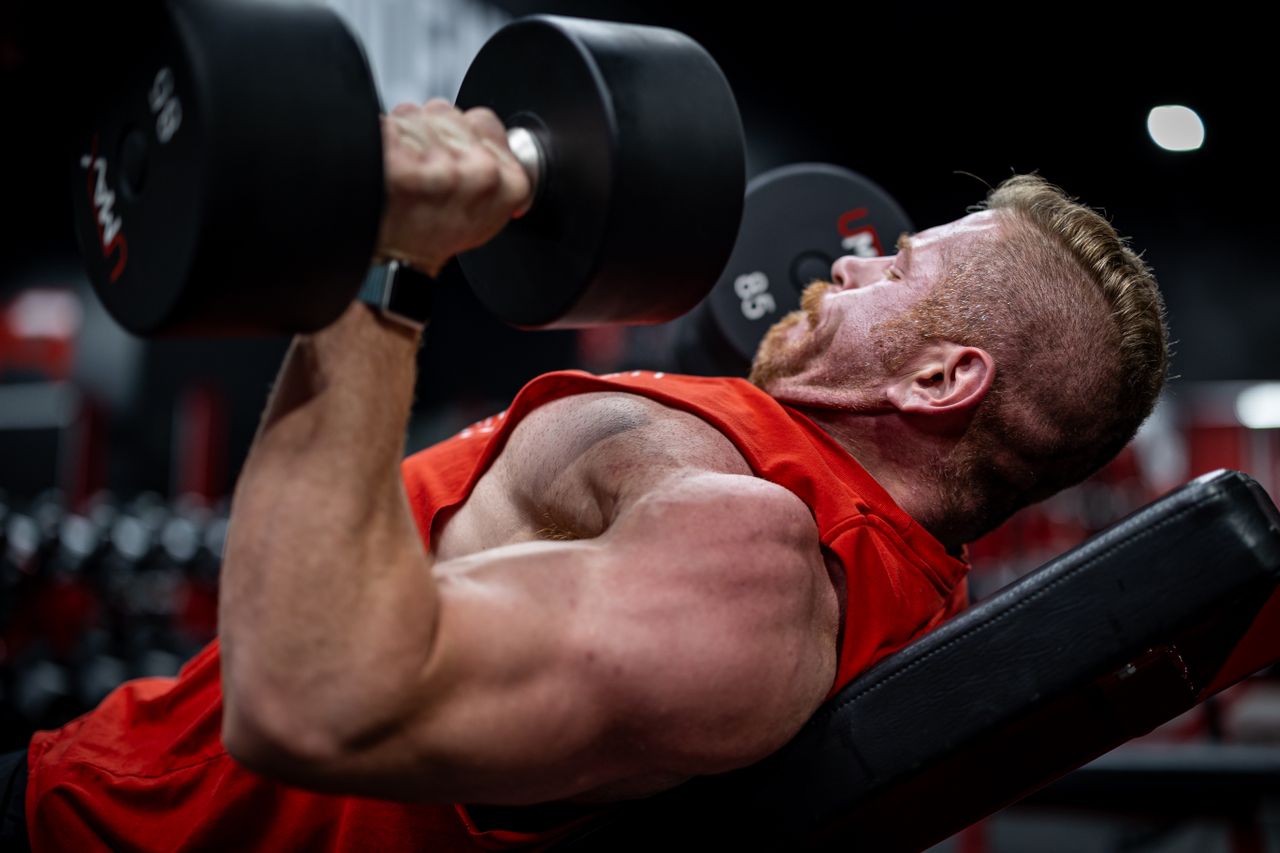
Table of contents
What changed in the test
In a 2020 study of 30 trained adults, researchers tested free-weight barbell presses at 0, 15, 30, 45 and 60 degrees. Each angle used 60% of the participant’s one-repetition maximum for that position. Surface electrodes recorded electrical activity in chest, front-shoulder and triceps muscles.
The front deltoid recorded its highest mean signal at 60 degrees. The upper-chest region’s highest mean occurred at 30 degrees, but that value was not significantly higher than at 0, 15 or 45 degrees. It would be a stretch to turn those results into a universal 30-degree rule.
Electrical activity is not a percentage of the lifting work or a measurement of future muscle growth. This was an acute barbell comparison; the dumbbell press pictured here illustrates the incline setup, rather than the tested protocol.
The bench setting and body position both matter
A steeper incline is not automatically a mistaken chest press. The American Council on Exercise’s dumbbell instructions use a 45-to-60-degree bench position. They also identify the shoulders alongside the chest as target areas. The useful question is which pressing movement you intend to practice, rather than whether one slot is universally correct.
In a 2026 coaching guide, Ebenezer Samuel, CSCS, emphasizes keeping the core tight and the butt against the bench. He explains that excessive back arching changes the arm-to-torso angle and undermines the intended incline position.
The number on the backrest therefore does not tell the whole setup story. Moving the bench and then changing your torso position can leave you practicing a different press from the one you meant to select.
Our incline-press setup guide shows the barbell and dumbbell versions if you need to distinguish the arrangements.
Set the angle before picking up the weights
Once you have chosen the incline, establish a stable position before starting the set. ACE recommends maintaining contact through the head, shoulders, butt and feet, with a neutral wrist and controlled lowering and pressing. Use the floor or a raised platform to keep the feet firmly supported.
If you are trying a different backrest setting, assess that position with a weight you can control. Raising the bench and increasing the dumbbells at the same time changes two things. Keep the setup deliberate enough to notice whether you can maintain the same supported torso and controlled path through the repetition.