
Mountain climbers can turn into a race against the timer, with attention fixed on how quickly the feet switch. But another change can slip past: each knee comes farther forward as the back starts to round, or the hips lift to make room. Reaching farther is a different result from moving the leg while holding the starting position.
For a controlled version, use back position as a boundary for the knee drive. If bringing the knee closer requires arching or rounding the back, return and reset instead of treating that extra reach as the target.
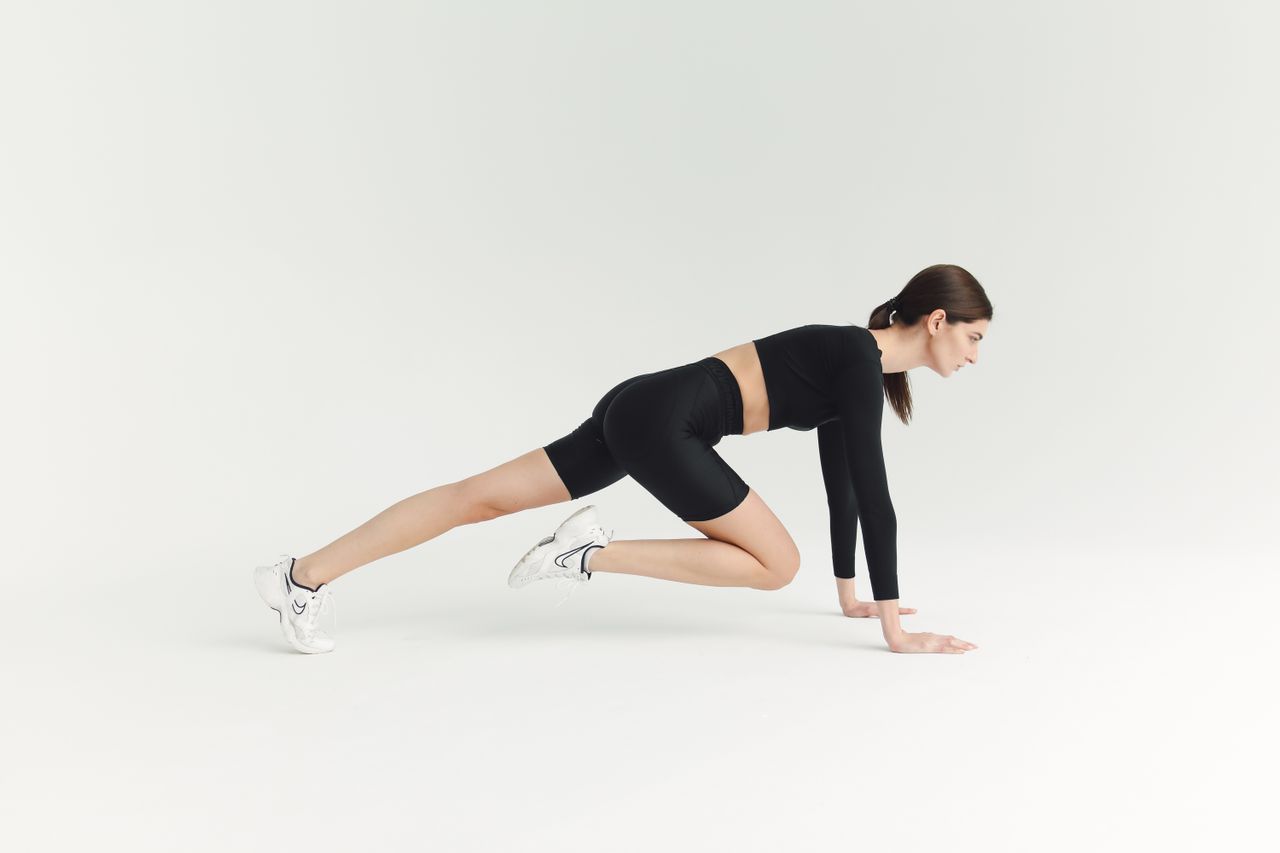
Table of contents
Move the knee without borrowing movement from the back
[P]rehab’s slow mountain-climber instructions start with the shoulders, hips, knees and ankles aligned in a high plank. Engage the core, bring one knee toward the chest, return it and repeat on the other side. Its specific compensation warning is to avoid arching or rounding the back.
That gives you a practical check: compare the shape of your back before the knee moves with its shape near the end of the drive. The instruction is to bring the knee toward the chest while maintaining the position, rather than forcing contact at any cost.
Watch the hips and supporting arms
In Men’s Health’s written coaching guide, trainer Ebenezer Samuel, C.S.C.S., also flags hips rising above the shoulders and shoulders drifting behind the hands. His cues keep the supporting position part of the exercise while the legs move, instead of counting every fast foot switch as an equally controlled repetition.
Speed is not automatically the problem. The American Council on Exercise describes a simultaneous leg switch in which both feet briefly leave the floor. That is different from [P]rehab’s slower alternating version. Both descriptions still include abdominal engagement and supported shoulders.
Choose which version you are practicing before judging pace. A deliberate knee drive gives you time to inspect the movement; a faster switch adds a different coordination demand. Neither needs a promise that more speed, more reach or more repetitions always produces a better result.
Change the setup if hip motion is limited
ACE offers a specific modification for limited hip range of motion: put the hands on a step or platform. That changes the support position instead of asking you to keep chasing the same floor-based knee reach.
Do not confuse that with feet-elevated mountain climbers, the decline variation in our box-exercise guide. Raising the hands and raising the feet are different arrangements. They should not be treated as interchangeable ways to solve the same movement problem.
Before adding a longer interval, practice an alternating knee drive while a trainer watches from the side. Ask whether the back keeps its shape and whether the hips rise to finish the reach. Use that observation to choose the range and setup you can control, rather than a knee-to-chest target you have to force.