
You catch the wall ball and drop into the next squat. The throw makes a satisfying thud, so you’re tempted to trade up to a heavier ball. Before you do, check where the ball actually hit and whether you reached the same squat depth on the last rep as on the first.
Use a short warm-up to check the bottom of the squat and the ball’s contact with the target. If one changes as you link reps, keep the lighter ball while you work on that part.
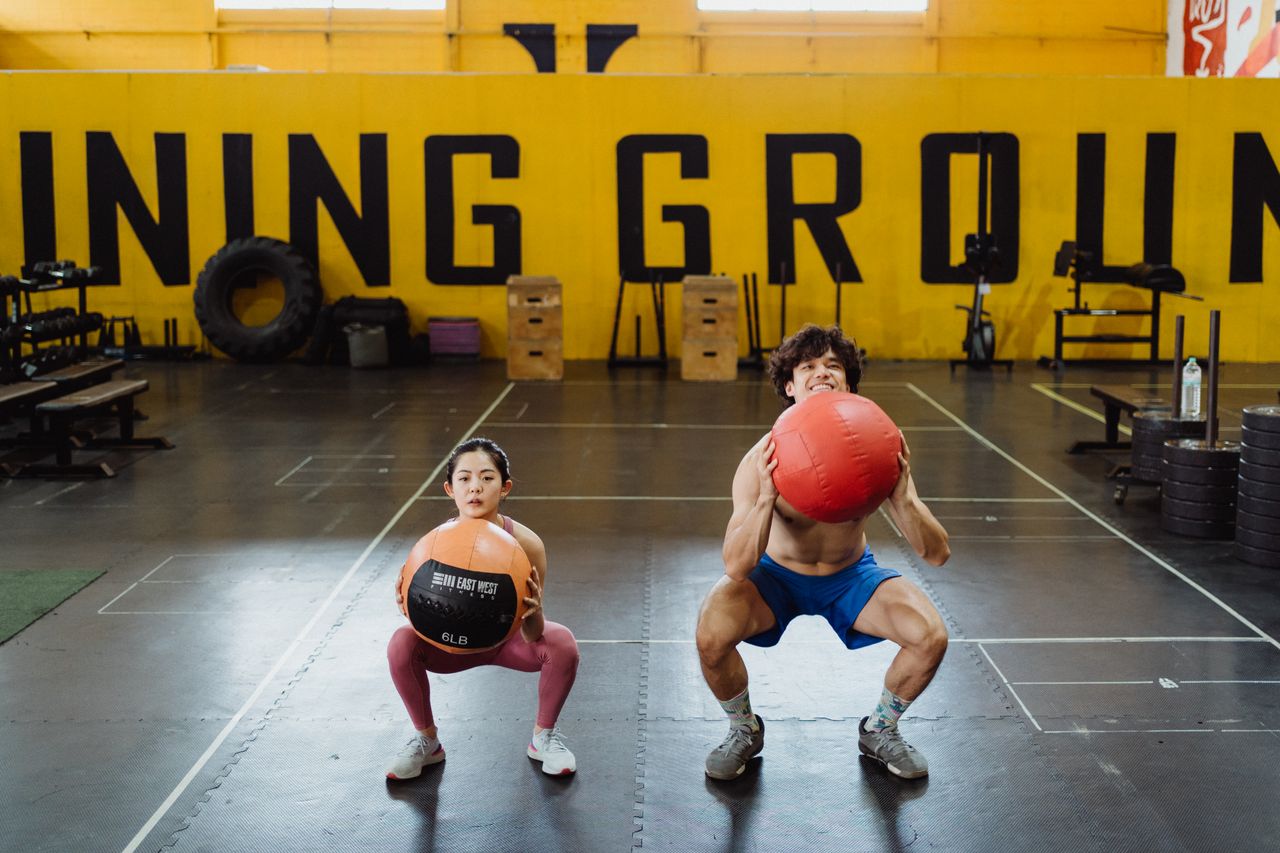
Table of contents
Check how low you go with the ball at your chest
After your general warm-up, do a few air squats. Then hold a light medicine ball at your chest and repeat without throwing it. Keep your feet flat and pause at the bottom once or twice. A coach or a side-view clip can help you see whether the crease at your hip drops below the top of your knee. CrossFit’s wall-ball movement guide uses that depth and suggests a pause if you have trouble identifying the bottom position.
Now try a few full shots at an easy pace. Look for the same depth after you catch the ball. You may reach it comfortably in a slow front squat, then cut the next squat short when you hurry to throw again. Slow the cycle and see whether the depth comes back. If the bottom is hard to recognize even in the slower squat, our guide to practicing squat depth explains how a box can give you a repeatable reference during a separate drill.
Watch where the ball makes contact
Pick the mark you’re aiming for before the first toss. Drive up out of the squat with your legs, then finish the throw with your arms. Watch the point where the ball meets the wall or target. The ball can climb above a line and still make contact too low on the way up or down. If you only listen for the thud, those two throws can sound the same.
Check the actual rules when you’re training for a judged workout. For example, the 2026 CrossFit Individual Semifinals Workout 3 scorecard required the hip crease to go below the knees and the center of the ball to hit the target clearly above the specified height. Use the height and ball weight given for the workout and division you’re doing.
Use the misses to choose the working weight
If the ball repeatedly hits low, practice standing tall with it before you add the throw back in. If the toss is on target but the squat gets shallower, go back to a few ball-at-chest squats and find the bottom again. CrossFit’s coaching lesson plans include separate squat and target-throw drills before full shots, with room to adjust the load when the movement breaks down.
Try another short set after you make the adjustment. If both checks hold up across the set and the workout lets you choose the load, test the next weight for a few reps using the same target. If depth or contact slips at that weight, you have a reason to stay with the lighter one for the working sets.