
A handful of whole almonds and a spoonful of almond butter can start with the same ingredient, yet behave differently during digestion. The change goes beyond crunch versus creaminess: grinding breaks up the almond’s structure, and controlled-feeding research found more usable energy per gram in almond butter than in whole almonds.
It’s a useful detail when you switch between a crunchy topping and a smooth spread. Researchers compared measured amounts of each food, so the finding goes beyond a spoonful and a handful simply being different-sized portions.
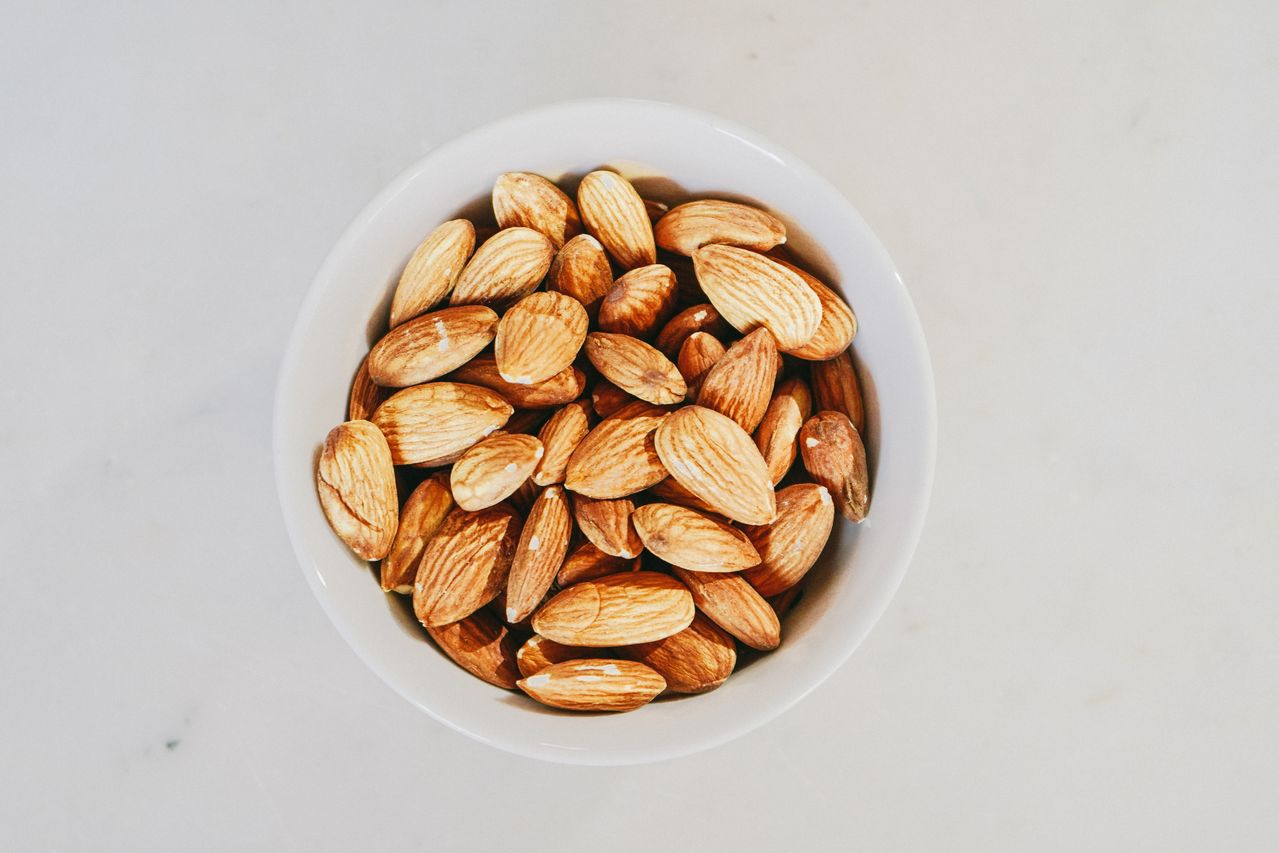
Table of contents
The almond’s structure changes what becomes available
In a 2016 controlled-feeding study, 18 adults followed five three-week diets. These included 42 grams, about 1.5 ounces, a day of whole natural almonds, whole roasted almonds, chopped roasted almonds or almond butter, plus a diet without almonds.
The butter provided more metabolizable energy per gram than the whole roasted or chopped almonds. It contained no additives: the comparison wasn’t between plain nuts and a spread loaded with extra sugar or oil. Chopping wasn’t equivalent to grinding: whole roasted and chopped roasted almonds did not differ significantly in measured energy.
The feeding study was small, and individual energy values varied. It did not establish a personal calorie discount or show that swapping almond butter for whole almonds causes weight loss. Treat the result as a reason to notice food structure, rather than subtracting a fixed percentage from every almond snack.
A review of almond digestion describes how cell walls can keep some fat enclosed. Grinding disrupts that structure, leaving smaller particles and making more of the stored fat accessible. The processing changes access to energy already present in the ingredient.
Measured energy can differ from calculated energy
Food energy is often estimated using factors applied to its protein, carbohydrate and fat. But the calculation and the energy people actually obtain are separate things.
An earlier USDA study reported in 2012 illustrates the distinction. In a controlled diet involving 18 adults, researchers measured about 129 calories of metabolizable energy per 28-gram serving of almonds, compared with approximately 168–170 calories predicted by the calculation used.
Those historical study figures aren’t a replacement for the label on a package you buy today. They explain why scientists test digestion as well as chemical composition when investigating a food’s energy value.
Compare the form and the portion
For an everyday comparison, start with how much you’re serving. The FDA explains that label information usually refers to one serving, with its weight in grams alongside a household measure. Check those amounts before comparing the calories on two packages.
A loose handful of almonds and a heaping spoonful of butter don’t establish equal portions. Weighing what goes into your bowl gives you a clearer comparison than assuming the two additions are interchangeable because both are almonds.
If your bowl starts with Greek yogurt with protein powder, whole almonds add crunch while almond butter mixes through it. Choose the texture you want, then account for the amount you add. The food form and the serving size answer different parts of the same question.