
The last pull on a lifting belt can feel like the final step before a squat or deadlift. Once the buckle is closed, the middle of your body feels firmly held. But that outside pressure is only part of using it: the next step is something your own trunk muscles do.
Physical therapist Aaron Horschig explains the distinction in his coaching guide: expand the abdomen into the belt, then brace against it. The belt supplies resistance around your middle; fastening it alone does not perform that muscular action.
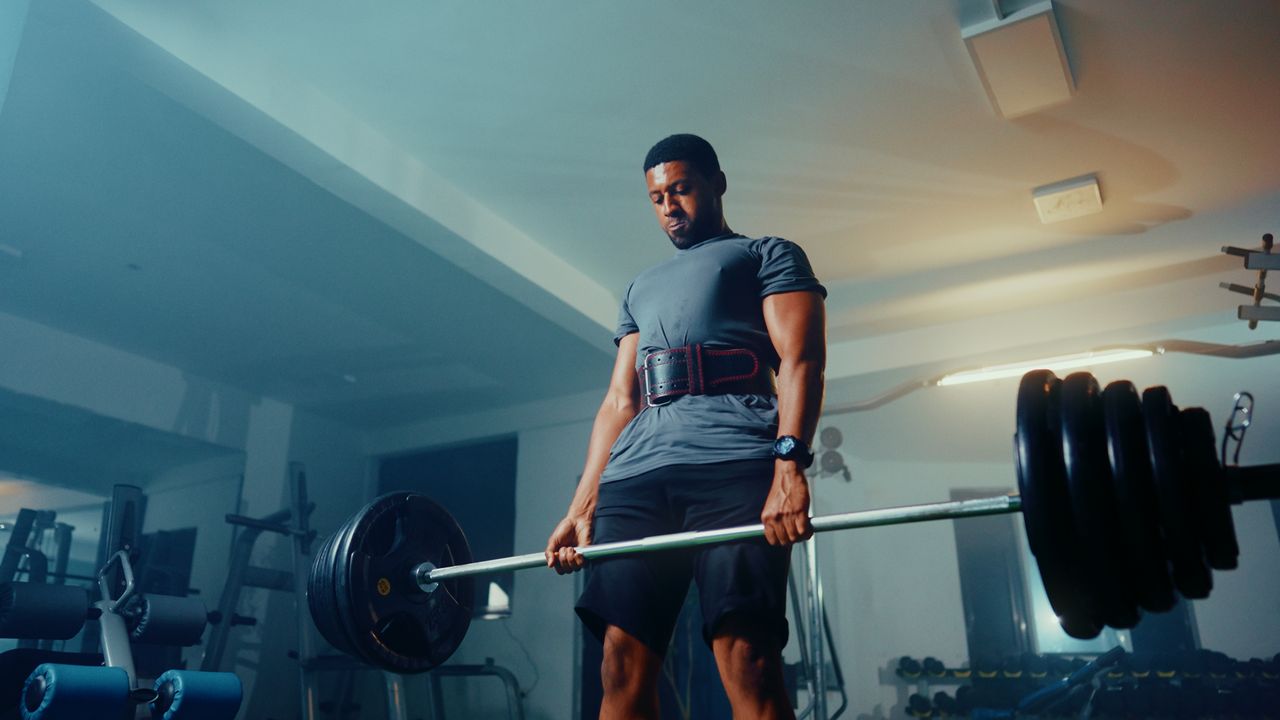
Table of contents
The belt works with the brace
In Horschig’s explanation, the belt adds an outer restraint to the abdominal expansion involved in breathing and bracing. The muscles still have a job. Think of the belt as something to press against as you establish trunk tension, rather than something that takes over once it is tight. Horschig recommends learning the breathing-and-bracing action with lighter weight first.
The underlying term is intra-abdominal pressure: pressure inside the abdominal cavity. Physician and strength coach Jordan Feigenbaum explains that it changes with breathing and resistance from the abdominal wall. A tighter fastening does not describe all of that activity. Treat the fit as part of rehearsal, rather than leaving a new belt setup for the heaviest attempt.
Check the fit in your lifting position
Strength coach Greg Nuckols’s practical guidance makes room for individual comfort and different positions. A belt placement that feels fine standing upright can interfere with setting up for a deadlift. His tightness check includes being able to take a full breath, rather than simply choosing the tightest possible setting.
Try that check before loading up: get into the position your lift actually requires. Can you establish your usual setup without the belt forcing you to change it? Can you breathe and produce tension against it? A notch number cannot answer those questions for every person or every exercise.
The aim here is to learn the setup, not to prove that a particular hole, belt height or amount of pressure is universally correct. Adjusting where the belt sits is a separate decision from learning to brace.
Practice before the heaviest set
Feigenbaum recommends introducing the belt by the last warm-up and working sets when using one, with earlier warm-up practice also an option. That is his coaching approach, not a rule that everyone needs a belt or a reason to add weight immediately.
Our guide to transverse abdominis exercises includes practicing abdominal bracing separately, before adding a belt to a loaded lift. Keep that muscular preparation in the routine when the belt goes on.
For your next lighter practice set, have a coach check two things separately: whether the belt lets you reach your lifting position, and whether you actively brace against it before starting. That gives you something more useful to rehearse than another pull on the buckle.