
You move the pin to a heavier setting on the lat-pulldown machine. The bar still comes down, but now your torso rocks backward to get it moving. Before treating that as a stronger set, check the movement you are repeating. A weight you can pull only by swinging calls for a lighter, more controlled attempt.
NASM master instructor Brian Sutton distinguishes a slight backward lean from a torso that moves throughout the set. Start with a secure seated position, then choose a load that lets you keep it.
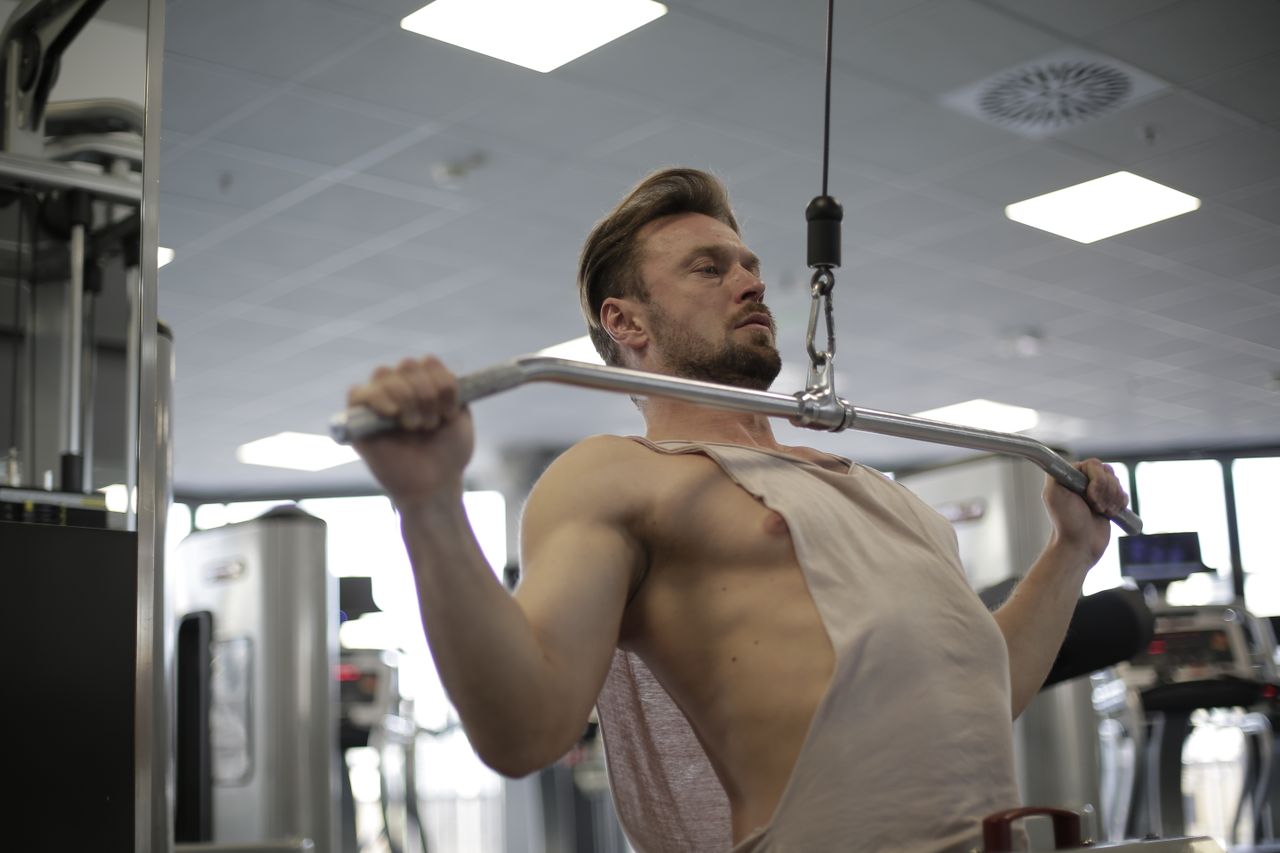
Table of contents
Set the seat before testing the stack
The American Council on Exercise’s instructions begin with the thigh pad. Adjust it so it fits firmly over the tops of your thighs. That anchors the lower body for the pull. Brace the abdomen without arching the lower back, and keep the head aligned with the spine.
Sutton also calls for planted feet and a tall posture, with the thighs secured beneath the pad. Establish that position before deciding whether to add resistance. If the station’s adjustments are unfamiliar, have a staff member show you its setup rather than guessing at the restraint.
The pad is one part of the setup; tightening it does not make an uncontrolled load appropriate. Check the seated position and the movement together.
A small lean can stay still
In Sutton’s pulldown guide, a slight lean back is acceptable, but the torso stays stable. Drive the elbows down toward the ribs as the bar moves toward the upper chest. The shoulders should stay away from the ears rather than shrugging through the pull.
ACE makes the same distinction: begin with a modest backward lean and avoid leaning farther back as you pull. Watch whether the torso changes position to start each repetition. Returning upright, then throwing yourself backward again, is different from holding a small lean throughout.
The bottom position needs control, too. Mayo Clinic’s lat-pulldown demonstration brings the bar toward the front of the chest and explains that it will not necessarily touch. Keep the movement smooth instead of chasing contact by shifting the body farther backward.
Return the bar slowly as well. The upward part should remain a movement you control, rather than a sudden release after getting the bar down. A controlled return gives you another part of the repetition to assess before increasing resistance.
Change the load when the form changes
Mayo Clinic’s general weight-training guidance recommends lowering the weight or the number of repetitions when good form cannot be maintained. On this exercise, that gives you a practical response to rocking: stop the set, reset the position and try a lighter setting with a steady torso.
Increase resistance gradually while keeping the technique intact. The next stack setting is worth testing when you can move it with control; you do not need to finish a set by adding momentum.
The same decision comes up when the next pair of dumbbells is too heavy: forcing the jump can change the exercise you are trying to improve. On the pulldown, keep the seated setup and torso position as part of the standard.