
Your deadlift set ends because keeping hold of the bar becomes the problem. With straps wrapped around it, another repetition may become possible. That can make the straps useful, but the extra rep does not show that your hands suddenly became stronger. You changed the assistance available during the lift.
A small study in trained women found more deadlift repetitions and less grip-strength loss with straps. Those were immediate performance results, rather than evidence that using straps builds stronger hands over time.
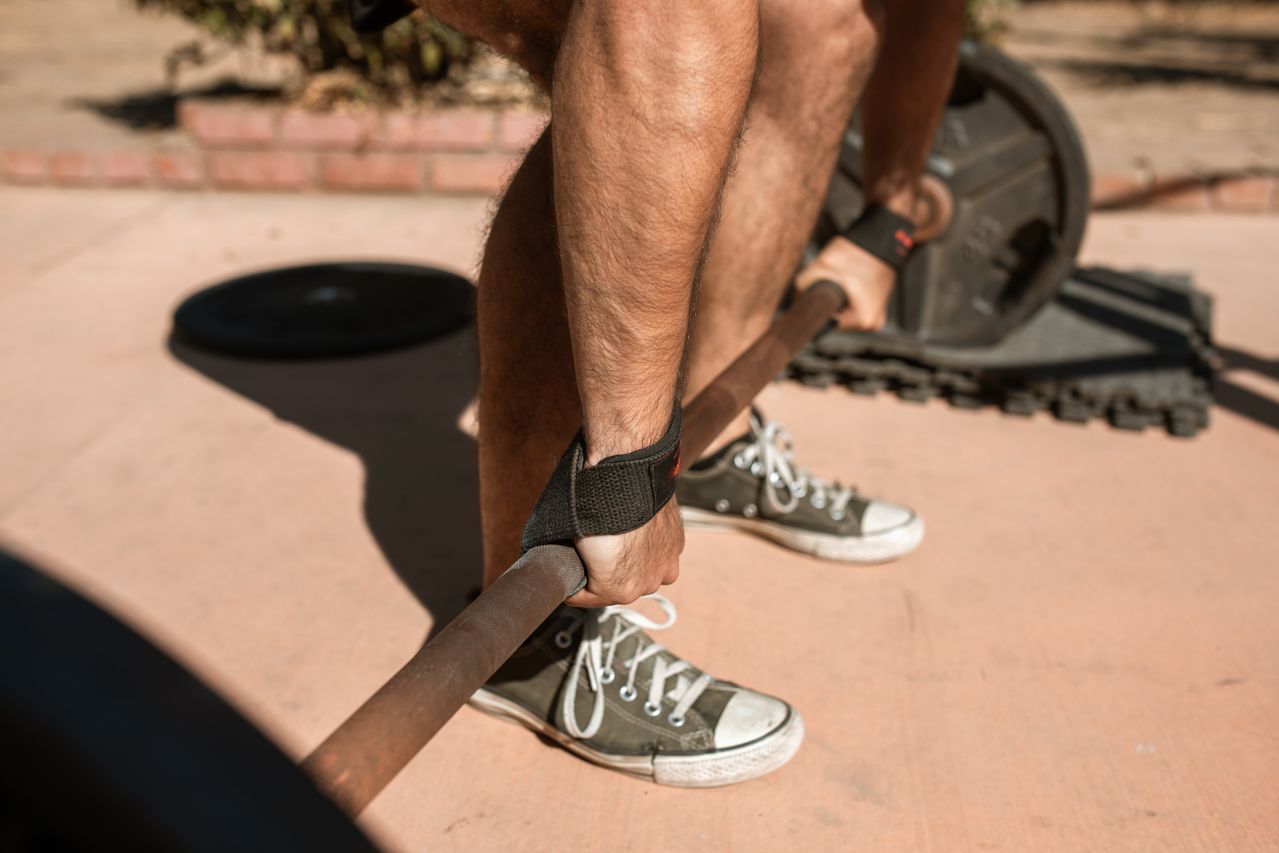
Table of contents
More reps and a different grip demand
The 2023 study involved 10 women with resistance-training experience, averaging about 20 years old. After an unstrapped one-repetition-maximum test, they completed two protocols: three sets of as many deadlift repetitions as possible at 80% of that reference maximum, with and without straps.
Straps allowed more repetitions and a smaller drop in measured grip strength. Mean and peak barbell speeds did not differ significantly. This was a small performance comparison, not a months-long trial measuring muscle growth or grip-strength development.
That distinction gives the extra repetitions a clear meaning: under the tested conditions, the lifters could do more with assistance. It does not establish how every lifter will respond or how much stronger someone’s unsupported grip has become.
Know what the accessory changes
In Eleiko’s equipment explanation, Rodney Corn distinguishes lifting straps from wrist wraps. A strap connects the wrist and the bar, taking some of the holding demand away from the fingers. A wrap goes around the wrist to provide support; it does not serve the same wrist-to-bar anchoring job.
That makes the equipment worth recording alongside the weight. “Deadlift” alone leaves out a condition that can affect the result. A strapped set and an unstrapped set can both belong in a program while answering different questions about performance.
Straps also are not a general fatigue eraser. In a separate study of 16 resistance-trained men, they did not reduce relative bar-speed decline when the same absolute loads were lifted. That study used four sets of four repetitions and compared several loading conditions, rather than the women’s maximum-repetition protocol.
Compare the same task before claiming progress
Keep separate entries for strapped and unstrapped work. Record the load, repetitions and whether assistance was used, then compare the next session with the relevant previous entry. More strapped repetitions can be progress in that condition without becoming proof of an unstrapped grip improvement.
If a coach reviews your log, include where the set stopped: difficulty holding the bar, the planned repetition limit or another technique limit. A total alone leaves that context out.
The equipment total needs the same care. Our guide to recording the empty bar’s actual weight explains why identical plates do not always mean an identical load. Changing the bar or the assistance can make a simple comparison less straightforward.
Before the set, decide which task you want to assess. If the goal is an unassisted hold, straps change that task. If the program uses assisted pulling work, note the assistance clearly and follow the intended load and repetitions. Removing a grip limitation is a training choice; documenting grip progress requires a comparable test.