
Putting the leg sessions with the most sets into one part of your menstrual cycle can look like careful planning. The useful question is whether that rearrangement improves the result. A training calendar can move the work around, but that alone does not tell you whether the muscles gain anything extra.
A 2026 trial in 24 young, naturally cycling women found no detectable advantage in muscle size or lifting strength for phase-based schedules over steady training across three cycles, roughly 12 weeks.
Same total sets, different timing
In the randomized trial, individual legs were assigned to no training, steady sets, more sets before ovulation, or more afterward. Single-leg presses and knee extensions used three sets per exercise consistently or alternated five and one. The three training schedules matched total sets per cycle. Calendar tracking, urinary ovulation tests and blood hormones helped verify phases.
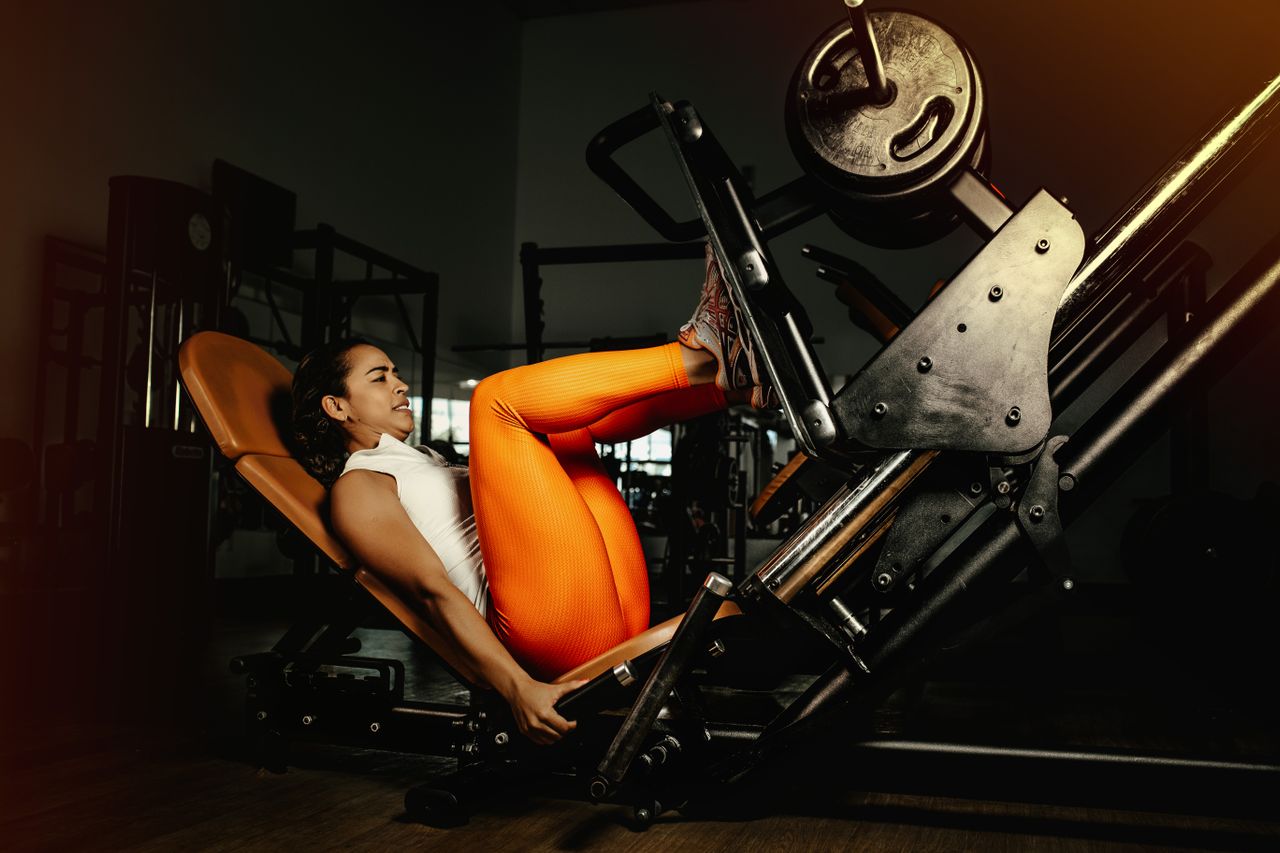
The small, previously untrained sample leaves questions about experienced lifters, severe symptoms and hormonal contraception. The photograph illustrates a bilateral leg press; the trial used single-leg exercises.
A symptom decision is a different question
In an October 7 commentary for the American College of Sports Medicine, study coauthors Derrick Van Every and Alysha D’Souza distinguish a rigid phase-based plan from responding to the person doing the training. Cramps, pain, bloating and psychological symptoms can affect a session, they explain. Adjustments can account for individual needs and preferences.
That distinction gives cycle tracking a practical role without turning a predicted phase into an instruction. You might want to record that a session felt uncomfortable, or notice a repeated pattern worth discussing with your coach. Those observations concern your experience; they are different from assuming that everyone should concentrate extra sets on the same cycle days.
The U.S. Office on Women’s Health recommends tracking the start and length of periods, bleeding and symptoms such as cramps, headaches or bloating. It notes that cycle length can vary between people and from month to month. A calendar can help organize that information rather than promise a fixed training response.
A cycle is counted from the first day of one period to the first day of the next. Record the symptoms alongside those dates: a start date by itself cannot describe how uncomfortable a particular training day felt.
For a different scheduling question, our full-body versus split-routine story looks at how the same weekly work can fit into two or four visits. That is about arranging sessions across a week, rather than predicting a hormonal advantage.
Before changing a lifting plan, identify the reason for the change: an actual symptom, your available time, or a belief about a supposedly ideal phase. That makes the decision easier to discuss and review. If pain or bleeding is severe enough to disrupt regular activities, the Office on Women’s Health advises discussing it with a healthcare professional; tracking it can help explain what is happening.